US Presses G20 to Tackle Trade Imbalances, With China in Focus
Key Takeaways
- •U.S. Treasury Secretary Scott Bessent urged G20 countries to protect domestic industries and jobs from Chinese imports diverted by U.S. tariffs.
- •China's goods trade surplus with the EU reached €360.6 billion last year, up 15% from 2024, and has widened further this year.
- •China is opposing firm communique language on non-market economies and its rare earth export restrictions, complicating agreement on global imbalances.
- •Japan's 10-year bond yield reached 3% for the first time since 1996 as a global bond selloff deepened.
- •Bessent signaled expectations for BOJ rate hikes and a stronger yen ahead of the bank's September 17-18 policy meeting.
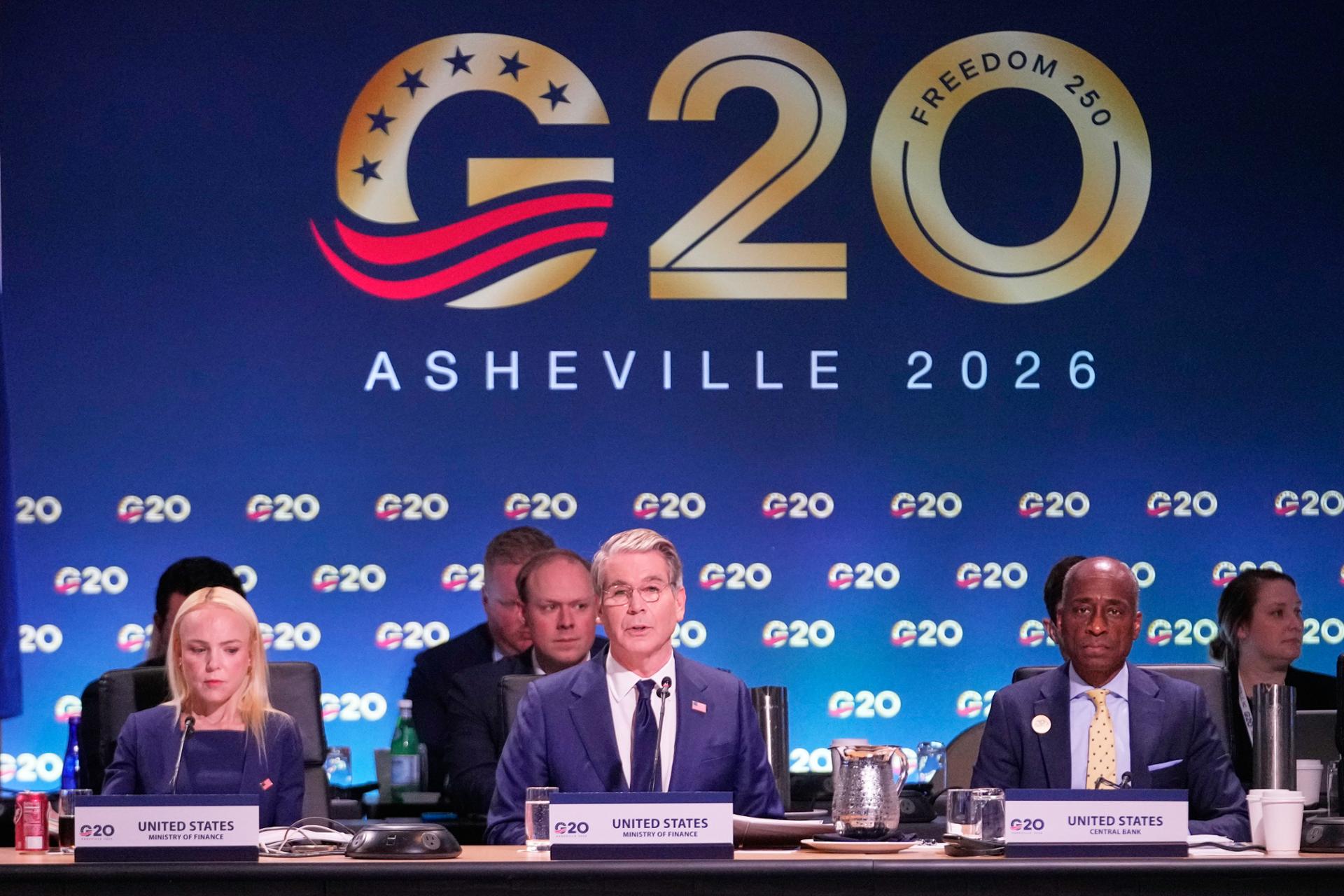
ASHEVILLE, North Carolina — The Trump administration urged fellow G20 countries on Tuesday to do more to shield their domestic industries and labor markets from Chinese imports, arguing that such distortions were "sucking" much-needed growth out of the global economy.
The two-day gathering of finance chiefs — which exposed differences in tone between the U.S. hosts and several European participants — took place amid a global bond market selloff driven by worries over rising debt levels and inflation pressures. The G20 groups the world's largest economies, accounting for the bulk of global output and trade, and its finance ministers meet regularly to coordinate on issues ranging from debt relief to currency stability — though joint statements have often papered over deep disagreements.
While Washington used a parallel G20 meeting of industry leaders and commerce ministers on Tuesday to argue for a hands-off approach to AI regulation, the finance ministers' discussions centered on China.
U.S. Treasury Secretary Scott Bessent said he had warned other trading partners last year that tougher U.S. tariffs would result in an influx of Chinese goods diverted to their markets.
"And unfortunately, I was right. They have — and the rest of the world probably needs to take a hard look at what they should be doing to protect their citizens' jobs," Bessent told the meeting in Asheville, North Carolina.
"We're seeing a lot of non-market economies with these big imbalances that are sucking growth from the rest of the world," he told reporters.
China's massive export drive has pressured economies worldwide, particularly as the United States has imposed high tariffs on Chinese goods and outright bans on certain products, such as Chinese vehicles. With chronically weak domestic demand, China has doubled down on exports of electric vehicles, semiconductors and other goods. Its total exports rose 23.9 percent in July year-on-year, prompting growing calls in Europe for tougher curbs on Chinese imports.
"We do know that Chinese currency is hugely undervalued, that China is supporting, very actively subsidizing its exports and this is a problem for Europe as well," Polish Finance Minister Andrzej Domanski told Reuters late on Monday.
China's goods trade surplus with the European Union reached €360.6 billion last year, a 15 percent increase over 2024, and has widened further this year as Chinese firms have sold more to the EU while importing less.
European Economy Commissioner Valdis Dombrovskis agreed that China is a major source of economic imbalances, but said the U.S. and Europe both had roles to play in evening things out.
In more direct comments, German Finance Minister Lars Klingbeil pointed to the U.S.- and Israeli-led Iran war, together with ongoing U.S. tariff disputes, as major sources of uncertainty holding back the global economy.
"Uncertainty is poison for economic growth," Klingbeil said. "The tariff conflicts being pursued by the U.S., such as the current dispute with Canada, destroy trust."
It remains unclear whether the United States can bring the diverse forum together to agree on a joint communique on how to reduce global imbalances.
G20 member China has shown little interest in longstanding calls to reduce its industrial subsidies and rebalance its economy, while its yuan currency remains significantly undervalued by most measures.
Beijing has also leveraged its dominance in critical minerals processing by imposing export restrictions on rare earths in April 2025 — a response to U.S. President Donald Trump's tariffs that has also affected non-U.S. companies. Rare earths are essential inputs for electric vehicles, wind turbines, smartphones and military equipment, and China processes the large majority of the world's supply, giving Beijing leverage few other countries can match.
Japanese Finance Minister Satsuki Katayama, speaking at a news briefing on Monday evening after the first day of talks, said she had told her G20 counterparts that arbitrary export restrictions on critical minerals were harming the global economy and should be withdrawn.
Officials said the section of the planned joint communique dealing with global imbalances was proving particularly difficult, with China opposing any singling out of "non-market economies" or firm language on critical mineral supply curbs.
European countries, meanwhile, were keen to include strong language critical of Russia's war against Ukraine. They expressed dismay that their Russian counterpart was present at the forum for the first time since Russia invaded Ukraine in 2022.
A selloff in global bond markets deepened on Tuesday, with Japan's 10-year bond yield reaching 3 percent for the first time since 1996 — the latest sign of investor concern about energy-driven inflation, potential monetary tightening and worsening fiscal conditions. Rising long-term yields raise borrowing costs for governments and businesses worldwide, which is why finance ministers track them closely as a gauge of stress.
Treasury officials said Bessent had called for sound monetary policy to anchor inflation expectations and avoid excessive currency volatility during his meeting on Sunday with Bank of Japan Governor Kazuo Ueda.
"I have information that the market doesn't have, and it's my belief that the Japanese government and the BOJ will do the things that will lead to a stronger yen," Bessent said in an interview with CNBC.
The remarks, which underline Bessent's recent calls for the BOJ to raise interest rates, were seen as an attempt to strengthen the case for Ueda to argue for a hike at the bank's policy meeting on September 17-18. A rate decision from the BOJ would be watched not only in Tokyo but in global markets, given that Japanese yields influence borrowing costs and currency flows far beyond Japan.
