DeepSeek Banned From US Federal Civilian Agencies Over Spying Fears
Key Takeaways
- •US federal civilian agencies have been prohibited from using the Chinese AI tool DeepSeek on government devices and networks amid alleged spying and data-exposure risks.
- •DeepSeek gained widespread attention in 2026 by matching the performance of leading US AI models at a fraction of the cost.
- •The central concern is that Chinese national security laws can compel technology firms to cooperate with state intelligence requests, though no confirmed incident of government data transfer has been documented.
- •The restriction follows the precedent of the 2024 TikTok ban on federal devices and reflects a broader pattern of treating AI platforms as infrastructure with national security implications.
- •Federal bans on foreign AI tools can quickly shrink a vendor's addressable market and contribute to regulatory risk across the technology sector, including crypto infrastructure that depends on AI-driven analytics.
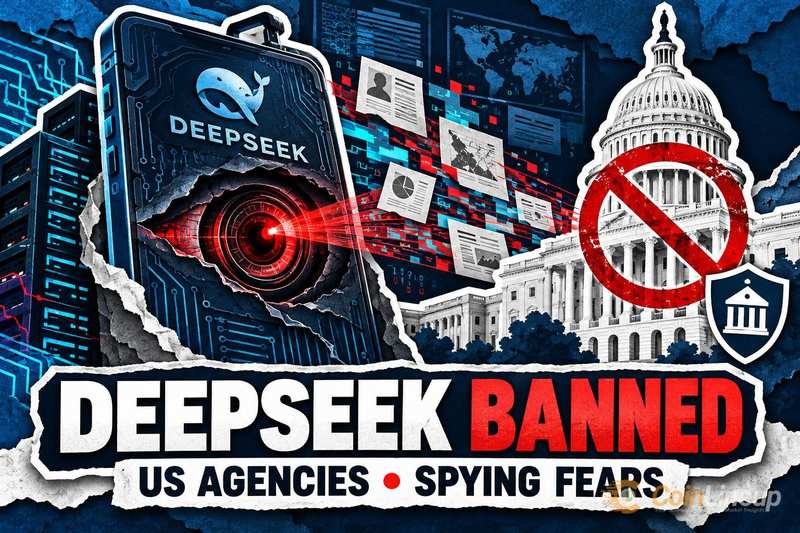
US federal civilian agencies have been barred from using DeepSeek, a Chinese artificial intelligence tool, over concerns that it could be used to spy on government workers and expose sensitive data. The reported ban marks a significant escalation in Washington's scrutiny of foreign AI platforms operating inside government systems.
What the Ban Means for US Federal Civilian Agencies
Federal civilian agencies are the non-military departments of the US government. They include bodies such as the General Services Administration and the Department of Homeland Security, along with dozens of other offices that handle sensitive public records and policy work. Under the reported restriction, workers at these agencies are barred from using DeepSeek on government devices or networks. Restrictions phrased this way are typically carried out through agency IT controls, such as network-level blocks and access disabled on government-issued devices, rather than relying on employees to self-police their app choices.
The scope of the action matters. It targets civilian agencies specifically, which sets it apart from any restrictions already in place within the US military or intelligence community. Whether the ban extends across all civilian departments or applies only to specific agencies has not been fully confirmed by the reporting available at this time. That unresolved scope question is the detail to watch, because it determines how much of the federal civilian workforce the restriction actually covers.
What Is DeepSeek?
DeepSeek is an AI assistant developed in China that gained widespread attention earlier in 2026 for matching the performance of leading US models at a fraction of the cost. Its rapid rise drew immediate questions from security researchers and lawmakers about where user data goes and who can access it. That cost-to-performance profile is what made the tool attractive to organizations weighing AI spending, which is why its exclusion from government systems carries weight beyond a single procurement decision.
Why DeepSeek Faces Spying and Data-Security Concerns
When a government worker uses an AI tool, every question they type, every document they upload, and every task they ask the system to complete is processed by the AI provider's servers. If those servers are located in, or legally accessible to, a foreign government, sensitive information could in theory be intercepted or reviewed.
Security reviews of AI tools used in government settings typically examine where data is stored, which laws govern it, and whether the provider could be compelled by a foreign state to hand over user information. Chinese technology companies are subject to Chinese national security laws that require cooperation with state intelligence requests. That legal obligation is the core concern driving restrictions on tools like DeepSeek.
It is important to note that the spying concern reported here is an alleged risk, not a confirmed incident. No publicly available evidence in the research supporting this article documents a specific case of DeepSeek transmitting government data to Chinese authorities. The ban is a precautionary measure based on the reported risk, not a response to a known breach.
This kind of precautionary restriction is not new. The US government previously banned TikTok from federal devices through legislation signed in 2024, citing similar concerns about data access by Chinese entities. Reporting on the DeepSeek restriction follows that same pattern of preemptive action against platforms whose data governance is tied to Chinese jurisdiction. The distinction is structural: the TikTok measure went through Congress as legislation, while an agency-level restriction does not depend on new law to take effect.
What the Restriction Could Signal for Technology Markets
Government procurement decisions rarely stay isolated. When a federal agency bans a technology platform, it typically signals to contractors, regulated industries, and state governments that the platform carries unacceptable risk. That ripple effect can shrink an AI company's addressable market quickly.
For the broader technology and digital-asset space, the action reinforces a growing pattern: governments are treating AI platforms as infrastructure with national security implications, not just software tools. That framing puts pressure on any AI vendor, foreign or domestic, to demonstrate transparent data governance if it wants to operate at scale inside regulated sectors.
As CZ, the former CEO of crypto exchange Binance, has noted, AI security risks go beyond the obvious hacking threats and touch deeper questions about who controls the underlying systems.
For people who hold crypto or follow digital markets, the direct price impact of this policy action is not established by available evidence. What is clear is that government restrictions on Chinese AI tools add to a broader technology cold war dynamic that shapes investment flows, platform adoption, and regulatory risk across the technology sector, including crypto infrastructure that relies on AI-driven analytics and trading tools.
The practical takeaway for anyone following this story: if you use AI tools for anything sensitive, whether for work, financial research, or personal data, the jurisdiction of the AI provider matters. A tool built and operated under a foreign government's legal reach carries different risks than one subject to domestic oversight, regardless of how capable or affordable it is.
Disclaimer: This article is for informational purposes only and does not constitute financial or investment advice. Cryptocurrency and digital asset markets carry significant risk. Always do your own research before making decisions.

