U.S. Expands Iran-Related Crypto Sanctions Over Alleged $100 Million Oil Payments
Key Takeaways
- •The U.S. has expanded sanctions targeting crypto activity linked to Iran, according to a Treasury announcement cited in the report.
- •The enforcement action is connected to allegations involving roughly $100 million in oil payments.
- •The reported figure is an allegation under review, not independently verified transaction data.
- •Exchanges, OTC desks, and blockchain analytics firms are expected to face greater pressure to screen addresses and customers.
- •Regulated-platform users are likely to encounter tighter compliance checks rather than immediate freezes of ordinary holdings.
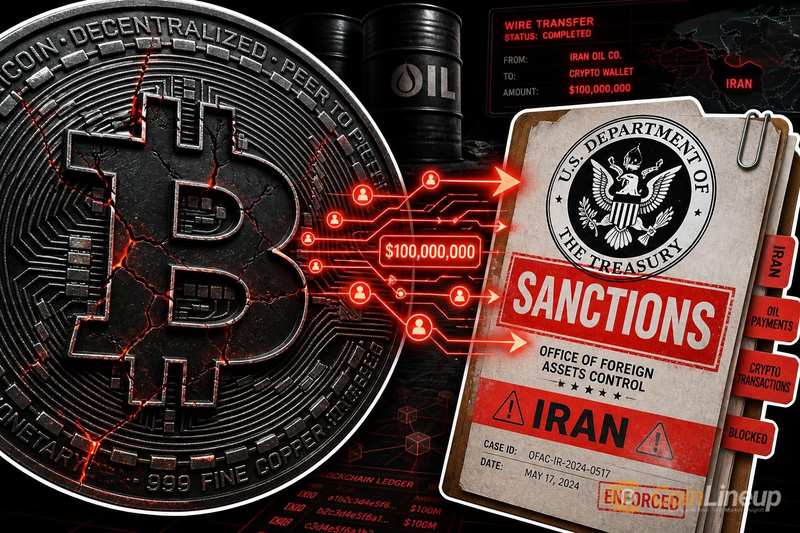
The United States has expanded its Iran-related crypto sanctions, linked to alleged oil payments worth about $100 million. The move targets crypto activity connected to Iran and raises fresh compliance risks for exchanges and ordinary holders.
The action is described as an enforcement escalation rather than a routine policy update. It focuses on crypto activity connected to Iran, based on a U.S. Treasury announcement. In plain terms, sanctions block named people or entities from accessing the U.S. financial system. For crypto firms, that usually means more pressure on screening systems, transaction monitoring, and customer checks. For related coverage, see US sanctions two crypto exchanges over alleged Iran-linked funds.
The crypto angle is central to the case. According to reporting, the U.S. is targeting digital-asset activity that allegedly helped move funds tied to Iran, as covered by crypto.news. These are enforcement allegations, so the claims should be treated carefully rather than as proven facts. The broader context is that crypto has increasingly appeared in sanctions enforcement, which means each new designation can affect how exchanges, custodians, and blockchain analytics firms handle compliance. For related coverage, see Ripple Expands Washington, D.C., Office to Deepen U.S. Policy Ties.
This is not the first time U.S. authorities have expanded Iran-linked crypto designations. Regulators have previously widened Iran crypto sanctions to procurement networks, and they have also sanctioned five sectors including crypto.
Why the alleged $100 million oil link matters
The headline figure is the main indicator of scale in this case. The alleged oil payments are reported at roughly $100 million, giving the matter a concrete financial benchmark. A figure of that size suggests serious transaction volume rather than a minor transfer.
The oil connection also increases the significance of the sanctions action. Oil revenue is a core source of funding for Iran, so any alleged payment channel connected to it draws close scrutiny. Whether crypto served as a payment rail, a settlement layer, or a transfer tool is a question the official reporting would need to confirm.
The attribution of the figure matters. The roughly $100 million amount comes from the allegations described in the reporting above, not from independently verified transaction records. Readers should treat it as a claim under enforcement review.
What it means for crypto compliance and holders
Sanctions actions affect the platforms people use every day. Exchanges, over-the-counter desks, and blockchain monitoring firms must screen for newly designated addresses and parties. That screening obligation is outlined in the U.S. Office of Foreign Assets Control virtual currency guidance: OFAC FAQs.
Dealing with a sanctioned party, even indirectly, can trigger penalties. Chainalysis has documented how sanctions are increasingly shaping crypto enforcement in its 2025 sanctions research. For someone holding a small amount of Bitcoin on a regulated exchange, the practical effect is usually stronger compliance checks rather than frozen personal funds.
These developments also influence the wider debate over crypto regulation. Enforcement actions feed discussion about how digital assets should be policed, alongside other policy moves such as a recent SEC proposal on how crypto insiders sell tokens.
The practical takeaway is straightforward. Users of regulated platforms should expect firms to keep tightening address screening and identity checks. Watch for additional designations or an official Treasury list that identifies the specific parties and confirms the crypto details.
Disclaimer: This article is for informational purposes only and does not constitute financial or investment advice. Cryptocurrency and digital asset markets carry significant risk. Always do your own research before making decisions.

