US Clean Energy Investment on Track for Record $180 Billion in 2026, Crux Report Finds
Key Takeaways
- •U.S. clean energy capital expenditures reached $74 billion in the first half of 2026 and are projected to hit a record $180 billion by year-end despite federal rollbacks of clean energy incentives, according to a Crux report.
- •Surging electricity demand from data center hyperscalers and the AI boom, along with fossil fuel market volatility driven by the war in Iran, has accelerated investment in renewables valued for energy security and affordability.
- •U.S. utility-scale battery storage capacity has grown at an average rate of 70 percent per year over the past three years to reach 52 GW, including 8.3 GW added in the first half of 2026, driven largely by co-locating batteries with solar PV plants.
- •Grid operators plan to add another 54 GW of battery capacity by the end of 2028, meaning U.S. energy storage capacity is set to double by 2030 compared with current levels.
- •The storage boom is a global trend, with China controlling more than half of worldwide capacity and the European Union formalizing a plan this month to triple its energy storage capacity by 2030.
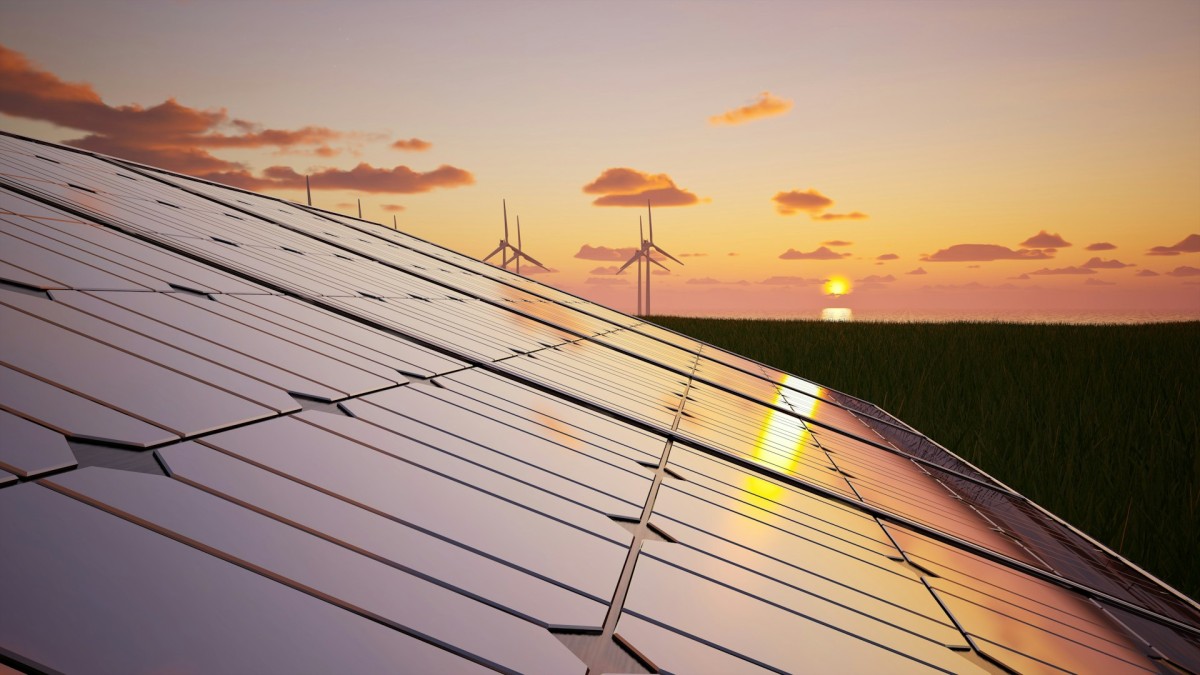
The United States is in the midst of a large-scale buildout of renewable energy capacity and infrastructure, one that is unfolding even as the federal government withdraws support from the sector. Investment in renewable technologies is climbing to new highs, and the national grid is being rapidly reshaped to accommodate an energy mix that increasingly runs on solar and wind power.
Despite sweeping rollbacks of Biden- and Obama-era clean energy incentives and financial supports, investment in clean energy technology keeps reaching new heights, buoyed by market forces largely beyond the federal government's control. Clean energy capital expenditures reached $74 billion in the first half of 2026 and are on track to hit a record $180 billion by the end of the year, according to fintech firm Crux's State of Clean Energy Finance: 2026 Mid-Year Market Intelligence Report. That momentum matters for utilities, developers, and grid planners alike, because it signals that project financing and deployment are still moving forward even as policy support changes.
"The market is proving resilient," Crux CEO and co-founder Alfred Johnson was recently quoted by Politico's E&E News. "We're seeing a significant amount of investment subsequent to the tax law changes of last year."
Insatiable energy demand from data center hyperscalers and the artificial intelligence boom has spurred a tidal wave of investment into energy projects of all kinds, and especially renewables, which are recognized for their advantages when it comes to energy security and affordability. Those advantages have been underscored in recent months by extreme volatility in fossil fuel markets driven by the war in Iran and the resulting supply chain vulnerabilities. "Renewables and storage continue to be the fastest way to get new electrons on the grid until additional gas-fired generation can be built," NextEra Energy CEO John Ketchum was recently quoted by Reuters. For that reason, clean power buildout is increasingly being treated not just as a climate issue, but as a practical response to rising load growth and slower timelines for other forms of generation.
The upshot, according to Miguel Stilwell d'Andrade, chief executive officer of Portuguese electric utilities company EDP, is that the sector is currently "living in what arguably is one of the best periods to invest in renewables in the US over the last 20 years." Accordingly, EDP is directing approximately USD $5.3 billion — more than half of its capital expenditures — toward United States renewables projects over the next three years.
All of that renewable buildout is being accompanied by a massive and unprecedented uptick in battery storage deployment, driving a rapid transformation of the nation's energy grid. Over the past three years, utility-scale battery storage capacity has increased at an average rate of 70 percent per year to reach 52 gigawatts (GW) today. Nearly 16 percent of that total — 8.3 GW — was added in the first half of this year alone.
"This expansion depends mostly on co-locating batteries with solar photovoltaic (PV) plants to capitalize on wholesale price arbitrage across major energy markets," Interesting Engineering reported earlier this week. Connecting battery packs directly to solar farms allows the farms' operators to store excess clean energy at peak production hours until the evening hours, when production wanes, demand rises, and rates reach a premium. "This lucrative business model has sparked a massive construction boom across solar-heavy states, turning temporary energy storage into a primary driver of modern grid infrastructure," Interesting Engineering goes on to report.
As striking as this year's figures are, the battery storage expansion is still in its early stages. Grid operators already have plans to add another 54 GW of battery capacity by the end of 2028, which means the nation's energy storage capacity will double again by 2030 compared with current levels. That buildout is also a reminder that the clean energy transition is increasingly being measured in grid hardware as much as in generation capacity, with transmission, interconnection, and storage now central to how new power reaches customers.
Nor is the United States alone — the energy storage boom is proving to be a global trend. China is leading buildout by a wide margin, controlling more than half of global capacity, while other major global leaders are hurrying to gain a foothold in the rapidly expanding market. Just this month, the European Union formalized a plan to triple the bloc's energy storage capacity by 2030. European leaders are banking on energy storage — alongside renewable energy expansion — to steady the continent's energy markets and protect member states from the next energy crisis.
By Haley Zaremba for Oilprice.com
