U.S.-Canada Trade Talks Collapse as Canada Rejects Trump Terms; 50% Tariffs Hit $20 Billion in Canadian Goods
Key Takeaways
- •Canada suspended the negotiations after Carney said the U.S. terms were "unfair" and "uneconomic."
- •The United States is imposing 50% tariffs on $20 billion of Canadian goods.
- •Ottawa says it will retaliate with dollar-for-dollar tariffs on $20 billion of U.S. goods.
- •The tariff dispute began in early 2025 and has already included multiple rounds of U.S. and Canadian retaliatory measures.
- •The breakdown adds pressure to industries and supply chains that depend on extensive cross-border trade between the two countries.
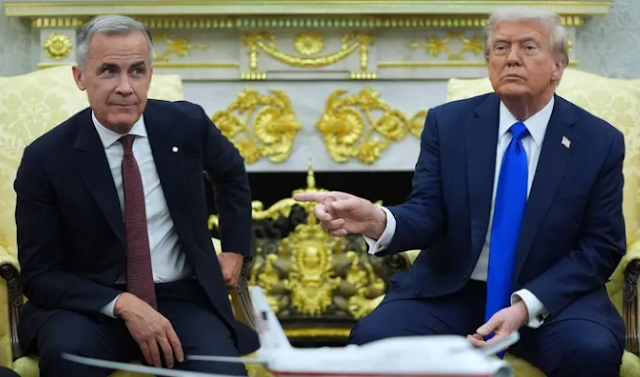
U.S.-Canada trade negotiations have collapsed after Canada rejected terms presented by President Donald Trump, with the dispute triggering 50% U.S. tariffs on $20 billion of Canadian goods, according to information shared on X by @coinbureau.
Canadian Prime Minister Mark Carney has suspended the negotiations and recalled Canada's trade team after rejecting the final U.S. terms as "unfair" and "uneconomic." Ottawa has also indicated that it will respond with dollar-for-dollar tariffs on $20 billion of U.S. goods, setting the stage for another escalation in trade tensions between the two North American economies.
The development marks a significant setback for efforts to resolve the latest dispute between Washington and Ottawa and places additional pressure on businesses exposed to one of the world's largest bilateral trading relationships. The collapse also extends a tariff conflict that began in early 2025, when Washington imposed new duties on Canadian imports and Ottawa answered with retaliatory measures of its own.
Canada Suspends Trade Negotiations With the United States
The immediate development is Canada's decision to suspend negotiations with the United States. Prime Minister Mark Carney has recalled the Canadian trade team after determining that the final terms proposed by Washington were unacceptable.
Carney took office as prime minister in March 2025 after previously serving as governor of both the Bank of Canada and the Bank of England, and his government has managed Canada's side of the dispute since the first U.S. tariff measures of early 2025.
Canada described the terms as "unfair" and "uneconomic," signaling that Ottawa was unwilling to proceed with an agreement under the conditions presented by the United States. The decision effectively pauses the current negotiating process and removes Canada's trade representatives from discussions with Washington.
The breakdown comes as both countries face renewed pressure over tariffs and access to each other's markets. The information shared by @coinbureau does not provide further details about the specific provisions contained in the U.S. proposal or explain which sectors would be most directly affected by the tariffs.
50% U.S. Tariffs Target $20 Billion in Canadian Goods
Following the collapse in negotiations, the United States is imposing 50% tariffs on $20 billion of Canadian goods, according to the information provided. Tariffs are taxes applied to imported goods and are generally paid by importers. Companies can subsequently face higher costs, which may influence pricing, supply chains and purchasing decisions.
The measures build on an escalating series of U.S. actions that began in early 2025, when Washington imposed 25% tariffs on a broad range of Canadian goods, later lifted rates on many products to 35% and raised steel and aluminum duties to 50%. Canada answered each round with retaliatory tariffs targeting tens of billions of dollars of U.S. exports. An earlier broad round exempted goods that complied with the USMCA, the trade pact that replaced NAFTA in 2020; the information provided does not say whether the new 50% measures take the same approach.
The scale of the announced tariffs means businesses involved in trade between the United States and Canada could face additional financial pressure. The $20 billion figure represents the value of Canadian goods identified in the latest tariff action, a fraction of total annual two-way goods trade between the two countries. The post does not provide a detailed list of the products covered by the measures, so the specific industries and companies affected cannot be determined from the available information.
Ottawa Plans Dollar-for-Dollar Response
Canada has indicated that it will respond with tariffs matching the U.S. measures. According to the information shared on X, Ottawa plans to impose dollar-for-dollar tariffs on $20 billion of U.S. goods. Such a response would represent a direct escalation of the dispute, with products moving in both directions potentially becoming subject to additional costs. Canada applied the same matching approach when answering U.S. tariff rounds in 2025.
The use of reciprocal tariffs would increase pressure on businesses in both countries that depend on cross-border supply chains. Companies importing products from the neighboring country could face higher costs, while exporters could encounter reduced demand if tariffs make their goods more expensive in the destination market. The Canadian government has not, in the information provided, identified the specific U.S. products that would be targeted by its response.
Trade Dispute Adds Pressure to North American Businesses
The United States and Canada maintain extensive economic ties, with two-way trade exceeding $700 billion in goods and more than $100 billion in services annually in recent years. Canada is the largest foreign supplier of crude oil to the United States, and the two countries' automotive, agricultural and lumber supply chains are deeply integrated, with auto parts in particular crossing the border multiple times before finished vehicles reach consumers. When tariffs are introduced, companies may need to reassess sourcing arrangements and pricing structures.
The impact can extend beyond the companies directly paying tariffs. Businesses may pass some or all of the additional costs through their supply chains, potentially affecting wholesalers, retailers and consumers. The latest measures therefore have implications beyond the immediate government negotiations.
However, the information provided does not offer estimates of potential economic losses, consumer price increases or employment effects resulting from the tariffs. Those consequences would depend on the products affected, the duration of the measures and how businesses respond.
Mark Carney Calls U.S. Terms Unfair and Uneconomic
Carney's characterization of the U.S. proposal as "unfair" and "uneconomic" provides the clearest explanation from Ottawa for the breakdown in negotiations. By suspending talks and recalling Canada's trade team, the Canadian government has signaled that it does not currently consider the proposed agreement acceptable. The decision also means the two governments will have to address the tariff dispute without the negotiating process that had been underway.
Whether discussions resume will depend on developments between Washington and Ottawa. The original information does not provide a timeline for when negotiations could restart or identify any new framework for resolving the disagreement.
Another Escalation in U.S.-Canada Trade Relations
The latest dispute adds to a broader pattern of trade tensions between the United States and Canada. Both countries have strong economic connections, making trade policy an important issue for companies operating across the border. Tariff disputes can create uncertainty for businesses and markets because companies may have difficulty determining whether additional costs will remain temporary or become part of longer-term trading conditions.
For exporters, uncertainty can complicate investment and supply-chain decisions. For importers, tariffs can alter the economics of existing agreements and sourcing arrangements. The current standoff therefore places renewed focus on the relationship between the two governments and their ability to reach a mutually acceptable trade agreement.
What Happens Next
For now, the immediate situation is defined by suspended negotiations, new U.S. tariffs and Canada's stated intention to retaliate. The United States is imposing 50% tariffs on $20 billion of Canadian goods, while Ottawa says it will apply dollar-for-dollar tariffs to $20 billion of U.S. goods. Canada has also recalled its trade team following the rejection of the latest U.S. terms.
The dispute is also unfolding against the backdrop of the USMCA's scheduled joint review in 2026, the first such assessment of the pact that has governed most North American trade since it replaced NAFTA in 2020.
The next stage of the dispute will depend on whether Washington and Ottawa return to negotiations or continue with reciprocal trade measures. As businesses on both sides of the border assess the impact, the focus will remain on the scope and duration of the tariffs and whether the two governments can find a path back to negotiations.
For now, the collapse of the talks represents a fresh setback in U.S.-Canada trade relations and raises the prospect of further tariff escalation if neither side changes its position.
Source: Hokanews

