Trump Administration Weighs Lower Canada Auto Tariff in Ongoing Trade Talks
Key Takeaways
- •U.S. and Canadian negotiators are discussing lowering the tariff on Canadian-made vehicles from 25% to 15%, according to Reuters.
- •President Trump delayed new tariffs of up to 50% that would have affected roughly $20 billion worth of Canadian goods, citing progress in the talks.
- •Washington wants tariff deductions based primarily on U.S.-specific vehicle content, while Canada argues for broader treatment of North American components including Mexican parts.
- •Canadian negotiators are reportedly pushing for an even lower auto tariff of around 10%.
- •Detroit automakers have warned that proposed changes to North American trade rules could cost billions of dollars annually and reduce their global competitiveness.
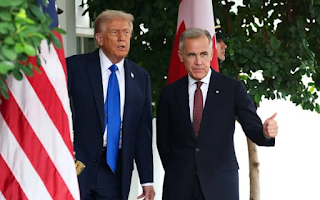
The United States and Canada are moving closer to a possible breakthrough in their latest trade negotiations, with the Trump administration considering a reduction in tariffs on Canadian-made vehicles from 25% to 15%.
The proposed change comes just days after President Donald Trump delayed the implementation of new tariffs of up to 50% on a broader range of Canadian imports, giving negotiators more time to reach an agreement.
The development was highlighted by @CoinBureau on X, as markets continue to watch the rapidly evolving U.S.-Canada trade relationship.
According to Reuters, U.S. and Canadian negotiators are discussing lowering the existing 25% tariff on Canadian vehicles to 15%, although important disagreements remain over how vehicle content would be treated under the proposed arrangement.
Trump Delays Broader Canadian Tariffs
The auto negotiations are unfolding as Washington and Ottawa attempt to resolve a wider trade dispute.
Trump recently delayed new tariffs that had been scheduled to take effect, citing progress in talks with Canada.
The proposed tariffs would have affected approximately $20 billion worth of Canadian goods and added another layer of uncertainty for businesses on both sides of the border.
Canadian Prime Minister Mark Carney has acknowledged progress in the discussions but has also said significant issues remain unresolved.
As a result, the negotiations are continuing under considerable pressure, particularly for industries that depend heavily on cross-border trade.
Why Canadian Cars Matter
Canada is deeply integrated into the U.S. automotive supply chain.
Vehicles assembled in Canada often contain parts manufactured in multiple countries before being shipped across the border.
That makes tariffs especially complicated.
A vehicle may be assembled in Ontario, include components manufactured in the United States and Mexico, and rely on additional materials sourced elsewhere in the global supply chain.
The question of which parts qualify for tariff deductions has become one of the central issues in the negotiations, because even small changes to the rules can affect how companies price vehicles, plan production and organize sourcing across North America.
According to Reuters, Washington has pushed for deductions based primarily on U.S.-specific content, while Canada has argued for broader treatment of North American components, including parts manufactured in Mexico.
Auto Industry Watches Closely
Automakers have strong incentives to see tariffs reduced.
The North American auto industry operates through highly interconnected production networks, meaning a tariff imposed at one stage can raise costs throughout the manufacturing process.
Higher import costs can eventually affect manufacturers, suppliers and consumers.
U.S. automakers have already warned that changes to trade rules could significantly increase their costs.
Reuters reported that Detroit automakers are concerned proposed changes to North American trade rules could cost billions of dollars annually and reduce their global competitiveness.
A reduction in Canadian vehicle tariffs from 25% to 15% would therefore represent meaningful relief for manufacturers operating across the border.
Canada’s Auto Exports Depend Heavily on the U.S.
The Canadian automotive industry is especially exposed to changes in U.S. trade policy because the United States is by far its most important export market.
A large share of vehicles manufactured in Canada is shipped south to American consumers.
That means Canadian manufacturers have little room to ignore changes in U.S. tariff policy.
A higher tariff can increase the cost of Canadian-built vehicles entering the American market, potentially affecting demand and production decisions.
For Canada, maintaining access to U.S. markets at competitive tariff rates is therefore a major economic priority.
What the 15% Tariff Could Mean
If the proposed 15% rate is finalized, Canadian vehicles would face a substantially lower tariff than under the current 25% structure.
That could reduce pressure on automakers and help stabilize cross-border supply chains.
However, the exact economic impact will depend on the final rules.
The treatment of non-U.S. components remains a key issue.
Washington wants stronger incentives for automakers to source more parts from the United States, while Canada is seeking a broader interpretation of North American content.
The final agreement could therefore determine not only how much manufacturers pay in tariffs but also where they choose to source future components.
Trump’s Tariff Strategy
Trump has repeatedly used tariffs as a tool to pressure trading partners and encourage more manufacturing in the United States.
His administration has argued that tariffs can help protect American workers and encourage companies to move production into the country.
The automotive industry, however, presents a complicated case because American manufacturers themselves rely heavily on Canadian and Mexican factories and suppliers.
That creates a delicate balance between protecting domestic production and maintaining an efficient North American manufacturing system.
The latest negotiations reflect that tension.
Canada Wants Further Relief
Canadian negotiators are reportedly pushing for an even lower auto tariff of around 10%, according to Reuters.
The United States is currently discussing 15% as part of a potential broader agreement.
That gap could become one of the final obstacles to a deal.
Canada also wants broader recognition of North American content when calculating tariff obligations.
If the two governments cannot reach an agreement, the automotive sector could continue facing uncertainty.
Markets Watching the Negotiations
Financial markets are closely monitoring the talks because trade policy can influence inflation, corporate profits and economic growth.
A reduction in tariffs could be viewed as positive for North American manufacturers and could reduce some of the inflationary pressure associated with imported vehicles and parts.
On the other hand, prolonged negotiations or the return of higher tariffs could increase uncertainty for businesses.
The automotive industry is particularly sensitive because manufacturers need to make long-term decisions about factories, suppliers and production capacity.
What Happens Next?
The proposed reduction to 15% is not yet a final trade agreement.
Negotiators still need to resolve differences over vehicle content, Canadian market access and other elements of the broader relationship.
The U.S. and Canada are also dealing with separate disagreements involving steel, aluminum, dairy products, alcohol and other sectors.
Reuters reported that Washington and Ottawa were continuing high-level discussions as both sides tried to bridge remaining gaps.
For the automotive industry, however, the potential reduction from 25% to 15% is an important development because the final text could shape how integrated supply chains are treated in future trade rules.
Trump's proposed reduction of Canadian auto tariffs from 25% to 15% could mark a significant shift in the latest U.S.-Canada trade dispute.
The move follows Trump's decision to delay broader 50% tariffs, giving negotiators more time to work toward an agreement.
For automakers, suppliers and consumers, the outcome could have major implications for vehicle prices, production costs and North American supply chains.
The biggest question now is whether Washington and Ottawa can resolve their remaining differences and turn the proposed 15% tariff into a finalized agreement.
Until then, the North American auto industry remains caught between two competing forces: Trump's push for greater U.S. manufacturing and the reality of a deeply integrated continental supply chain.

