US Approves Potential $125 Million Sale of AIM-9X Missiles to South Korea
Key Takeaways
- •The State Department has authorized a potential $125 million Foreign Military Sale to South Korea for AIM-9X air-to-air missiles and related equipment.
- •South Korea requested 103 AIM-9X Sidewinder Block II tactical missiles, 10 guidance units, and non-major items including training aids, devices, and spare parts.
- •RTX Corporation, based in Arlington, Virginia, will serve as the principal contractor for the proposed sale.
- •The deal requires congressional notification and review, and notification alone does not conclude a sale, though objections to sales for close allies have historically been rare.
- •The department said the sale would expand South Korea's air defense capability, support regional deterrence, and ensure interoperability with U.S. forces.
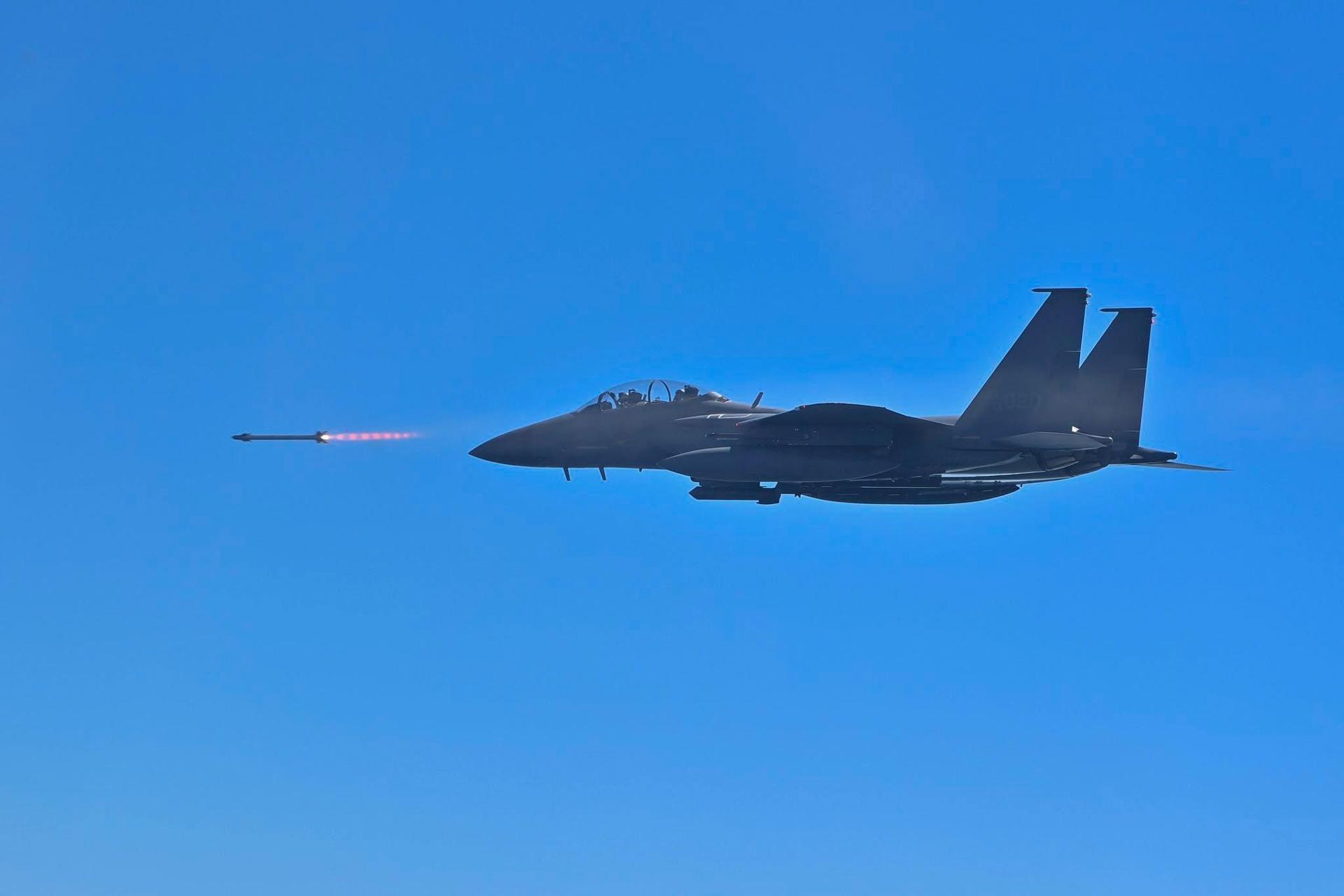
WASHINGTON — The U.S. government has authorized a potential sale to Korea of AIM-9X air-to-air missiles and related equipment, the State Department said Friday, noting that the proposed deal will help enhance the Asian ally's air defense capabilities.
The department announced its decision on the potential government-to-government Foreign Military Sale (FMS), which is estimated to cost $125 million. The proposed sale requires congressional notification and review before it can move forward.
Korea has requested the purchase of 103 AIM-9X Sidewinder Block II tactical missiles and 10 guidance units, as well as other non-major defense items, such as training aids and devices and spare parts, according to the department.
"This proposed sale will support the foreign policy and national security objectives of the United States by improving the security of a major ally that is an important force for political stability and economic progress in the Indo-Pacific region," the department said in a release.
"The proposed sale will help improve the Republic of Korea's capability to meet current and future threats by expanding its air defense capability, deterring aggression in the region, and ensuring interoperability with U.S. Forces," it added.
The principal contractor will be RTX Corporation, located in Arlington, Virginia, the department said.
The AIM-9X is the most advanced variant of the Sidewinder, a heat-seeking, short-range air-to-air missile family that has equipped U.S. and allied air forces since the 1950s. The missile is designed for close-range aerial engagements and is carried by a wide range of Western-built fighter aircraft, including the F-15, F-16, F/A-18 and F-35. The Block II configuration adds a lock-on-after-launch capability, allowing the weapon to be fired before its infrared seeker locks onto the target. In Korean service, the AIM-9X is integrated onto frontline jets: an F-15K fighter was documented firing the missile during a training session over a Yellow Sea firing range on May 20, in an image credited to Yonhap news agency. The Republic of Korea Air Force also fields KF-16 and F-35A fighters, platforms compatible with the missile.
Foreign Military Sales are conducted on a government-to-government basis, with the United States acting as the intermediary between American defense contractors and partner nations. The program is administered by the Pentagon's Defense Security Cooperation Agency. Formal notification to Congress opens a review process, but it does not by itself conclude a sale; lawmakers can move to block a notified deal, though objections to proposed sales for close allies have historically been rare. If no objection is raised, Washington and Seoul would finalize the transaction under a formal agreement, with deliveries following negotiated timelines.
RTX Corporation, formerly known as Raytheon Technologies, is one of the largest aerospace and defense companies in the United States. South Korea is a treaty ally of the United States under a mutual defense pact dating to 1953, signed months after the 1950-53 Korean War ended in an armistice rather than a peace treaty, and the country hosts U.S. Forces Korea, which supports combined defense operations on the peninsula. U.S. arms sale notifications for South Korea in recent years have spanned aircraft, missiles and naval systems, reflecting the scale of the alliance's defense procurement ties.
