Unitree Prices Shanghai IPO at 150.8 Yuan Per Share as China's Humanoid Robot Makers Race to List
Key Takeaways
- •Unitree set its Shanghai IPO price at 150.8 yuan per share and aims to raise approximately 6.1 billion yuan, which would make it the first humanoid robot manufacturer listed on mainland China exchanges.
- •The company's revenue grew more than fourfold to nearly 1.7 billion yuan in 2025, with an adjusted net profit of around 600 million yuan, making it a rare profitable player among humanoid robotics startups.
- •Overseas markets accounted for more than 40 percent of Unitree's sales across all reported periods, highlighting its international competitiveness alongside firms like Tesla and Boston Dynamics.
- •Current demand for Unitree's humanoid robots comes predominantly from universities and government-backed projects, and the technology still faces unresolved challenges in reliability, dexterity, and sustained autonomous operation.
- •China's government has positioned humanoid robotics as a national industrial priority, targeting mass production by 2025 and two to three globally competitive firms by 2027, with peer companies Leju Robotics and AgiBot also advancing toward public listings.
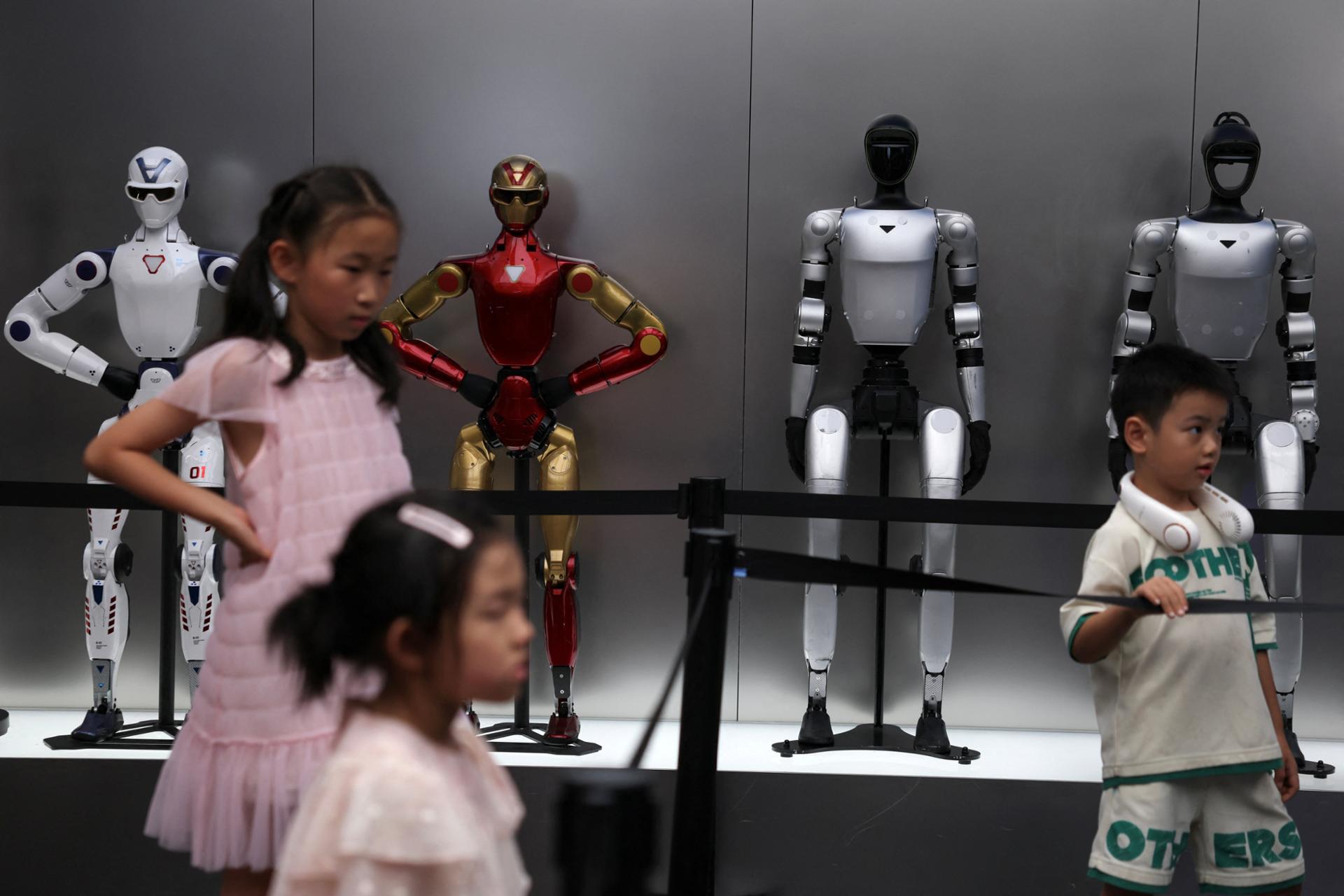
Chinese robotics firm Unitree has set its Shanghai initial public offering price at 150.8 yuan per share, with subscriptions opening Monday. The Hangzhou-based company aims to raise 6.1 billion yuan ($904 million) in a deal that would make it the first mainland-listed humanoid robot manufacturer.
Founded in 2016 by engineer Wang Xingxing, Unitree initially gained recognition for its affordable quadruped robots, commonly known as robot dogs. The company's G1, H1, and R1 humanoid models have since drawn global attention through widely circulated demonstrations in which the machines run, dance, and perform martial arts. Unitree competes with Tesla, Boston Dynamics, and an expanding field of Chinese startups all pursuing robots designed to eventually work in factories and households.
According to its prospectus, Unitree's revenue surged more than fourfold to nearly 1.7 billion yuan in 2025. Unlike many peers in the humanoid startup space, the company is profitable, reporting an adjusted net profit of approximately 600 million yuan. Overseas revenue accounted for more than 40 percent of sales across each of the reporting periods disclosed.
Unitree has demonstrated that China can produce sophisticated robots at prices well below those of many international competitors, leveraging the country's extensive supply chains for motors, sensors, batteries, and other critical components. The company has also come to represent Beijing's broader ambition to lead in embodied intelligence — an emerging discipline that pairs AI models with physical machines capable of navigating and interacting with the real world. China's Ministry of Industry and Information Technology in late 2023 issued guidelines calling for mass production of humanoid robots by 2025 and the cultivation of two to three globally competitive firms by 2027, placing the sector at the center of national industrial policy.
However, Unitree's commercial success does not yet establish that humanoid robots can replace human workers. Present demand comes predominantly from universities and government-backed projects deploying robots for education, research, and demonstration purposes. Humanoid robots continue to face challenges related to reliability, dexterity, and the ability to perform varied tasks over extended periods without human intervention.
Developing humanoid robots demands substantial investment in engineering talent, robot-training data, AI models, and manufacturing infrastructure — investments that must be made years before demand from factories or consumers materializes. Public markets therefore provide companies with the capital needed to sustain technological development while government backing and investor enthusiasm remain robust. China's shrinking working-age population — which has declined for several consecutive years according to official statistics — adds a long-term policy incentive for automation, though widespread deployment in industrial settings remains unproven.
Unitree is not alone in pursuing a public listing. Leju Robotics, manufacturer of the Kuavo humanoid, filed an application in May to list on Shenzhen's ChiNext market. Shanghai-based AgiBot, another leading humanoid producer, began preparations for a Hong Kong IPO in July.

