Uniswap Launches First Permissioned Pools on V4 Amid Tokenization Push
Key Takeaways
- •Uniswap launched its first permissioned pools on Uniswap V4 in partnership with Securitize, Superstate, and Dowgo to enable compliant trading of tokenized regulated assets.
- •The permissioned pools restrict swaps and liquidity provision to an allowlist of approved wallets and automatically block sanctioned entities from participation.
- •The global tokenized asset market is currently valued at approximately $36 billion and is projected to reach $11 trillion within the next four years.
- •Uniswap has generated $5.6 billion in cumulative fees to date, with protocol revenue remaining comparatively low at approximately $27 million.
- •UNI token has surged nearly 61% from its June lows and was trading at $3.84, with potential upside toward $4.17 if it maintains support above the 200-day moving average.
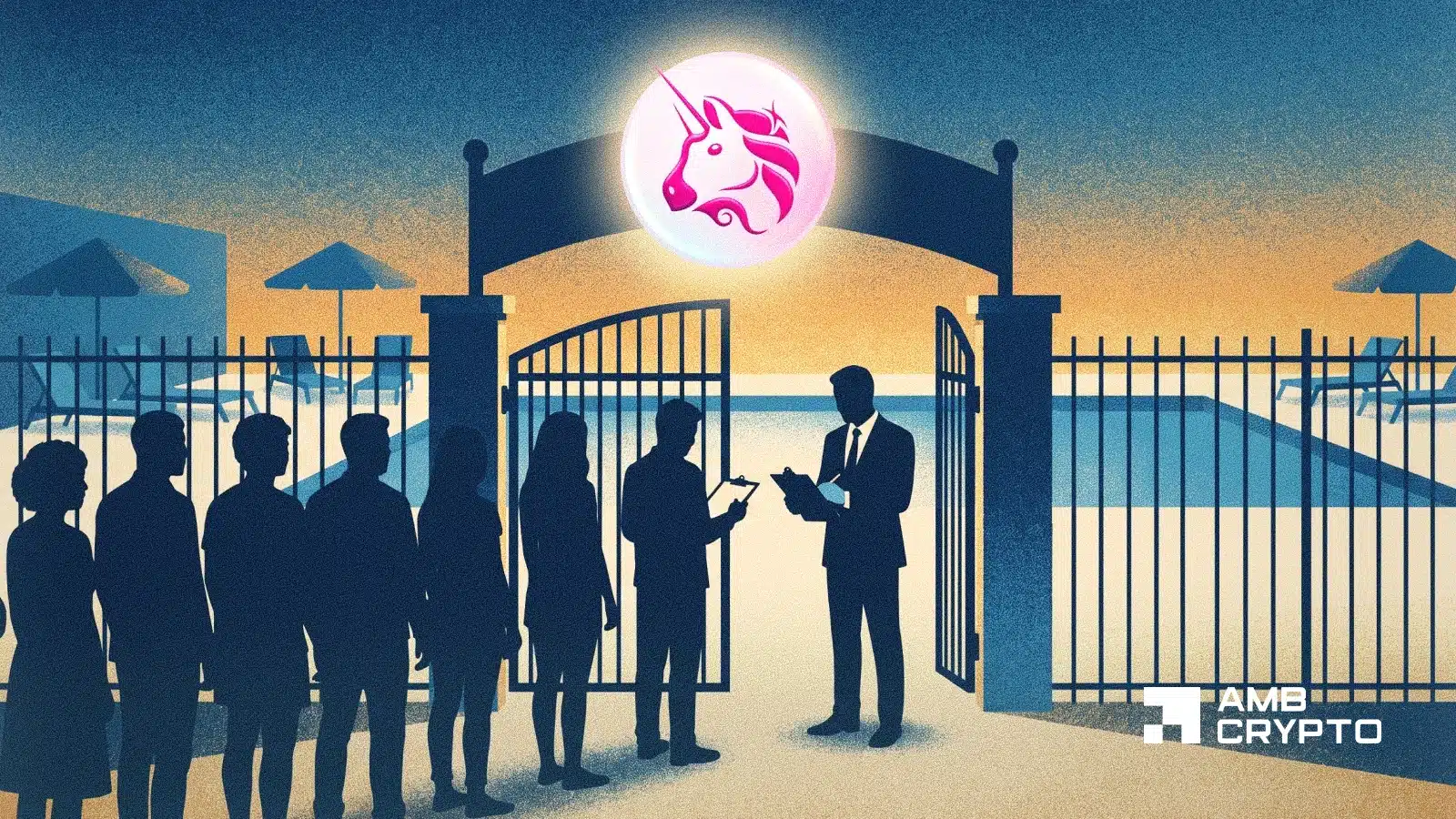
Decentralized exchange Uniswap has launched its first permissioned pools as part of its broader tokenization strategy. The pools are now available on Uniswap V4 through partnerships with tokenized asset issuers Securitize, Superstate, and Dowgo. Securitize, an SEC-registered transfer agent, has emerged as one of the leading platforms for issuing compliant digital asset securities, while Superstate focuses on bringing traditional investment products such as Treasury bill funds onchain.
Uniswap CEO Hayden Adams said the initiative is aimed at bringing "regulated assets onchain." The Uniswap protocol serves as infrastructure for all onchain trading, and certain regulated tokens and use cases require permissioned trading. Through a newly developed hook built on Uniswap V4's customizable architecture—which allows developers to insert tailored logic at key points in a pool's lifecycle—the protocol can now support these use cases more effectively.
The permissioned pools will restrict swaps and liquidity provision tied to tokenized stocks and ETFs to an allowlist of approved wallets. Any sanctioned entity will be automatically flagged and blocked. This approach introduces a degree of centralization within a portion of the DEX to meet key compliance requirements for trading regulated tokenized assets.
Uniswap Targets the $11 Trillion Tokenized Market
The tokenized asset market is currently valued at approximately $36 billion but is projected to reach $11 trillion within the next four years. Major financial institutions have accelerated their involvement in tokenization, with BlackRock launching its BUIDL tokenized fund on Ethereum and JPMorgan expanding blockchain-based settlement infrastructure, signaling growing institutional demand for onchain representations of traditional securities.
The U.S. Securities and Exchange Commission (SEC) maintains a technology-neutral stance on tokenized securities, meaning the same traditional disclosure requirements and monitoring obligations apply to onchain markets.
Attempts by the DeFi industry to secure exemptions or limited legal liability have faced strong opposition from traditional stock exchanges and operators such as Citadel Securities. Traditional finance (TradFi) participants argue that all legal responsibilities should apply to any entity handling tokenized securities, regardless of whether the platform is non-custodial.
The permissioned pools represent one approach by which DeFi platforms like Uniswap aim to participate in the tokenization boom while maintaining regulatory compliance. Other protocols, including Ondo Finance and Hashnote, have also pursued tokenized treasuries and money market instruments, intensifying competition for early position in the growing RWA segment. If Uniswap captures even a fraction of the anticipated tokenization growth, it could drive additional trading volume and revenue.
The protocol has activated several fee mechanisms across various versions and chains in recent months. To date, Uniswap has generated a cumulative $5.6 billion in fees, the majority of which has gone to liquidity providers. By contrast, the protocol's own revenue has remained comparatively low at approximately $27 million.
The push for protocol fees shared with liquidity providers could help generate additional revenue for the UNI token buyback program. Thus far in 2026, the project has burned an estimated 6 to 8 million UNI, averaging roughly 1 million UNI burned per month.
UNI Price Performance and Technical Outlook
Recent Uniswap activity on Robinhood Chain contributed to a July rally, with UNI surging nearly 61% from its June lows. At press time, the altcoin was valued at $3.84 and was trading above the 200-day Moving Average (MA), suggesting a bullish long-term market structure.
UNI could potentially extend its rally toward the Q2 peak level of $4.17, which would represent an additional 12% upside. However, this bullish setup would be invalidated if UNI falls below the 200-day MA, currently situated at $3.6. Such a decline could trigger a pullback toward the 50-day MA at $3.3.

