UN Warns Nuclear Test Resumption Could Spark Arms Race as Key Powers Refuse to Ratify Test Ban Treaty
Key Takeaways
- •The U.N. warned that any resumption of nuclear testing could trigger reciprocal tests and a renewed arms race.
- •Nine of the 44 states required to ratify the Comprehensive Nuclear Test Ban Treaty have yet to do so, preventing it from entering into force.
- •Tonga's ratification in the past month brought the total number of CTBT parties to 179.
- •More than 2,000 nuclear test explosions have occurred since 1945, but fewer than 12 have taken place in the past three decades.
- •Tina Cordova told the General Assembly that five generations of her New Mexico family suffered cancer after radiation exposure from the first atomic bomb test in 1945.
The United Nations warned Monday that any new nuclear test could trigger another arms race, as the United States, Russia, China and other nuclear-armed nations continue to refuse ratification of the treaty banning atomic testing.
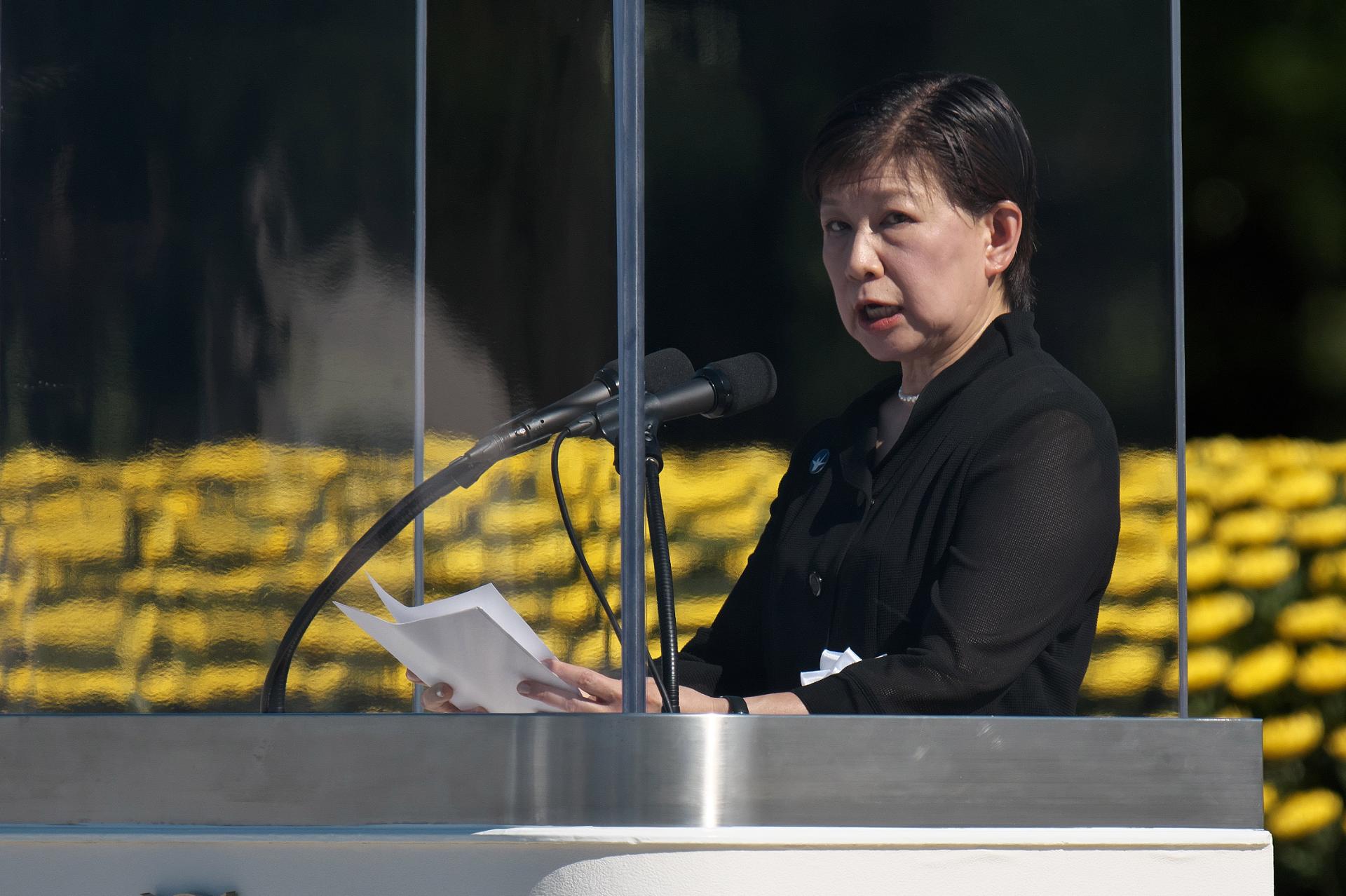
U.N. disarmament chief Izumi Nakamitsu told the U.N. General Assembly, convening to mark the International Day Against Nuclear Tests, that the meeting comes at a time of "deep geopolitical tension, growing division and diminishing trust," along with concern about a possible resumption of testing.
Late last year, the United States and Russia — holders of the world's largest nuclear arsenals — threatened to resume nuclear testing, setting off global alarm bells. President Donald Trump accused Russia and China of conducting tests, accusations both countries deny.
"Even contemplating such a course is dangerous," Nakamitsu warned. "Any resumption would erode decades of restraint, deepen mistrust and risk triggering reciprocal tests and an arms race. This must never become reality."
The Comprehensive Nuclear Test Ban Treaty, adopted in 1996, set a very high bar for entry into force: it required ratification by 44 specific countries — those with nuclear reactors or advanced nuclear programs at the time — and nine of them have yet to do so. The United States, China, Iran, Egypt and Israel have signed but not ratified the treaty. India, Pakistan and North Korea have neither signed nor ratified it. Russia signed and ratified the treaty, but revoked its ratification in 2023.
Although the treaty has never formally entered into force, it established a global verification regime, including a network of monitoring stations designed to detect nuclear explosions anywhere in the world, and the near-halt in testing over the past three decades is widely credited as a de facto norm even without full legal force.
Robert Floyd, head of the organization overseeing the treaty, known as the CTBT, told the General Assembly that Tonga's ratification last month brought the number of treaty parties to 179.
Since 1945, the planet has witnessed more than 2,000 nuclear test explosions, Floyd said, but fewer than 12 in the past three decades. He cautioned, however, that "the international scene is tense, full of mistrust," including over nuclear testing.
If nuclear testing resumes, Floyd warned, the result would be new technologically advanced nuclear arsenals, soaring risks of nuclear miscalculation, and "devastation from nuclear 'bad luck.'" The warning comes amid broader strains in arms control: key U.S.-Russia agreements limiting nuclear arms have lapsed or been suspended in recent years, leaving fewer formal constraints on the world's two largest arsenals.
The International Day Against Nuclear Tests was established to commemorate the Aug. 29, 1991, shutdown of the former Soviet nuclear test site at Semipalatinsk, now in Kazakhstan, where 456 nuclear tests took place, Floyd said. The day also puts a spotlight on victims of the atomic era.
Tina Cordova told the U.N. General Assembly how five generations of her family were exposed to radiation beginning with the test of the first atomic bomb on July 16, 1945, in New Mexico — and how every generation since has suffered from cancer.
"We were never warned before or after of the danger, so we lived our lives off the land as we always did," said Cordova, who co-founded the Tularosa Basin Downwinders Consortium 21 years ago to spotlight the negative health effects of radiation suffered by the people of New Mexico.
She stressed that her family was not alone. Nuclear testing took place around the world, she said, and people living in Guam, Tahiti, Kazakhstan and Aboriginal areas of Australia, as well as in Idaho, Utah, Arizona, Nevada, Colorado and Montana, were also exposed — including uranium workers and their families.
"We're the people that became the collateral damage to the development and testing of nuclear devices and were left to deal with the consequences on our own," Cordova said. "It is why we fight for acknowledgment and assistance."
