Umia Raises $6 Million to Build the Onchain Formation Platform for Token-Native Projects, Joined by Galaxy Ventures, DCG and Draper Associates
Key Takeaways
- •Umia raised $6 million through a seven-day auction of its $UMIA token on Base, closing at more than 3x its $2 million minimum.
- •The sale attracted ten funds and nearly 700 individual bidders, including Galaxy Ventures, DCG and Draper Associates, all bidding on identical terms without discounts.
- •Umia places a project's intellectual property, operating team and treasury in a single legal wrapper, with the raised funds held in a non-custodial treasury rather than a team wallet.
- •Umia's first decision market, live since September 17, used a futarchy model to allocate $4.77 million of treasury USDC to an Aave and Steakhouse lending strategy on Base.
- •The first external projects are expected to launch through Umia in Q4 2026, subject to onboarding and legal review.
Most tokens have no formal link to the business behind them: a project's intellectual property, revenue and treasury typically sit in a separate entity. Umia places all three in a single legal structure alongside the token, with treasury decisions made through onchain decision markets.
NEW YORK, Oct. 6, 2026 /PRNewswire/ — Umia, the onchain platform for launching, funding and governing projects, today announced that it has raised $6 million through the auction of $UMIA, the first token launched through its own system.
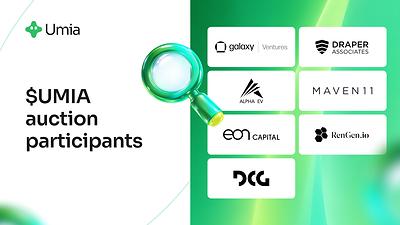
Ten funds and nearly 700 individual bidders took part in the seven-day sale, which ran on Base, the Ethereum layer-2 network incubated by Coinbase, from August 26 to September 2 and opened with a three-day early round for vetted funds and zkTLS-verified community members. The public round reached its cap seven minutes after opening on August 29, and the sale closed at more than 3x its $2 million minimum. Galaxy Ventures, DCG, Draper Associates, RenGen, Alpha EV, Maven 11 and Eon Capital were among the participating funds, all bidding on the same terms as every other participant, with no discounts. Uniform pricing speaks to a recurring criticism in crypto fundraising: discounted, preferential allocations for insiders.
"Serious teams have never had a way to launch a token that is actually tied to the project behind it, so we put our own token through our system first," said Francesco Mosterts, Co-Founder of Umia. "The result is a framework we believe will change how projects are funded, launched and governed."
Umia itself now operates under the same structure that every project on the platform will use. Its intellectual property, operating team and treasury sit within one legal wrapper, the funds raised went into a non-custodial treasury rather than a team wallet, and board-level decisions are routed through decision markets.
Those decisions are made through futarchy, a governance model proposed by economist Robin Hanson in 2000 under the slogan "vote on values, bet on beliefs": each proposal opens a conditional market per option, and participants trade on each option's expected impact. The option valued highest by the markets is the one executed.
Umia's first decision market went live on September 17, asking traders how to deploy $4.77 million of treasury USDC into lending protocols on Base. Three strategies competed against a do-nothing baseline, and the winning strategy — an allocation to Aave (one of decentralized finance's largest lending protocols) and Steakhouse — has since been executed.
"Onchain capital formation typically means choosing between a fair mechanism and a credible structure," said James Kibbie, Investor at Galaxy Ventures. "Umia's auction mechanism pairs the two: a clearing process that treats funds and individuals identically, and a legal and treasury framework that gives the token a defined relationship with the project behind it."
With the full stack now live, the first external projects are expected to launch through Umia in Q4 2026, subject to onboarding and legal review. Timelines are indicative and may change. Those launches would provide the first external cases of the model in operation, each pairing a legal wrapper, a non-custodial treasury and decision-market governance.
Umia is built by the team behind Chainbound, an Ethereum research and development lab with more than four years of experience designing core EVM infrastructure, including work with Flashbots and the Ethereum Foundation. Co-Founder and CEO Francesco Mosterts previously worked at Point72, and Co-Founder and CTO Nicolas Racchi previously built DeFi protocols and Ethereum infrastructure. The wider team also includes specialists in trading, governance, growth and operations.
About Umia
Umia is a full-stack platform for launching, funding and governing projects onchain. Each project launched through Umia operates within a single legal wrapper, with its intellectual property, operating team and treasury under one structure and board-level decisions delegated to onchain decision markets. $UMIA, Umia's own, was the first launched through the system, and Umia itself is incubated by Chainbound. Learn more at umia.finance, docs.umia.finance and x.com/umia_finance.
Media contact: Umia Media Relations, hello@umia.finance.
Source: Chainwire

