Ukrainian FPV Drones Strike Russian Tanks, Highlighting Evolving Drone Warfare in Eastern Ukraine
Key Takeaways
- •Ukrainian FPV drones have reportedly inflicted substantial damage on Russian tanks, demonstrating the expanding role of inexpensive UAVs in frontline combat.
- •The cost asymmetry between drones costing hundreds to thousands of dollars and modern tanks costing several million dollars each is driving a global reassessment of armored warfare doctrine.
- •Ukraine has scaled domestic drone production to hundreds of thousands of units annually through state-backed procurement and crowdfunding initiatives.
- •Both Ukrainian and Russian forces are engaged in an accelerating technological cycle of countermeasures, including electronic warfare jamming and fiber-optic-guided drone variants designed to resist interference.
- •Defense analysts worldwide regard the conflict as the first large-scale war in which commercially derived drones serve as a dominant battlefield technology.
- •Prediction-market data suggests an increased likelihood of Ukrainian military success, with potential implications for scenarios including the recapture of Crimea.
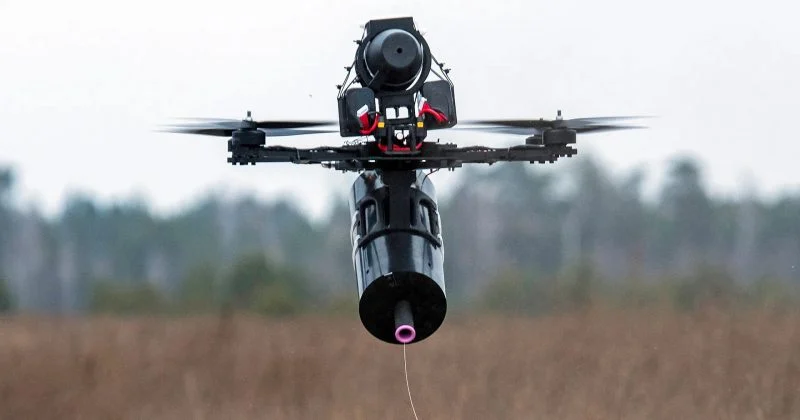
Ukrainian first-person-view (FPV) drones have been reported targeting Russian tanks over the past month, causing substantial damage, according to social media sources. The footage of these drone strikes, widely circulated online and described by viewers as brutal, underscores the rapidly expanding role of unmanned aerial vehicles (UAVs) in modern warfare, particularly in contested regions of eastern Ukraine such as Donetsk.
The deployment of FPV attack drones—relatively inexpensive, commercially derived systems guided by real-time video feeds—signals a strategic shift in the ongoing Russia-Ukraine conflict. Both sides have increasingly relied on drone technology for reconnaissance, targeting, and direct offensive operations since the full-scale invasion began in February 2022. However, Ukraine's reported success in using FPV drones against heavily armored Russian platforms points to a heightened capability to challenge fortified positions that would otherwise require more conventional and costly military assets. The conflict is widely regarded by defense analysts as the first large-scale war in which commercially derived drones are a dominant battlefield technology, and military establishments worldwide are actively studying it for lessons about the future of armed conflict.
The emergence of drone warfare as a defining feature of the eastern Ukraine battlefield has been recognized by military analysts worldwide. FPV drones, often modified consumer-grade quadcopters equipped with explosive payloads, have allowed Ukrainian forces to conduct precision strikes on individual vehicles and fortified emplacements at a fraction of the cost of traditional artillery or missile systems. The cost asymmetry is stark: individual FPV drones typically cost hundreds to a few thousand dollars, while modern main battle tanks cost several million dollars each, a dynamic that is driving a broader reassessment of armored warfare doctrine and defense procurement priorities among NATO and other militaries. Ukraine has scaled its domestic drone production through state-backed procurement programs and crowdfunding initiatives, with officials reporting output in the hundreds of thousands of units annually. Russia has similarly expanded its own drone programs, deploying both domestic and imported UAV models across the front lines.
Prediction-market data, as reported by the source, suggests an increased likelihood of Ukrainian military success, with potential implications for scenarios including the recapture of Crimea—the peninsula annexed by Russia in 2014. Market-based assessments of conflict outcomes have become a supplementary tool for observers seeking to gauge shifting probabilities in the protracted war.
Observers will be monitoring several key indicators going forward, including the frequency and effectiveness of FPV drone strikes against Russian defensive positions, any territorial gains by Ukrainian forces in eastern Ukraine, and the nature of Russian countermeasures. The evolution of electronic warfare tactics, drone-jamming technologies, and armor modifications will also be critical factors in assessing how battlefield dynamics continue to develop. Both sides are engaged in an accelerating technological cycle in which countermeasures such as signal jamming prompt rapid iteration, including the reported deployment of fiber-optic-guided drone variants designed to resist electronic interference.
The ongoing drone-driven transformation of the conflict carries implications for both tactical engagements and broader strategic calculations. As both Ukrainian and Russian forces adapt to the proliferation of UAV technology, the balance between offense and defense on the eastern front continues to shift in ways that may reshape expectations for the conflict's trajectory.
