Ukraine’s Caspian Sea Strike Links the Wars in Ukraine and Iran
Key Takeaways
- •Ukraine’s intelligence service said its drones struck an oil platform, a Russian missile boat, and cargo ships under international sanctions in the Caspian Sea on July 25.
- •Ukraine’s ambassador to Israel said the targeted vessel was carrying drone and missile components from Iran to Russia rather than civilian goods.
- •Iran said one sailor was killed, summoned Ukraine’s diplomat in protest, and warned that retaliation would follow.
- •Russia and Iran maintain close military ties, including past joint naval exercises and Iran’s supply of Shahed drones to Russia since 2022.
- •Analysts said the attack likely aimed to disrupt the transport route between Iran and Russia and may also have been intended to draw attention from the Trump administration.
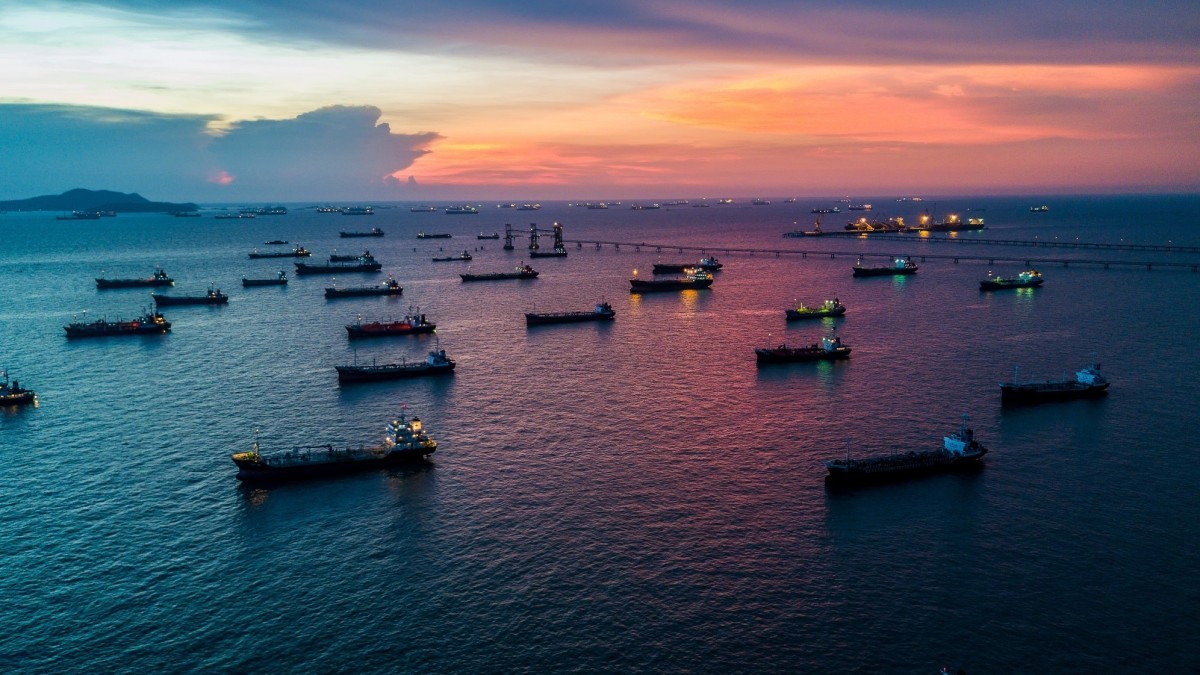
Ukraine's attack on an Iranian commercial vessel in the Caspian Sea marks the first direct link between the wars in Ukraine and Iran — the latter referring to the US-Israeli military campaign against Iranian targets that has drawn in Tehran's allies and heightened tensions across the Middle East.
While details of the July 25 incident remain unclear, Ukraine's intelligence agency, the SBU, said its drones hit an oil platform in the Caspian Sea, along with a Russian missile boat and "cargo ships that are under international sanctions."
President Volodymyr Zelensky said on Saturday that Ukrainian forces had achieved "very good results" in long-range strikes in the Caspian Sea, including against vessels used to transport military cargo linked to Iran.
The BBC reported that Ukraine's ambassador to Israel, Yevgen Korniychuk, said the vessel had been carrying components for drones and missiles from Iran to Russia, not civilian cargo. In an interview with Israel's N12, he said Ukraine and Israel were confronting the same "axis of evil" on different fronts.
Iranian officials reacted angrily, saying one sailor was killed and vowing retaliation. According to Radio Free Europe, Ukraine's top diplomat in Iran was summoned to the Foreign Ministry in protest. Iranian Foreign Minister Abbas Araqchi said in a post on X, "Zelenskyy has attacked an Iranian commercial vessel, killing a sailor," calling it "a blatant United Nations Charter violation done at Israel's behest to drag Europe into its war."
Ebrahim Azizi, who heads the national security committee in Iran's parliament, said in another post that Kyiv would soon learn that Tehran "leaves no action unanswered." The Kremlin also weighed in, with spokesman Dmitry Peskov telling reporters that the Ukrainian attack should be seen as an attack on Iran itself.
Russia-Iran ties
Iran and Russia have developed a close military relationship. The two US adversaries conducted joint naval exercises off southern Iran on February 19.
The BBC noted that Iran began supplying Russia with Shahed drones in 2022, when the war between Russia and Ukraine began. Moscow has since modified the drones and used them to strike Ukrainian cities. The low-cost, loitering munitions have become one of Russia's most frequently deployed weapons against Ukrainian civilian infrastructure and energy grids, with individual attack waves numbering in the hundreds.
Zelensky told Sky News over the weekend that Tehran was planning to send ballistic missiles to Russia for use in the war. The report suggested that short-range missiles were being supplied from 2024. Related: Taiwan Halts $800 Million in Spot LNG Buys From Papua New Guinea
This is not the first time Ukraine has hit targets in the Caspian Sea, which forms a strategically important supply route between Russia and Iran. The Caspian is the world's largest enclosed body of water, bordered by Russia, Iran, Kazakhstan, Azerbaijan, and Turkmenistan, and because it has no outlet to the open ocean, it offers Moscow and Tehran a transport corridor largely insulated from Western naval interdiction.
The BBC said Ukraine has been relentlessly targeting Russia's shadow fleet — aging tankers operating under opaque ownership and flags of convenience to circumvent Western sanctions on Russian oil exports — in an effort to choke off a major source of revenue for the Kremlin. Radio Free Europe said at least 12 Russian warships have been struck during the Russian invasion, and added that Israel has hit Iranian targets on the Caspian in conjunction with US forces.
On March 18, about three weeks after the start of the US-Israeli campaign, Israeli jets struck the port of Bandar Anzali, sinking an unknown number of naval ships. Experts said it was possible Ukrainian forces acted this weekend with the help of Israeli intelligence.
Wider implications
Ukraine is dismissing Iran's threat of retaliation. Foreign Minister Andrii Sybiha wrote on X: "The regime in Tehran is a direct accomplice to Russian aggression against Ukraine, fuelling Moscow's criminal war with weapons that have killed Ukrainians since 2022."
Sybiha also accused Iran of trying to shift attention away from Russia's attacks on ships carrying grain from Ukrainian ports, which he said were threatening global food security, according to the BBC.
The Kyiv Post reported Zelensky as saying: "We must be careful. We must do everything to ensure that under no circumstances do we open a new front, but we must be honest. The Iranians and the North Koreans have already attacked us."
Zelensky said he hoped the two countries would not expand their involvement, but warned that Ukraine must prepare for any development. "We have to be ready for everything. Just be ready and understand that we cannot trust these people," he said.
The president said both countries had supplied Russia with weapons without any preceding Ukrainian escalation against them. "At the very beginning, without any statements or any escalation on our part, the Iranians provided weapons, the North Koreans provided weapons – drones, missiles and 155mm artillery shells," Zelensky said.
Experts cited by Radio Free Europe said it remains unclear what Iran could do to retaliate.
"Tehran is clearly angry, but it has very limited ability to project military power against Ukraine," said Saeid Golkar, an expert on Iran's military and a professor at the University of Tennessee at Chattanooga. "If it decides to respond, I'd expect something indirect such as cyber operations, intelligence activity, support for Russian operations, or possibly targeting Ukrainian interests abroad rather than a conventional military strike."
According to Olha Polischuk, research manager for Eastern Europe at ACLED (Armed Conflict Location & Event Data), "Ukraine's attack on an Iranian vessel is less about opening a new front against Tehran and more about disrupting supply routes between Iran and Russia."
She said the attack comes amid a broader expansion of Ukraine's campaign against networks supporting Russia's war effort. Since May, Ukraine has increasingly targeted Russia's oil infrastructure and maritime assets, including an ongoing wave of drone strikes in July that hit nearly 200 Russian and Russian-linked tankers, cargo ships and tugboats across the Sea of Azov and Black Sea.
"The Iranian vessel can be seen as an extension of that strategy," Polischuk said. "Iran remains an important military partner for Moscow, while the Caspian Sea provides a direct transport route between the two countries. Targeting that route allows Kyiv to put further pressure on Russia's supply networks beyond the traditional battlefield."
Signal to Washington
Polischuk also argued that the timing of the attack was not a coincidence.
"With the US now intensifying its campaign against Iran, the strike comes during a renewed period of alignment between Washington and Kyiv. It serves Ukraine's immediate interests against Russia, while also demonstrating that Kyiv and Washington increasingly have a shared adversary in Tehran."
Radio Free Europe cited Luke Coffey, a Russia expert at the Hudson Institute, a Washington think tank, as saying the attack was likely intended to get the attention of the Trump administration.
Zelensky was scheduled to meet President Trump at the White House on Tuesday. The publication said Zelensky was expected to raise earlier Ukrainian claims that Russia has been supplying Iran with satellite images and other intelligence, helping Iran target US facilities in the Gulf region, including CIA stations.
A Western defence source corroborated the Ukrainian president's claim, telling The Telegraph that there had been a notable improvement in Iran's precision strikes and target selection since a ceasefire with the US broke down earlier this month.
The publication noted that despite Russia's alleged support for Iran, Trump has been reluctant to criticize Russian President Vladimir Putin.
Radio Free Europe also cited Nicole Grajewski, a Russia-Iran expert at Sciences Po, who said: "The Americans really don't, for some reason, want to show that the Russians are involved in the [Iran] war. So in that sense, yeah, it complicates things because the Ukrainians are coming out and saying that there's direct Russian involvement."
"The Trump administration wants to compartmentalize the two wars," she said.
By Andrew Topf for Oilprice.com
More Top Reads From Oilprice.com

