Iran Reports Ukrainian Drone Strike Kills Sailor Aboard Caspian Sea Vessel
Key Takeaways
- •Iran publicly acknowledged that a Ukrainian drone strike killed a sailor aboard a vessel in the Caspian Sea, despite Tehran's longstanding denial of supplying weapons to Russia.
- •The July 25 strikes targeted two sanctioned cargo ships — Port Olya-2 and Begey — along with a Russian missile boat, all reportedly involved in ferrying Iranian military supplies including drone components and ammunition.
- •Ukraine's ability to conduct long-range drone strikes in the Caspian Sea marks a substantial expansion of its operational reach into a corridor previously considered a safe haven for Russian and Iranian shipping.
- •Ukrainian strikes against Russian assets in the Caspian region have occurred throughout 2026, indicating a sustained and deliberate campaign to disrupt the military supply chain between Iran and Russia.
- •Military operations in the Caspian Sea introduce elevated insurance risks and could complicate hydrocarbon export logistics for Central Asian producers that depend on the waterway for energy transit.
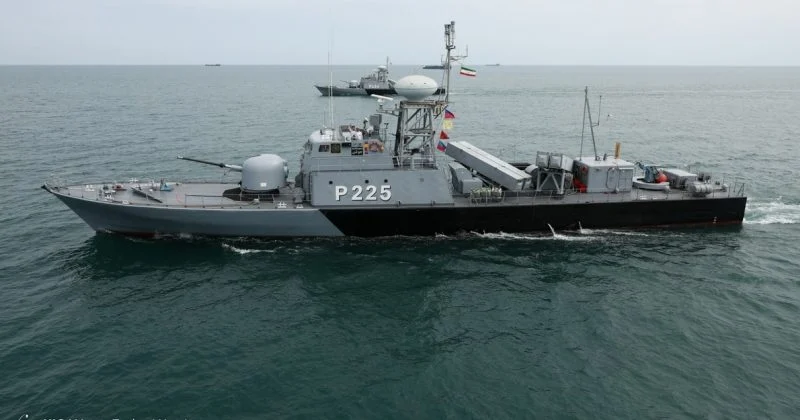
Iran has reported that a Ukrainian drone strike on a vessel in the Caspian Sea killed a sailor, marking a notable escalation in the ongoing Russia-Ukraine conflict as it extends into new theaters of operation. The incident forms part of a broader Ukrainian military campaign targeting ships believed to be transporting Iranian military supplies to Russia. Iran's public acknowledgment of a casualty is notable given that Tehran has consistently denied supplying weapons to Russia despite extensive documentation of Iranian-made Shahed drones deployed across Ukrainian targets.
Details of the Caspian Sea Strike
On July 25, Ukrainian President Volodymyr Zelenskyy announced long-range drone strikes against Russian naval assets and cargo vessels operating in the Caspian Sea. The operation struck multiple targets, including two sanctioned cargo ships — Port Olya-2 and Begey — as well as a Project 12418 Molniya-class missile boat.
According to reports, the targeted vessels had been used to ferry Iranian military supplies to Russia, including ammunition, artillery shells, body armor, helmets, and components for Shahed drones. These Iranian-manufactured drones have been deployed extensively by Russian forces against Ukrainian civilian infrastructure over the course of the conflict, and disrupting their supply chain has been a stated priority of Ukrainian long-range strike operations.
The Caspian Sea had previously been regarded as a comparatively secure zone for Russian naval operations. It is landlocked, geographically distant from Ukraine's borders, and bordered by five nations — Russia, Iran, Kazakhstan, Azerbaijan, and Turkmenistan — that have largely remained outside the conflict. The body of water is not patrolled by Western naval forces, making it one of the few maritime corridors where Russian and Iranian shipping can operate without direct interdiction risk from NATO-aligned navies. Ukraine's demonstrated ability to reach the Caspian with long-range drones signals a substantial expansion of Kyiv's operational range and reduces the sanctuary value of the route.
The Supply Route Under Pressure
As Western sanctions have increasingly restricted conventional shipping lanes, Russia and Iran have turned to Caspian Sea ports to facilitate the movement of military cargo between the two countries. The corridor forms part of the broader International North-South Transport Corridor, a multi-modal route linking Indian Ocean ports through Iran and across the Caspian to southern Russia. Ammunition and drone components transiting this corridor directly support Russia's sustained military operations inside Ukraine.
Ukrainian strikes on Russian assets in the Caspian region have occurred throughout 2026, indicating a deliberate, ongoing campaign rather than an isolated operation. The fact that both Port Olya-2 and Begey were already under international sanctions yet continued to operate raises questions about sanctions enforcement, particularly given the limited inspection regimes available in international waters not covered by conventional coast guard jurisdiction.
Broader Regional and Economic Implications
The Caspian Sea region holds significant oil and gas production and transit capacity. Kazakhstan, Turkmenistan, and Azerbaijan all depend on Caspian infrastructure to export hydrocarbons, and several active pipeline and shipping routes traverse waters near the struck areas. Military operations in these waters, even when directed at specific vessels, introduce insurance risk premiums for all maritime shipping in the area and could complicate energy export logistics for Central Asian producers who rely on stable transit through the Caspian.
Iran's involvement adds a further layer of complexity. Tehran already operates under extensive sanctions, and its deepening military cooperation with Russia has drawn sustained attention from Western policymakers. Any resulting additional sanctions on Iranian entities or Caspian shipping networks could further constrain regional oil supply. The strike also underscores the degree to which the Russia-Ukraine conflict has drawn Iran into a direct logistical role, linking the security dynamics of Eastern Europe and the broader Caspian and Persian Gulf regions.

