Ukraine Faces Growing Air Defense Crisis as Patriot Interceptor Supplies Dwindle
Key Takeaways
- •Ukraine failed to intercept a single Russian missile during a large-scale overnight attack, exposing critical gaps in its air-defense capabilities as interceptor supplies dwindle.
- •A CSIS report estimates that US Patriot PAC-3 MSE interceptor stocks have fallen from over 2,300 to roughly 800, severely limiting Washington's ability to supply additional missiles to Ukraine.
- •Ukraine has sent formal requests to nearly 40 countries seeking temporary transfers of Patriot interceptors, offering to replace them later with missiles from future production.
- •The Netherlands has stated it has already donated all available Patriot missiles from its stockpiles, while Germany and Romania declined to comment on potential additional supplies.
- •Ukrainian military intelligence sources indicate a North Korean missile unit is deploying to western Russia equipped with up to 120 ballistic missiles and six launchers for potential attacks on Ukraine.
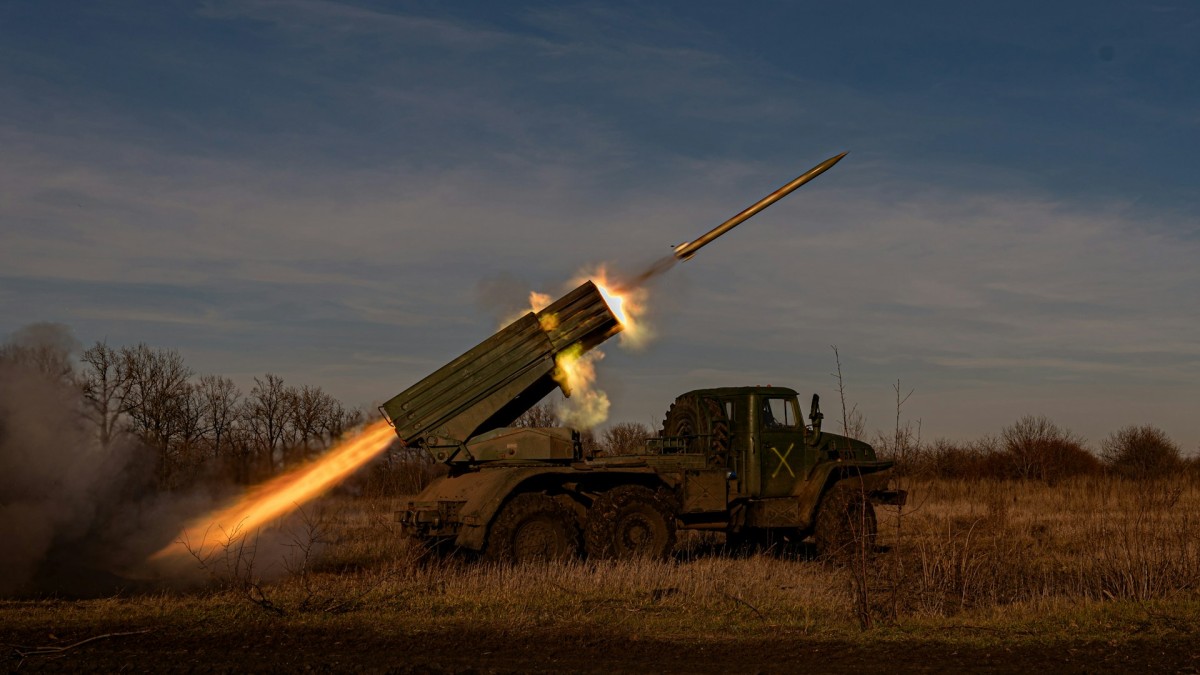
Ukraine's failure to intercept a single Russian missile during a large-scale overnight attack this week has intensified concerns over Kyiv's dwindling supply of air-defense interceptors, as Moscow escalates ballistic missile strikes against the capital and other regions.
Ukrainian President Volodymyr Zelenskyy has warned that deliveries of anti-ballistic interceptor missiles from partner countries have dropped sharply, leaving Ukraine increasingly vulnerable to deadly Russian attacks launched with growing frequency. Following an August 2 meeting with Ukraine's military leadership on protecting critical infrastructure, Zelenskyy said Ukraine had received only a third as many air-defense interceptors this year compared to the same period in 2025.
"Our partners have the missiles. What is needed are the necessary political decisions on deliveries and on accelerating production, including localization in Ukraine," Zelenskyy said.
Latvian Foreign Minister Baiba Braze, who was in Kyiv during the most recent attack on August 5, condemned Russia's latest strikes, which lit up the night sky with massive explosions.
"It was a vile attack on Ukrainians. I was hiding in the shelter along with a number of them and admiring their resilience. Russia is a terrorist state and needs to be contained," she wrote on X.
Ukrainian Foreign Minister Andrii Sybiha also urged allies not to slow military assistance. Speaking on August 5, he said: "Russian strikes take no summer vacation; support for Ukraine and pressure on the aggressor must not pause, either. Every interceptor counts. They are life-saving tools."
US Stockpile Questions
Patriot interceptor missiles remain Ukraine's most effective defense against Russian ballistic missiles — the only Western system in Ukraine's arsenal specifically designed to track and destroy incoming ballistic missiles traveling at hypersonic speeds. But questions are mounting over how many additional interceptors Washington can realistically provide.
Last week, the Center for Strategic and International Studies (CSIS) estimated that the United States has used more than half of its Patriot PAC-3 MSE and THAAD interceptor inventories during its military operations against Iran this year. The report estimated that US stocks of Patriot PAC-3 MSE interceptors have fallen from more than 2,300 before the conflict, which began in February, to roughly 800, while THAAD interceptor inventories have been nearly halved.
Mark Cancian, a senior adviser with CSIS and co-author of the report, told RFE/RL that the shortages leave Washington with little flexibility to supply Ukraine.
"Ukraine will not be able to expect many interceptors -- or any interceptors -- from the United States for quite a while," Cancian said. "The US has used extensively its own inventories.... We're down to about 800 or 900 [Patriot interceptors]. The war planners don't want to go below that, so it would be very difficult to provide any of those or any new production to Ukraine."
Cancian said Ukraine may instead have to seek Soviet-designed S-300 missiles from countries that still operate the system and intensify efforts to destroy Russian missile launchers before they can fire.
His assessment contrasts with public assurances from the Trump administration. CNN, citing unnamed officials, reported on August 4 that Patriot inventories had fallen to "dangerously low" levels. Defense Secretary Pete Hegseth rejected that report, calling it "fake news."
Just days earlier, the Pentagon announced agreements with Lockheed Martin and Northrop Grumman to expand production of Patriot PAC-3 and THAAD interceptors. US President Donald Trump insisted early on August 6 that the United States has "massive" amounts of munitions. Trump had previously pledged to allow Ukraine to manufacture Patriot missile interceptors, only to appear to backtrack on that promise days later.
"Additionally, large amounts are being manufactured and shipped to the US as needed. Defense companies are building the largest number of plants and factories in our country's history," Trump wrote on his Truth Social platform. "The 'leakers' of these treasonous statements are being hunted down. Long term jail sentences will be sought!" he added.
However, US administration officials who spoke to RFE/RL on condition of anonymity said the CSIS estimates broadly reflect the current state of American interceptor inventories.
Cancian said rebuilding those stockpiles will take years despite efforts to accelerate production. "The United States is expanding production," he said. "Before the war in Ukraine, it was producing about 300 Patriot interceptors a year. Now we're up to about 600. We're trying to get to 2,000 a year, but that will take until at least 2030."
Even then, he said, Ukraine will have to compete with other US partners for new production. "The Gulf states have used a lot of their Patriots [in the current Gulf conflict]. They want their inventories replenished, so there'll be a lot of competition for the new production. It may be four or five years before supply meets demand."
Risks For Ukraine
The prospect of fewer US interceptors raises immediate questions for Ukraine as Russia steps up missile attacks ahead of another winter, when Moscow has historically intensified strikes on energy and heating infrastructure to maximize civilian hardship. Adding to the urgency, several media reports, including from Reuters, quoted Ukrainian military intelligence sources as saying a North Korean missile unit had begun deploying to western Russia and could be equipped with up to 120 ballistic missiles and six launchers for attacks on Ukraine.
Kervin Aucoin, a US Army veteran and former military intelligence analyst, said reduced US inventories will inevitably affect Kyiv. "It's not going to be none, but it will be far less than what Ukraine was expecting," Aucoin told RFE/RL.
Still, he argued that Ukraine has repeatedly adapted to changing battlefield conditions. "Ukraine is doing a great job…. If they can't rely on the US, unfortunately, they will rely on their own resilience, and they will continue to succeed on the battlefield," he said.
Over time, he said, Ukraine may increasingly turn toward cheaper technologies, including drone-based air defense and laser systems, rather than relying primarily on costly Patriot interceptors.
Republican Senator Rick Scott of Florida, who chairs the Senate Armed Services Subcommittee, told RFE/RL he believes the White House remains committed to supporting Ukraine. "When I talk to people in the White House, they are absolutely committed to supporting Ukraine. I'm confident they will provide Ukraine with the weapons it needs when it needs them."
Cancian also warned that depleted US inventories could influence how America's adversaries assess Washington's military readiness. "China is what the United States is most worried about," he told RFE/RL. "Using so many interceptors has created a window of vulnerability, and China might try to take advantage of that."
He added that Iran could reach similar conclusions: "Iran is certainly looking at this and thinking that the United States might be unwilling to recommence hostilities because of these growing shortages."
Ukraine Looks To Europe
With US supplies under pressure, Ukraine is increasingly looking to European allies. US Ambassador to NATO Matthew Whitaker recently said Washington is exploring joint production of Patriot interceptors with Ukraine and European partners. He stressed, though, that the immediate priority is to provide Ukraine with the air defense capabilities it needs to survive another winter, either from allies with excess interceptors or through increased production at US factories.
Kyiv has already begun that effort. In early July, then-Defense Minister Mykhaylo Fedorov sent requests to nearly 40 countries seeking the temporary transfer of Patriot interceptors from existing inventories, proposing to replace them later with missiles from future production. Ukraine has not disclosed which countries received the requests.
Within the European Union, a key provider of military assistance to Ukraine, seven countries operate Patriot systems: Germany, Poland, the Netherlands, Sweden, Greece, Spain, and Romania. Many of these allies have been replenishing their own depleted stocks after transferring significant quantities of arms to Ukraine since 2022. RFE/RL asked those governments on August 5 whether they would consider supplying additional interceptors following Ukraine's failure to intercept any Russian missiles during the overnight attack.
Germany declined to comment on operational matters, as did Romania, which called it a "matter of national security."
Sweden pointed to its contribution of an additional $108 million to the PURL initiative, bringing its total support for the program to $535 million.
The Netherlands has previously said it has already donated everything it could spare from its own Patriot inventories, and is providing Ukraine with around 3 billion euros per year in military aid until at least 2029. "We have already delivered Patriots missiles and are currently unable to deliver more missiles from our existing stockpiles. At the same time, we are open to exploring any option that helps Ukraine protect its skies and people. Air defense has been a strong focus point of our military support and will continue to be so in the future," Netherlands Defense Ministry spokesman Kees Bakhuis told RFE/RL in a written statement on August 6.
Poland's Defense Ministry said all support requests from Ukraine are reviewed by the Polish Armed Forces and organizational units of the ministry as part of the country's comprehensive support — from the donation of military equipment, to the training of Ukrainian soldiers, to extensive logistical and medical support — to Ukraine's Armed Forces.
RFE/RL asked Ukraine's ambassador to NATO, Alyona Hetmanchuk, about the state of negotiations with partner countries, but her response was not available as of publication.
By RFE/RL

