UK Sanctions Three Crypto Exchanges Over Alleged Russia Sanctions Evasion
Key Takeaways
- •The United Kingdom has sanctioned three cryptocurrency exchanges accused of helping Russia evade financial restrictions, though the exchanges stand accused rather than convicted.
- •UK financial sanctions are enforced by HM Treasury's Office of Financial Sanctions Implementation, and dealing with a designated entity without a licence can lead to civil or criminal penalties.
- •Users holding accounts on the sanctioned exchanges may face frozen accounts, blocked withdrawals, or complete service disruptions in affected jurisdictions.
- •Because banks and payment processors worldwide screen counterparties against UK and allied sanctions lists, the designations could affect the exchanges' business relationships well beyond British jurisdiction.
- •The move mirrors similar actions by the United States, which has sanctioned crypto platforms including the Iranian exchange BitBank over comparable evasion allegations.
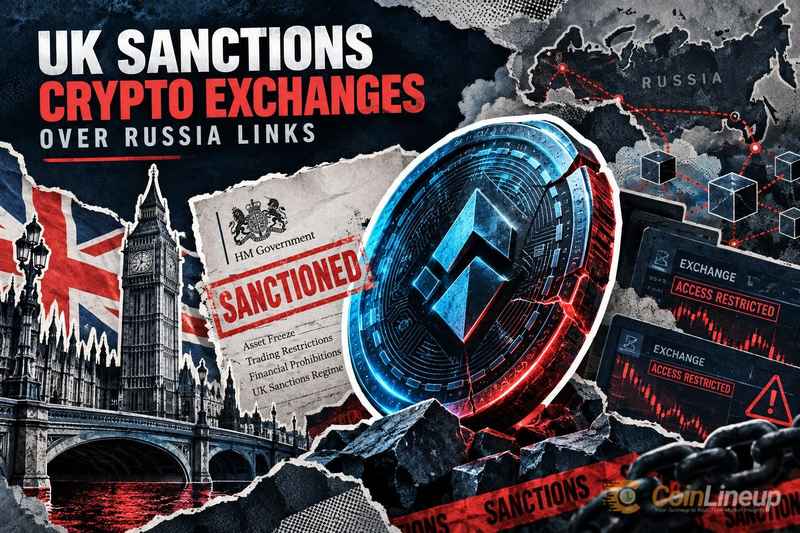
The United Kingdom has imposed sanctions on three cryptocurrency exchanges, accusing the platforms of helping Russia sidestep financial restrictions. The move targets the exchanges directly, cutting them off from British financial systems and raising compliance questions for anyone who uses them.
What the UK Sanctioned and Why
A financial sanction is an official restriction placed by a government on a person, company, or service. In practice, it typically blocks the designated entity from accessing the sanctioning country's financial system, prevents UK businesses from dealing with it, and can freeze any assets held within UK jurisdiction. UK financial sanctions are administered and enforced by HM Treasury's Office of Financial Sanctions Implementation (OFSI), and dealing with a designated entity without a licence from OFSI can expose a business to civil or criminal penalties.
The UK named the three exchanges in its latest sanctions package, alleging that they helped Russia evade existing restrictions. The word "alleged" matters here: a sanction is a government enforcement action, not a court verdict. The exchanges stand accused, not convicted.
This is not the first time a government has used sanctions to target crypto platforms suspected of facilitating evasion. The United States has taken similar steps against other exchanges, including sanctioning the Iranian crypto exchange BitBank over comparable allegations.
How Crypto Exchanges Could Help Evade Restrictions
A crypto exchange is a service that lets people buy, sell, or move digital currencies such as Bitcoin or Ethereum. Functionally, it works much like a payment gateway, processing financial transfers between parties.
When a government places restrictions on a country, the goal is to limit that country's access to international finance. An exchange that ignores those restrictions and continues processing transfers for sanctioned parties can act as a back door around the rules. That is the core of the allegation against the three platforms.
Russia has been subject to sweeping Western financial restrictions since 2022. Regulators in multiple countries have subsequently raised concerns about cryptocurrency being used to move money outside those controls. Russia's own crypto regulations have evolved in this environment, though the market remains tightly controlled.
Authorities have also been watching how exchanges handle foreign stablecoins and cross-border transfers. A US Treasury proposal has already pushed American exchanges to audit or delist foreign stablecoins that could be used in a similar manner.
What the Sanctions Mean for Crypto Users
Anyone holding an account on one of the three sanctioned exchanges could face disruption. Sanctions enforcement can lead to accounts being frozen, withdrawals being blocked, or services being cut off entirely for users in affected jurisdictions.
The measures are targeted, not blanket. Sanctions on three specific exchanges do not mean all cryptocurrency is sanctioned, and they do not affect users of other platforms. That said, designations can have effects beyond the sanctioning government itself: banks, payment processors, and partner platforms around the world screen counterparties against UK and allied sanctions lists as part of routine compliance, so a listing can shape an exchange's broader business relationships well outside British jurisdiction.
Users who are unsure whether their is affected should check the official UK government sanctions list and the exchange's own compliance announcements, rather than relying on social media for confirmation. Because sanctions lists are living documents — entities can seek a review, and governments periodically add, amend, or lift designations — checking official sources directly is the safest approach.
The action fits a broader pattern of governments using sanctions as a tool against crypto platforms suspected of enabling evasion. The United States has expanded its own crypto sanctions against Iran over similar concerns. For everyday users, the practical lesson is straightforward: know where your exchange is registered and whether it operates under a recognized regulatory framework.
Disclaimer: This article is for informational purposes only and does not constitute financial or investment advice. Cryptocurrency and digital asset markets carry significant risk. Always do your own research before making decisions.

