UK and Nigeria Deepen Cooperation on AI Governance, Standards and Digital Transformation
Key Takeaways
- •The British Standards Institution delivered an Executive Workshop on AI Governance and Standards in partnership with Nigeria's NCAIR under the UK Government's Digital Access Programme.
- •Senior Nigerian public sector leaders were trained on international standards including ISO/IEC 42001 for AI management systems and ISO/IEC 23894 for AI risk management.
- •Grace Bell of the British High Commission affirmed continued UK backing for Nigeria's digital transformation, describing standards as strategic enablers of innovation, investment, trade and public trust.
- •Dr. Olubunmi Ajala, National Coordinator of NCAIR, said the collaboration has built genuine sovereign institutional capacity and called for a permanent cross-government Community of Practice.
- •BSI also engaged NESREA and the FCDO Climate Finance team to assess e-waste management models in Nigeria and explore deeper cooperation on digital trade standards.
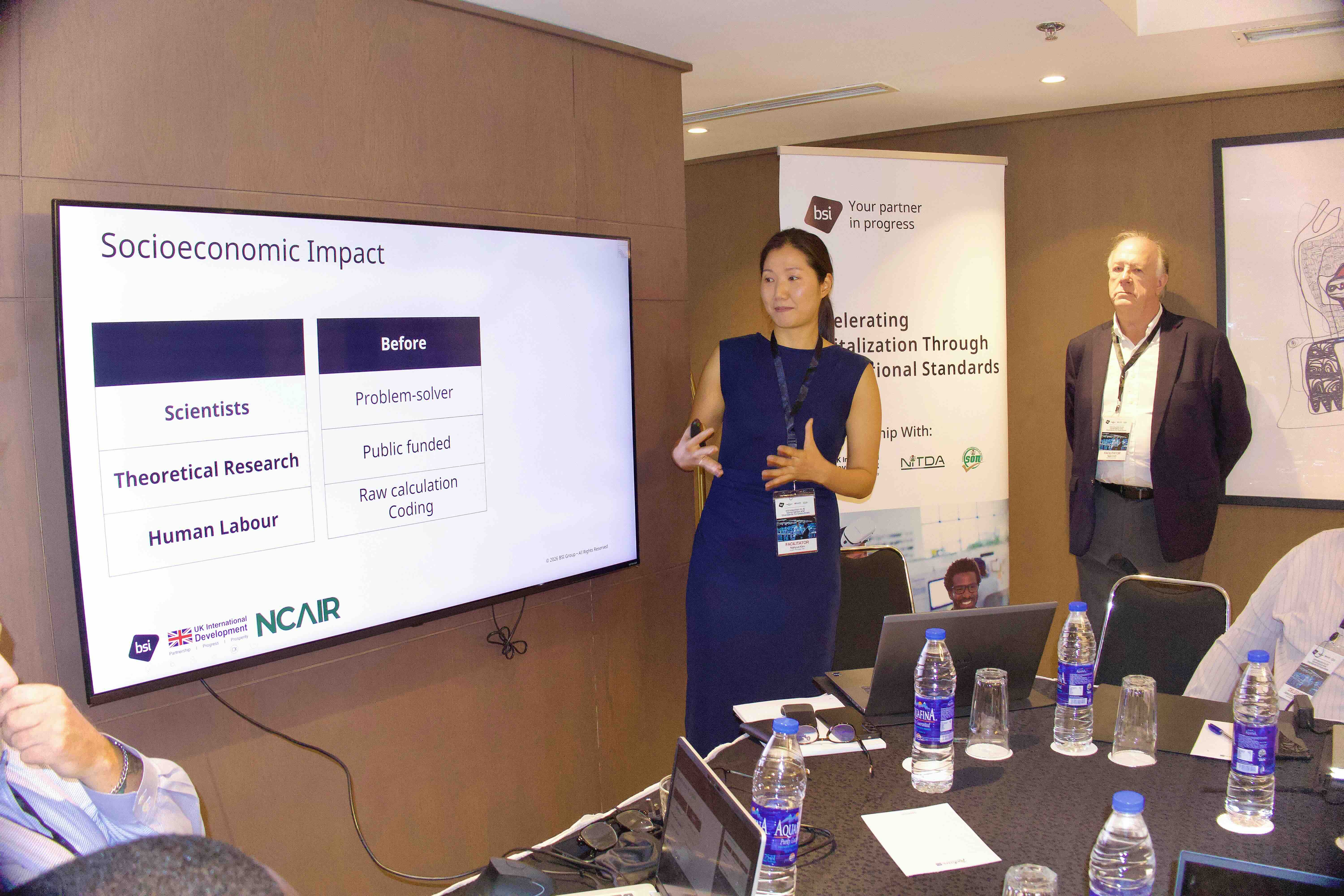
The British High Commission in Nigeria has reaffirmed the United Kingdom's commitment to supporting Nigeria's digital transformation agenda, following a series of events and engagements held during a recent visit to the country by the British Standards Institution (BSI), the UK's national standards body.
At the centre of the visit was the delivery of an Executive Workshop on Artificial Intelligence Governance and Standards, run in partnership with the National Centre for Artificial Intelligence and Robotics (NCAIR), Nigeria's federal centre for research in artificial intelligence and robotics, under the UK Government's Digital Access Programme, a Foreign, Commonwealth & Development Office (FCDO) initiative focused on digital inclusion. The four-day workshop brought together senior government leaders, regulators and technology practitioners to strengthen Nigeria's capacity for responsible AI adoption, governance and oversight. Sessions explored practical approaches to implementing internationally recognised standards for AI governance, risk management, assurance and accountability, in support of Nigeria's ambition to become a leading AI economy in Africa.
Built on years of standards cooperation
The workshop builds on several years of collaboration between BSI and Nigerian government institutions to promote standards as a catalyst for economic growth and digital transformation. Working closely with the National Information Technology Development Agency (NITDA), the Standard Organisation of Nigeria (SON), the Nigeria Data Protection Council (NDPC), NCAIR and other stakeholders, BSI has supported capacity building, policy engagement and awareness raising on the application of international standards to emerging digital technologies.
As Nigeria accelerates its adoption of emerging technologies, standards are increasingly recognised as a critical foundation for innovation, providing common frameworks that build trust, strengthen cybersecurity, enhance data governance, improve interoperability and support responsible technology deployment. Nigeria's ambition to become a leading AI economy is also anchored in a growing domestic policy agenda, including a National Artificial Intelligence Strategy spearheaded by the Federal Ministry of Communications, Innovation and Digital Economy (FMCIDE) and NITDA. Through the partnership, the UK and Nigeria are working to promote international best practice in areas including artificial intelligence, digital trust, data governance, cybersecurity, smart infrastructure, digital public services and electronic waste management.
Training on leading AI standards
The Executive Workshop on AI Governance and Standards marked another milestone in this collaboration. Over three days of intensive training, senior public sector leaders examined how international standards can help organisations manage AI risks, improve institutional oversight and create enabling environments for innovation. Participants studied leading standards, including ISO/IEC 42001 for AI Management Systems and ISO/IEC 23894 for AI Risk Management, alongside other emerging frameworks designed to support safe and trustworthy AI deployment. ISO/IEC 42001, published in late 2023, is the first international standard for AI management systems, setting out requirements for establishing, implementing, maintaining and continually improving an AI framework, while ISO/IEC 23894 provides guidance for managing risks related to artificial intelligence.
The programme culminated in a high-level close-out reception in Abuja, which convened policymakers, regulators, standards experts, industry representatives and development partners to discuss the future of AI governance and standards-led innovation in Nigeria.
UK pledges continued support
Speaking at the event, Grace Bell, First Secretary for Economic Partnerships and Digital at the British High Commission, highlighted the strategic importance of standards in unlocking the benefits of emerging technologies.
"Artificial Intelligence presents enormous opportunities for economic growth, innovation and social development. However, realising these benefits requires the right governance frameworks, strong institutions and trusted standards that can underpin safe, secure and responsible adoption," she said.
"The UK is proud to support Nigeria's digital transformation journey. Our collaboration with BSI, NITDA, SON, and the Federal Ministry of Communications, Innovation and Digital Economy (FMCIDE) reflects a shared belief that standards are not simply technical tools; they are strategic enablers of innovation, investment, trade and public trust. By aligning around internationally recognised standards, we can help create the conditions for sustainable digital growth and unlock greater opportunities for businesses, governments and citizens."
Bell added that the UK-Nigeria partnership on standards has evolved into a broad platform for cooperation on issues ranging from trust and assurance in digital trade, AI governance and digital public infrastructure to cybersecurity and data protection, with potential to expand further into e-waste management and e-health.
Nigeria: from theory to institutional capacity
Delivering remarks on behalf of the Government of Nigeria, Dr. Olubunmi Ajala, National Coordinator of NCAIR, highlighted the importance of strengthening national capability for AI governance and thanked the UK Government and BSI for their continued support.
"Together, we have moved beyond theoretical conversations about emerging technology to build genuine, sovereign institutional capacity. Let us use this evening to forget a permanent cross-government Community of Practice," he said.
At the close-out of the workshop, held at the Afreximbank trade centre, successful participating officials were recognised, contributing to a growing ecosystem of policymakers, regulators and practitioners equipped to champion responsible AI adoption across Nigeria's public and private sectors.
E-waste and digital trade engagements
Beyond the AI Governance and Standards Policy and Practice workshop, BSI held engagements with adjacent government agencies, including the National Environmental Standards and Regulations Enforcement Agency (NESREA), Nigeria's environmental regulator, and the FCDO Climate Finance team, to assess e-waste management models in Nigeria and explore opportunities to deepen the existing partnership on digital trade standards. E-waste management has become an area of growing policy attention as device adoption and digital services expand across the country.
The partnership recognises that standards play a critical role in translating policy ambitions into practical implementation. As Nigeria continues to develop its AI ecosystem and expand digital services, strengthened data governance frameworks can help ensure that innovation in the country is standards-led, inclusive and sustainable.
The British High Commission remains committed to supporting Nigeria's vision for a digitally enabled economy through partnerships that foster innovation, strengthen governance and promote trusted technology. Through collaboration with BSI and strategic Nigerian institutions, the UK will continue to champion standards-led approaches that enable sustainable and inclusive digital transformation. Whether the permanent cross-government Community of Practice Ajala referenced takes shape, and how far cooperation extends into e-waste management and e-health as Bell indicated, will be among the clearest signals of the partnership's next phase.

