Andy Burnham on Course for Second-Highest Debt Interest Bill of Any UK Prime Minister
Key Takeaways
- •The UK national debt surpassed £3 trillion, with the most recent trillion added in just six years compared to eleven years for the previous increase.
- •Debt interest payments reached £109.3 billion in 2025–26, consuming more than one in every twelve pounds the government spends.
- •Prime Minister Andy Burnham is forecast to record the second-highest average annual debt interest bill of any Prime Minister at £112.8 billion, exceeding all previous Labour leaders.
- •The OBR projects debt will resume climbing from 2032–33 and describes the long-term trajectory as unsustainable by the late 2040s.
- •State pension spending is expected to rise from 5 per cent to approximately 9 per cent of GDP, while health spending is projected to climb from 8 per cent to 13 per cent of GDP by 2075–76.
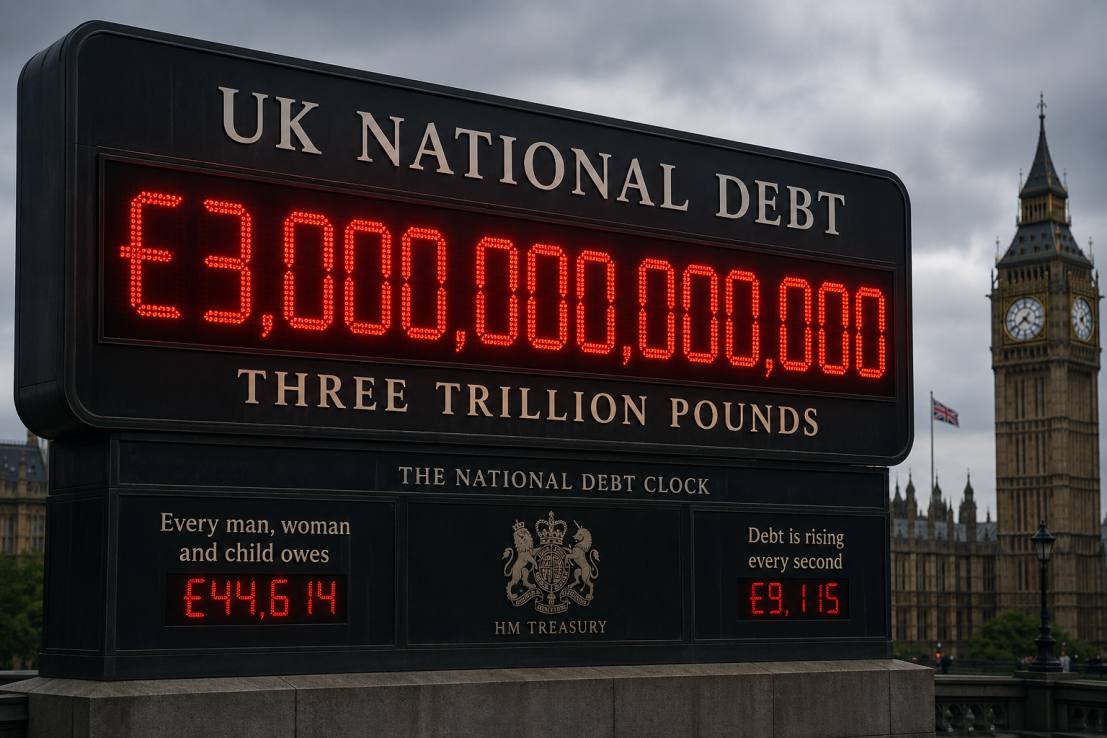
Britain's national debt has surpassed £3 trillion, and the cost of servicing it is becoming staggering, warns Anne Strickland.
Andy Burnham has been Prime Minister for just over a fortnight, and in that brief period Britain's national debt has crossed the £3 trillion threshold, according to the Taxpayers' Alliance Debt Clock. It took the country 11 years to climb from £1 trillion to £2 trillion during the 2010s, but only six years to add another trillion on top.
Spread across every household in the country, that figure amounts to more than £100,000 per household — and that is before accounting for unfunded public sector pension liabilities and other obligations the government keeps off its main balance sheet. Including those, the real national debt is likely substantially higher.
Soaring Debt Servicing Costs
What should concern taxpayers most about the £3 trillion debt pile is the annual cost of merely servicing it. Debt interest reached £109.3 billion in 2025–26, the fourth-highest year on record in real terms. Notably, all four of the highest debt interest years ever recorded have occurred since 2022–23. The current figure is 2.4 times the 70-year average, meaning more than £1 in every £12 the government spends now goes purely toward paying interest on borrowing.
A key reason debt servicing has become so expensive is the shift in interest rates. After more than a decade of near-zero borrowing costs, the Bank of England's Bank Rate was lifted sharply through 2022 and 2023, and the yields on UK government bonds (gilts) rose in tandem. Because a large share of UK government debt is index-linked to inflation, higher inflation further inflated the interest bill, making the spike in servicing costs a direct consequence of the broader cost-of-living crisis.
For perspective, the amount spent on debt interest in the last year alone exceeded the entire projected cost of HS2. It would have covered the cost of repairing every pothole in England and Wales nearly six times over.
Burnham on Track for Record-High Labour Debt Bill
There is a personal dimension for Burnham as well. Rishi Sunak — primarily due to the knock-on effects from the scale of borrowing during the Covid pandemic — holds the record for the highest average annual debt interest bill of any Prime Minister, at £121.5 billion a year. However, based on current Office for Budget Responsibility (OBR) forecasts, Burnham is on course to post the second-highest bill on record at £112.8 billion a year, exceeding that of any previous Labour leader.
Debt Trajectory Set to Climb Again
The OBR's own long-term projections indicate that current government plans will only stabilise debt temporarily. Debt is projected to resume climbing from 2032–33, and by the late 2040s the OBR itself describes the trajectory as "unsustainable."
Much of this stems from an ageing population. State pension spending is projected to rise from 5 per cent to approximately 9 per cent of GDP, driven largely by the triple lock — the mechanism guaranteeing the state pension rises each year by the highest of inflation, average earnings growth, or 2.5 per cent — while health spending is projected to climb from 8 per cent to 13 per cent of GDP by 2075–76. Under nearly any scenario the OBR models, the outcome is the same upward trajectory.
Those projections, however, may even prove optimistic. The OBR has acknowledged in its own publications that its forecasts tend to grow rosier the further out they extend, meaning the reality could well be worse.
A Challenge Burnham Cannot Ignore
Burnham did not accumulate this debt himself — he has only been in office for two weeks. Yet he is already on course to preside over one of the worst debt interest bills of any Prime Minister on record. Every predecessor since the financial crisis has offered the same reassurance: debt will stabilise once growth returns, once the next round of reforms lands, once the numbers work themselves out. The outcome has been consistently disappointing.
The scale of the servicing bill also narrows the fiscal choices available to any government. When interest payments alone consume more than defence or education spending, the room to fund new priorities — whether infrastructure, public services, or tax cuts — shrinks accordingly, regardless of which party occupies Downing Street.
If the Prime Minister is serious about rebalancing the economy, addressing the national debt must sit at the top of his agenda. Failure to do so will render his other economic objectives a herculean task.
Anne Strickland is a researcher at the Taxpayers' Alliance.
