UK Economy's August Rebound Fails to Stem Record 23-Month Run of Job Losses
Key Takeaways
- •The UK private sector PMI rose to 52.5 in August from 52.2 in July, indicating faster overall growth.
- •Services activity helped offset weaker manufacturing growth, which eased from 51.9 to 51.5.
- •Employment fell for a 23rd consecutive month, the longest streak of job losses recorded in the PMI survey series.
- •The unemployment rate has increased from 4.4 per cent to 4.9 per cent since Labour took office in mid-2024.
- •Economists said the latest PMI readings are consistent with modest third-quarter GDP growth, though energy costs and policy uncertainty could constrain demand.
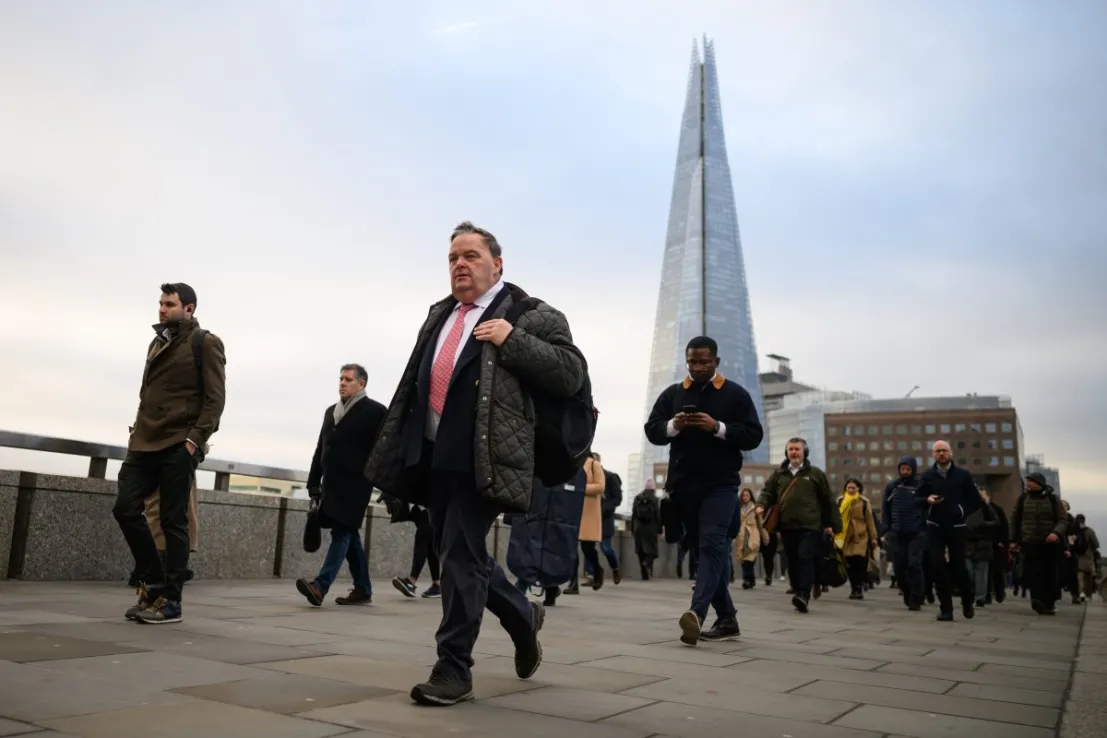
The UK economy's rebound gathered pace in August but failed to revive the country's flagging labour market, which has now endured nearly two years of continuous job losses, new estimates show.
Data tracked by S&P Global indicated that the UK's private sector grew at its fastest pace in four months in August, despite concerns over business costs and rising inflation. A pickup in services offset a slowdown in manufacturing, lifting growth above July's level, according to a provisional estimate from the purchasing managers' index (PMI), a closely watched monthly gauge that often provides an early read on demand before official GDP data are published.
Yet the resilience in activity stands in contrast to an extended streak of labour shedding. Jobs have now been cut for 23 consecutive months — the longest run since PMI surveys began in 1996 — while the unemployment rate has climbed from 4.4 per cent to 4.9 per cent since Labour took office in mid-2024.
Chris Williamson, chief business economist at S&P Global, said the rate of job losses was "moderating" and that firms felt "more upbeat than at any time since the war began".
"The expansion is being helped by sunny weather and tech investment, though as expected we have seen some softening of growth in the manufacturing sector as precautionary stock building cools," Williamson said.
"It's clear, however, that the Middle East and concerns over domestic government policy continue to have a damaging effect," he added. "Most worryingly, cost pressures remain high, largely due to energy prices and supply disruption linked to the Middle East conflict alongside high staffing costs."
Labour's decision to hike the minimum wage and national insurance payments for employers at its first budget in 2024 has hammered companies and triggered a slowdown in hiring. According to a cost calculator from the British Chambers of Commerce, a typical small firm's cost stack has risen some 70 per cent since 2016, with more than a quarter of that increase coming since the 2024 Budget.
Job losses not reversed despite UK economy's gains
The overall PMI for the private sector came in at 52.5, above the 50 threshold that signals no change in activity, and beat last month's score of 52.2. Manufacturers suffered slower growth, with the sector's reading dropping from 51.9 to 51.5.
Rob Wood, chief UK economist at Pantheon Macroeconomics, said the improvement in business sentiment suggests the UK economy could run above the Bank of England's expectations for growth in the third quarter.
"We estimate the average PMI over July and August is consistent with quarter-to-quarter GDP growth of 0.2 per cent in the third quarter, down from 0.4 per cent in the second quarter but still above the Monetary Policy Committee's forecast for a rise of just 0.1 per cent," Wood said.
"Granted, some of the '[Andy] Burnham boost' could yet fade as Budget uncertainty ratchets up in the Autumn, while higher energy prices will continue to drag on demand," he added.
