Burnham bounce lifts Labour polls, but UK economic confidence remains fragile, argues Paul Ormerod
Key Takeaways
- •Labour is showing a clear 'Burnham bounce' in both opinion polls and local authority by-election results, but the party's overall support remains historically low.
- •GfK's Consumer Confidence Index climbed to a two-year high last month while remaining in negative territory at -14 points, indicating continued household pessimism.
- •The CBI's August industrial trends survey improved distinctly from the previous month, though its -7 balance means more manufacturers expect output to fall than rise over the next three months.
- •Households accumulated £180bn in excess savings during lockdown but have saved 8.8 per cent of disposable incomes in recent years versus 5.6 per cent before Covid, amounting to roughly £60bn a year in additional saving.
- •Chancellor John Healey's commitment to fiscal discipline is viewed as more credible than his predecessor's, but over £100bn in added spending plans and high public sector debt continue to depress private sector confidence.
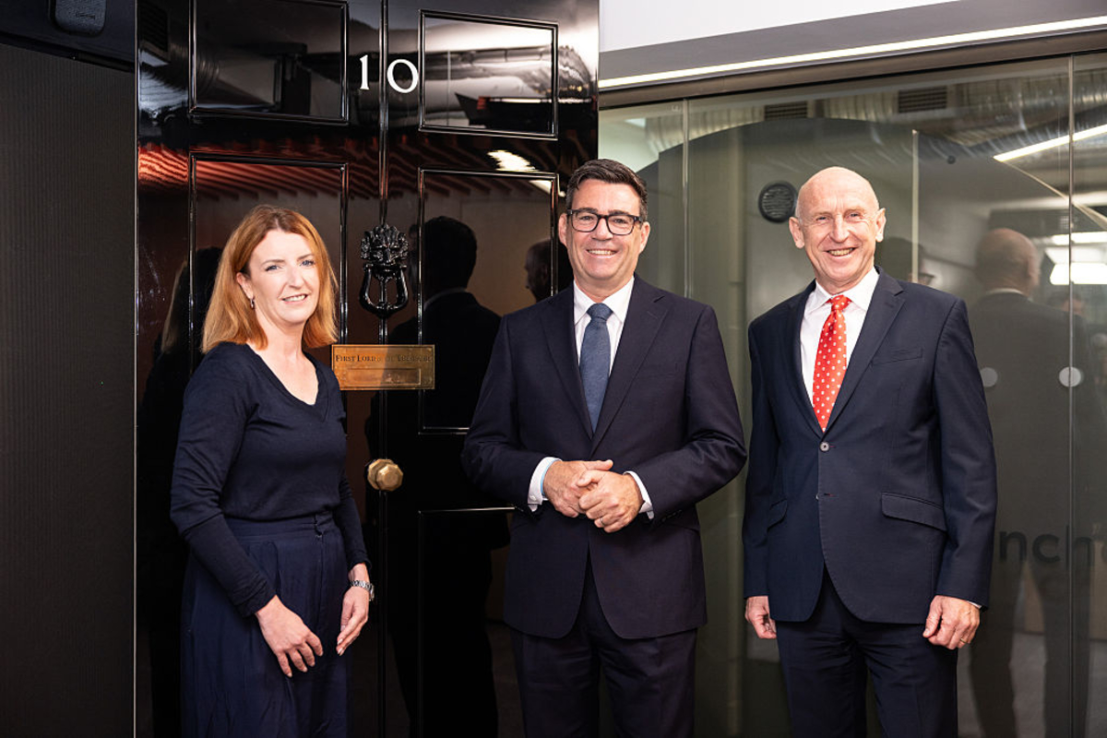
Labour may be improving in the polls under Andy Burnham, but overall support for the party remains historically low — and, according to economist Paul Ormerod, economic confidence among both households and companies tells a similar story.
Writing in City AM, Ormerod, an Honorary Professor at the Alliance Business School at the University of Manchester, notes that both opinion polls and local authority by-election results — a combination often cited as a real-world check on survey movements — show clear evidence of a “Burnham bounce” for Labour. In historical terms, however, support for the party is still very low. It is simply better than it was under Starmer.
Economic confidence follows the same pattern. Last month, GfK’s Consumer Confidence Index — a long-running monthly gauge of household sentiment — rose to a two-year high. Yet the balance remains firmly in negative territory at -14 points, meaning many households are still more pessimistic than optimistic.
The corporate sector paints a comparable picture. The CBI’s industrial trends survey in August — the business group’s monthly snapshot of manufacturers — recorded a quite distinct improvement on the previous month. Even so, more manufacturers expect output to decrease over the next three months than expect it to increase, with the balance standing at -7 points.
Two months ago, Ormerod wrote that the financial balance sheet of the private sector was in much better shape than it had been for 25 years. Both companies and households have been repaying debt, leaving them in a position to spend — if they had sufficient confidence about the future. There are signs that this is now happening, but private sector confidence in the economy is still fragile.
During lockdown, the Office for National Statistics (ONS) estimated that households accumulated a massive £180bn of so-called “excess savings”. Conventional wisdom argued that people would spend these down once restrictions were lifted. The opposite occurred: households have been saving more than they did before the pandemic, not less. In the three years leading up to the Covid crisis, households saved 5.6 per cent of their disposable incomes; in the most recent three years, the figure is 8.8 per cent. The difference may seem small, but in cash terms it amounts to some £60bn a year.
The uncertainty premium
What the private sector, whether households or companies, needs above all else is confidence, Ormerod argues. Balance sheets are healthier, but households and firms remain hesitant to spend.
In the 1930s, John Maynard Keynes identified confidence as the key factor driving the economy. True, he advocated public spending to boost activity, but he did not imagine in any way that there was an automatic connection between such measures and higher levels of economic output. In a short but crucial passage of his major work, the General Theory, published in 1936, Keynes argued that the positive boost would be undermined if the increase in public borrowing it entailed had an adverse effect on “confidence”.
Since the pandemic, uncertainty about the overall economic and political environment has been high. The energy price shock that followed the outbreak of the conflict between Russia and Ukraine, reinforced by the war against Iran, has done little to create benign conditions. There is little, if anything, a British government can do to influence these events, Ormerod writes. What it can do is try to reduce the level of uncertainty created by purely domestic events.
In his view, Chancellor John Healey has certainly helped in this respect. Healey has not permitted the apparently endless stream of leaks and subsequent denials over tax that characterised the tenure of his predecessor, Rachel Reeves — conduct Ormerod describes as a massive display of incompetence that created uncertainty and undermined confidence. Healey’s commitment early this week to fiscal discipline, he adds, carries more credibility than Reeves’s did.
Under Starmer and Reeves, public spending plans were increased by over £100bn, which Ormerod says vitiated their insistence that the government was fiscally responsible. The huge level of outstanding public sector debt carries the ever-present threat that taxes will have to be raised to meet interest and repayment schedules. Despite the recent rosy signs, he concludes, it will continue to act as a depressant on confidence. For readers tracking whether that fragility eases, the monthly survey readings and the Chancellor’s handling of fiscal policy are the near-term signals to watch.
Paul Ormerod is an Honorary Professor at the Alliance Business School at the University of Manchester. He can be followed on Instagram at @profpaulormerod.
