Burnham Returns to Westminster as Bond Market Pressures Mount
Key Takeaways
- •The ten-year gilt yield has reached its highest point since 2008, and the 30-year yield is at its highest since 1998, increasing government borrowing costs.
- •National debt is approaching £3 trillion, with annual interest payments exceeding £130 billion, a sum comparable to major departmental budgets.
- •Chancellor John Healey emailed all Treasury staff, including apprentices, seeking ideas for his first Budget, an unusual open consultation ahead of a fiscal statement.
- •The Prime Minister's growth strategy relies on a 'triple helix' of the state, universities, and the private sector, with local leaders to gain powers to impose an overnight visitor levy, though these powers cannot be used to cut taxes.
- •Economists expect the limited growth seen so far this year to weaken in the second half, keeping bond market conditions central to every Budget decision.
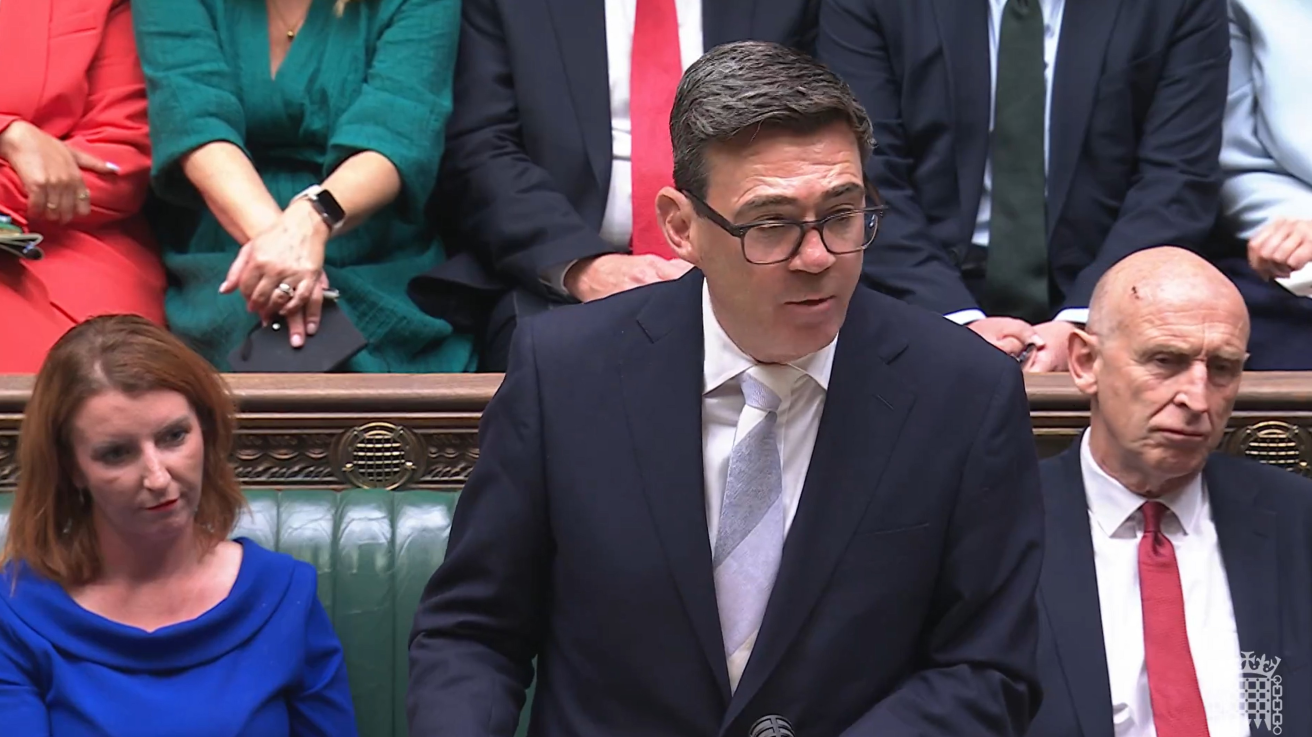
Andy Burnham once argued that Britain should not be in hock to the bond markets, so it was an awkward coincidence that his much-hyped return to the House of Commons yesterday was overshadowed by the surging cost of servicing government debt.
The yield on the ten-year gilt has reached its highest level since 2008 – the era of the global financial crisis – while the 30-year bond yield stands at a level not seen since 1998. Higher yields matter because they raise the price at which the government can borrow, feeding directly into the cost of servicing the national debt. That debt is approaching £3 trillion, spending continues to rise, and the country is borrowing heavily while paying out more than £130bn a year in interest alone – a sum that rivals the annual budgets of major departments and limits what is available for other priorities. It was perhaps unsurprising that the Chancellor, John Healey, looked uneasy sitting beside the new Prime Minister.
Nor is reassurance likely to come from the fact that Healey has emailed all Treasury staff – including the IT department and civil service apprentices – inviting them to submit ideas for his first Budget. Open consultations of this kind are unusual ahead of a fiscal statement, when Chancellors more typically rely on Treasury officials and the Office for Budget Responsibility's forecasts of the fiscal headroom available against their own borrowing rules – headroom that sustained pressure on gilt yields can quickly erode.
Meanwhile, the Prime Minister delivered a confident performance before MPs, though one that appeared at odds with the country's current reality. He was right to say that "Britain is not where any of us would want it to be," yet the alternative he promised consisted of more public spending, more debt, bigger government and higher taxes.
Growth expected to fade in the second half
He claimed to have "a clear theory of growth," explaining that it rested on the "triple helix approach to economic development" – an arrangement in which the state, universities and the private sector work together, supported by local government leaders who will soon be empowered to impose an "overnight visitor levy." Burnham touted this tourist tax as a prime example of "fiscal devolution." Visitor levies of this kind already operate in cities such as Manchester, where a £1-per-night charge on hotel rooms has been collected since 2018 to fund local tourism projects, and extending such powers would widen the revenue tools available to regional leaders.
Whether any region will be permitted to use these new powers to lower the tax burden, as the Tory mayor of Tees Valley would like, appears doubtful – such a move will not be allowed.
Burnham's optimism, and his evidently sincere desire to make life easier for people and businesses, offers a welcome contrast to the tone of the outgoing Member for Holborn and St Pancras. But it is unlikely to shift the economic picture. Economists expect the limited growth recorded so far this year to fade in the second half, and an agenda of subsidies, nationalisations and a reorganisation of Whitehall is unlikely to revive it.
Restoring private sector confidence to hire and invest should be treated as an urgent priority, alongside a credible strategy to cut spending and reduce the tax burden. With debt interest costs already among the largest single items of public spending, the bond market will remain the backdrop against which every Budget decision – and every speech like Burnham's – is judged.

