UK Vehicle Production Falls 7.5% in First Half of 2026 as Tariffs and Regulation Weigh on Sector
Key Takeaways
- •UK vehicle production declined 7.5% year-on-year in the first half of 2026, totaling 385,979 units—approximately 31,000 fewer than the same period the previous year.
- •Domestic-market output fell roughly 13% while export production decreased 5.6%, though exports rebounded 3.9% in the second quarter compared to the first.
- •The SMMT identified high UK industrial energy costs, US tariffs under the Trump administration, and the government's zero-emissions vehicle mandate as the primary pressures on the sector.
- •More than three out of every four cars manufactured in the UK are exported, with Europe as the largest destination and the United States as the second-largest market.
- •Former Prime Minister Keir Starmer was reportedly preparing to soften EV mandate rules before stepping down, but successor Andy Burnham and business secretary Jonathan Reynolds have not yet outlined their plans for the policy.
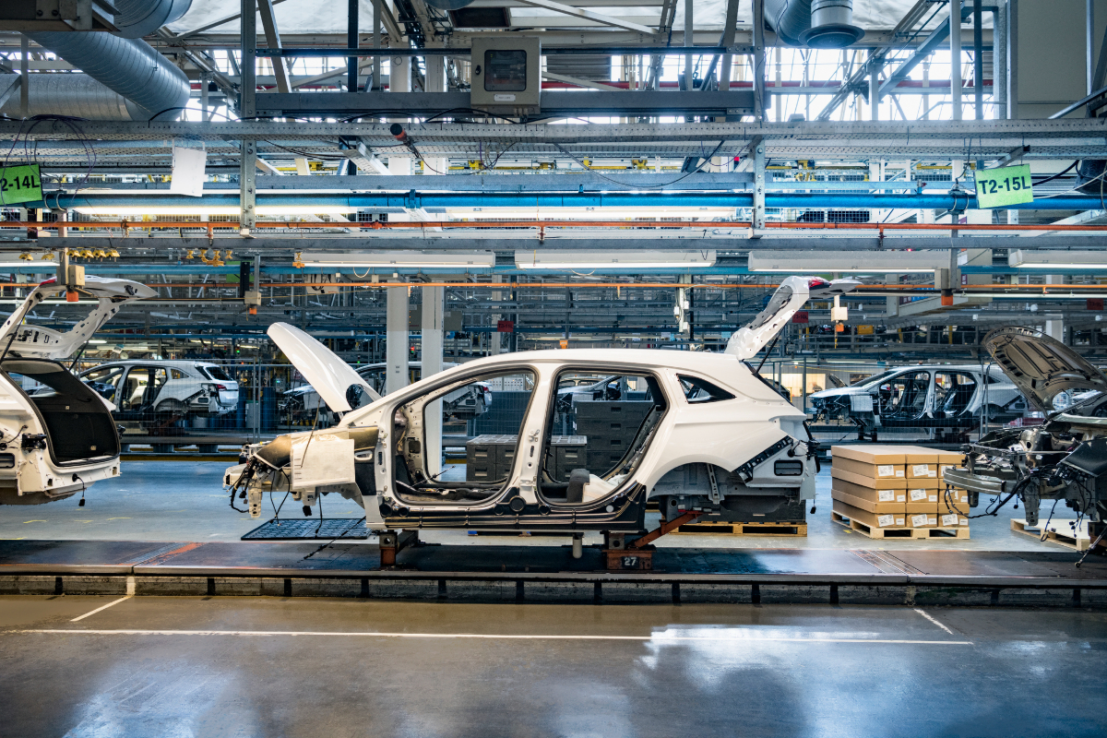
British car manufacturers produced significantly fewer vehicles in the first six months of 2026, according to new data from the industry's largest trade body, which warned that tariffs and domestic policy decisions are placing additional strain on an already struggling sector.
Vehicle production declined by 7.5 per cent between January and July compared to the same period a year earlier, in what the Society of Motor Manufacturers and Traders (SMMT) described as a "challenging" half for carmakers. However, the lobby group noted that production figures for the first and second quarters were essentially flat, with June output rising slightly compared to the previous month.
"We're kind of hoping we're at the nadir," SMMT chief executive Mike Hawes told reporters. "Global vehicle production remains under intense pressure, and the UK is no exception. Global market weakness, trade pressures and uncompetitive costs are taking their toll."
Approximately 31,000 fewer vehicles rolled off UK production lines in the first six months of 2026 compared to the same period the previous year, bringing total output down to 385,979.
The decline was especially sharp among vehicles destined for the UK domestic market. Home-market output fell roughly 13 per cent year on year, while export production declined 5.6 per cent over the first half. Exports did gain momentum in the second quarter, rising 3.9 per cent compared to the first three months of 2026.
More than three out of every four cars built in the UK are exported. The majority are shipped to Europe, while the United States remains the country's second-largest market, even as tariffs introduced under President Donald Trump continue to suppress trade volumes.
The SMMT said the latest figures underscore the need for urgent action to address multiple challenges facing the industry, including the UK's high industrial energy costs and the government's stringent electric vehicle production requirements. UK industrial electricity prices have consistently ranked among the highest in Europe, a long-standing structural disadvantage for energy-intensive manufacturers competing with counterparts in France and Germany.
The zero-emissions vehicle mandate compels automakers to sell an increasing proportion of electric cars each year. Currently, approximately 30 per cent of cars sold in Britain must be emissions-free, a threshold set to rise to over a third next year. Under the existing framework, all combustion engine and hybrid vehicles must be phased out entirely by 2035 — one of the most aggressive EV strategies in the Western world. Manufacturers are simultaneously having to commit billions in capital investment to retool plants for electric vehicle production at a time when consumer EV uptake has slowed across European markets, squeezed by high sticker prices, uneven charging infrastructure and the partial withdrawal of purchase incentives.
Following sustained industry pushback, then-Prime Minister Keir Starmer was reportedly preparing to soften the rules before stepping down, according to The Sunday Times. His successor, Andy Burnham, and business secretary Jonathan Reynolds have yet to outline their plans for the mandate.
The SMMT warned that reform of the policy is "vital," stating: "Regulation remains ahead of demand, making the cost of selling in the UK untenable and undermining any case for local manufacturing investment."
The trade body also highlighted that two protectionist measures being introduced by the European Union — known as rules of origin and 'Made in Europe' provisions — risk further disadvantaging UK exporters. The rules of origin requirements dictate how much of a vehicle's content must originate from within a trade bloc to qualify for tariff-free treatment, a threshold that UK-based producers — who rely heavily on imported components — have warned they may struggle to meet.
"Urgent action on energy costs, reform of market regulation and improved trading arrangements with our global partners would ensure the sector can return to growth," Hawes said. "And given that growth would be across every region in the UK, there is every reason for the new government to get behind the sector."

