Typhoon Saudel Makes Third Landfall in China; Port Disruption Risks High
Key Takeaways
- •Typhoon Saudel made its third landfall near Gulei in Fujian province at around 06:30 local time on Thursday as a tropical storm, after two earlier landfalls in Zhejiang on 28 August.
- •Last week's storm-driven port closures at Shanghai, Ningbo and Zhoushan caused vessel delays exceeding 10 days in the most severe cases, according to Linerlytica.
- •Linerlytica reported that 3.92 million TEU, or 11.4% of the global container fleet, remained tied up at anchorages last week, and August new ship deliveries hit a three-year low of 64,640 TEU.
- •All monitored mainland Chinese ports remained open as of 2 September, although Quanzhou and Fuzhou reported moderate-to-heavy rain and strong winds from Saudel.
- •Taiwan's Kaohsiung Port has faced intermittent restrictions and several temporary closures since 1 September, while other Taiwanese ports including Keelung, Taipei, Taichung and Mailiao remained open.
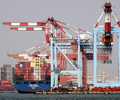
Typhoon Saudel made its third landfall along the coast of Fujian province in eastern China early on Thursday, raising the risk of renewed weather-related shipping disruptions in one of the world's busiest container shipping regions.
- The renewed threat follows widespread port closures across eastern China last week.
- China's National Meteorological Center (NMC) warns of extremely heavy rain in Fujian province.
- Taiwan's Kaohsiung Port continues to face intermittent movement restrictions.
Saudel came ashore along the coast of Gulei in Zhangpu, Fujian province, at around 06:30 local time (22:30 GMT) on Thursday as a tropical storm, according to the NMC. The storm had previously made landfall twice along the coast of Zhejiang province on 28 August before moving back over water and tracking toward Fujian.
The latest landfall comes less than a week after Saudel forced widespread port closures across eastern China, including at Shanghai, Ningbo and Zhoushan, disrupting vessel schedules and cargo movements across the region. Shanghai and the Ningbo-Zhoushan complex rank among the world's largest container ports by throughput, meaning weather-related stoppages there ripple through global shipping networks well beyond Asia.
Impact on Port Operations and Global Congestion
Port terminal operations at Ningbo and Shanghai were severely disrupted by Typhoon Saudel last week, resulting in delays exceeding 10 days in the most severe cases, according to shipping consultancy Linerlytica.
The disruption has compounded existing global congestion pressures, with 3.92 million twenty-foot equivalent units (TEU), or 11.4% of the global container fleet, still tied up at anchorages last week, the consultancy said. Backlogs of this scale typically take days or weeks to clear after ports reopen, as vessels queue for berths and schedules are reworked.
Vessel availability also remains tight, supporting charter rates, as new ship deliveries in August fell to a three-year low of 64,640 TEU, Linerlytica said in a 1 September blog post.
Freight rates have generally remained firm, although rates on the Asia-Europe route declined for an eighth consecutive week, according to the consultancy.
Mainland Chinese Ports Remain Open
Unlike the extensive shutdowns in eastern China last week, all monitored mainland Chinese ports currently remain open, according to maritime services provider Wilhelmsen Port Services.
As of 2 September, ports including Dalian, Tianjin, Qingdao, Rizhao, Lianyungang, Shanghai, Ningbo, Zhoushan, Quanzhou, Fuzhou, Jieyang, Huizhou, Dongguan, Zhuhai and Zhanjiang remain operational.
However, adverse weather conditions are affecting some locations, with Quanzhou and Fuzhou reporting moderate-to-heavy rain and strong winds associated with Saudel.
The NMC said heavy rain was expected on Thursday in central and southern Fujian, southern Jiangxi, eastern Guangdong, and northern and southern Taiwan, with heavy rainstorms in some areas.
The affected areas encompass several major petrochemical and manufacturing hubs, including the Gulei Petrochemical Base, Quanzhou refining and petrochemical facilities, Fuzhou's Jiangyin Chemical New Materials Zone, and the Pearl River Delta chemicals and exports corridor.
The NMC issued a yellow typhoon warning on Thursday morning — China's second-lowest typhoon alert — and maintained a yellow warning for heavy rains, along with thunderstorms and strong winds.
Industry participants will be monitoring whether the latest weather system triggers operational restrictions or delays at ports serving the Pearl River Delta, a major gateway for chemicals, polymers and refined products. Further heavy rain inland could also affect ground transport and warehouse operations serving those ports, extending any delays to cargo flows even after terminals reopen.
Taiwan Restrictions Continue
In Taiwan, Kaohsiung Port continues to face intermittent restrictions because of rough sea conditions and strong winds, according to Wilhelmsen Port Services. Several temporary closures have occurred since 1 September, disrupting vessel schedules, according to Wilhelmsen.
The situation is also being closely watched by petrochemical market participants because Mailiao, home to Taiwan's Formosa Plastics Group's integrated refining and petrochemical complex, is located roughly 140-150 kilometers north of Kaohsiung.
Intermittent rainfall could slow cargo handling operations and delay estimated times of departure (ETDs), while vessels with tight schedules may require berth extensions if rainfall intensifies, Wilhelmsen added.
Other Taiwanese ports including Keelung, Taipei, Taichung and Mailiao remain open.
Source: ICIS by Nurluqman Suratman,
