Columnist Sees “Long-Overdue Reckoning” as Major TV Networks Suspend Pooled Coverage of Trump White House
Key Takeaways
- •Major U.S. television networks jointly suspended their pooled coverage of the Trump White House on Monday after the president refused to allow CNN to serve as a pool representative.
- •The suspension followed the Friday barring of CNN, MS NOW, and Politico from covering the House.
- •Under the pool system, a small rotating group of journalists shares notes and footage with outlets not present, so a coordinated withdrawal is a rare act of unity among competing broadcasters.
- •Alternet columnist D. Earl Stephens praised the move as overdue, had urged media to withhold White House coverage until the president apologized, and singled out the Associated Press for firm reporting.
- •Stephens questioned whether the networks will maintain their stance, framing the episode as a test of the press's commitment to editorial principle.
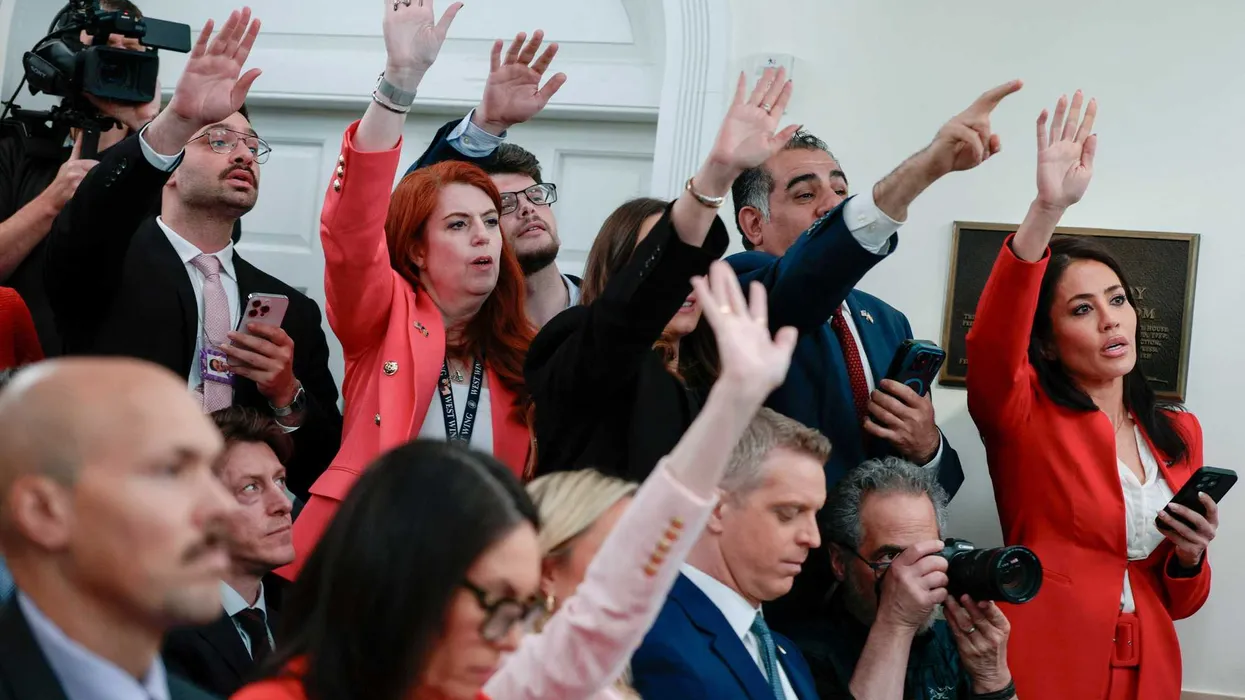
Major United States television networks jointly suspended their pooled coverage of the Trump White House on Monday morning after the president refused to allow CNN to serve as a pool representative, and Alternet columnist D. Earl Stephens argues that the coordinated stand marks a long-overdue reckoning for both the administration and the press corps that covers it.
The stakes of that stand are rooted in how the pool itself works. Under the long-standing arrangement, a small rotating group of reporters, photographers and camera operators covers the president whenever space at an event is limited, and the resulting notes and footage are shared with outlets that were not in the room. A coordinated refusal by major broadcasters to take pool duty is therefore an unusual show of unity among companies that otherwise compete for access every day.
Stephens, an award-winning journalist and the author of “Toxic Tales: A Caustic Collection of Donald J. Trump’s Very Important Letters,” said the Monday-morning news provoked a three-word reaction from him: “IT’S ABOUT TIME.”
The suspension came days after CNN, MS NOW (formerly MSNBC) and Politico were banned from covering the House on Friday. Writing in a column published Saturday, Stephens had urged a bolder response from the industry, arguing that every media agency covering the administration should refuse to go near the White House until the president apologized and stopped, in his words, “acting like Stupid Putin.” “Starve this maniac, and start feeding America the facts,” he wrote at the time.
In his latest column, Stephens wrote that he would like to believe the working press has “finally learned its lesson” when dealing with “abusive fascists, malignant narcissists, and convicted felons,” but said he remains unconvinced. He argued that after years of being branded “the enemies of the people” and subjected to a “grotesque variety of demeaning names,” mainstream outlets should be done inviting the president to their dinners, where, he wrote, he can “projectile vomit all over them while they pick away at their shrimp cocktail.”
He likened the press’s navigation of Washington over the past decade to Peter Sellers’ Inspector Clouseau bumbling through the Pink Panther comedies, with one distinction: “Clouseau managed to always get his man.” The media’s approach, he wrote, “hasn’t been at all funny.” Stephens contended that news organizations have “relentlessly disgraced themselves” through an inability or refusal to report what he described as Trump’s ongoing attack on the country, embarrassing the many veteran journalists who built careers “holding power to account, and calling liars, LIARS.”
“It is impossible to process,” he added, “just how shoddy and bad things have become with our media the past decade.”
The columnist placed the dispute in a broader political context, asserting that the country is “inches away from losing everything” to a political party that “spends every waking hour devising ways to extinguish our vote.” In his characterization, that party is “poisoning our air and water, killing endangered species, and coddling Russia, while attacking Canada.” He further alleged that “cold-blooded, masked government agents” roam American streets “killing innocent people without consequence,” that prices Trump promised to lower are “rocketing ever higher,” and that Trump is “actually filling his pockets with our money.” Most of the media, he argued, carries on as though the country were dealing with “nothing but another rainy day.”
Stephens singled out the Associated Press for praise, writing that the wire service was “kicking the lying, duplicitous Trump with both feet Monday” when it published a post on Bluesky that he called a “blast of truth.” “Perfectly put, and more, please,” he wrote, adding, “Reporting the truth shouldn’t be this hard.” He described himself as “a fan” of the AP and recalled that it was among the first institutions Trump targeted after the outlet refused to call the Gulf of Mexico anything other than the Gulf of Mexico in its reporting — a refusal that escalated into federal litigation, Associated Press v. Budowich, over access to presidential events. Still, he said he sees “some instances where they can do better” — a standard he attributed to a long career in which he was “beaten on by better journalists” over even the smallest errors.
In Stephens’s assessment, the apparent final straw — being “kicked down the White House stairs by a limping 80-year-old deviant” — may have spurred “a handful of these major media conglomerates” into action. What happens next, he wrote, will show whether this is “the beginning of something bolder, a return to truth, and holding power to account,” or whether the networks “faint from the thin air of standing up for editorial principle, a free press and their viewers.”
He also asked how the news organizations will “comport themselves if and when Trump allows them back in OUR White House.”
“I guess we can hope for the best,” Stephens concluded, “but you’ll have to excuse me if I am highly skeptical they’ve learned a damn thing.”
D. Earl Stephens is the author of “Toxic Tales: A Caustic Collection of Donald J. Trump’s Very Important Letters” and an award-winning journalist who ran newsrooms and worked in the newspaper business for decades. His work is collected on his Substack.

