Trust Wallet Introduces Address Labels to Help Users Verify Exchange Deposit Addresses
Key Takeaways
- •Trust Wallet has introduced address labels for cryptocurrency exchange deposit addresses, allowing users to verify a destination before sending funds.
- •Blockchain transfers are generally irreversible once confirmed, and in self-custody arrangements no third party can reverse an erroneous transaction, making misdirected payments a risk of permanent loss.
- •The feature is expected to be particularly valuable for users who regularly move cryptocurrencies between self-custody wallets and centralized exchanges.
- •Trust Wallet cautions that labels do not replace standard security checks, and users should still confirm the complete recipient address, blockchain network, and any required deposit memo or destination tag.
- •The update, publicized by Cointelegraph on X on November 17, 2026, reflects ongoing efforts to narrow the gap between machine-readable addresses and human-readable names and support wider crypto adoption.
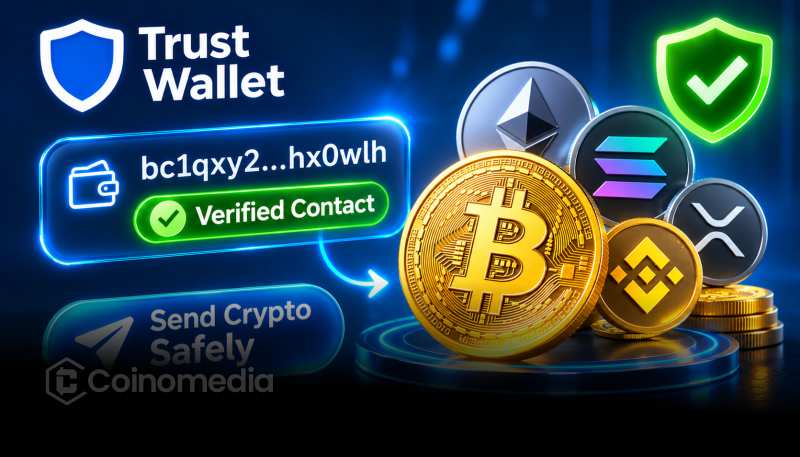
Trust Wallet, a self-custody cryptocurrency wallet, has introduced address labels for cryptocurrency exchange deposit addresses, giving users a way to identify and verify a destination before funds are transferred. The feature is intended to improve transaction transparency by attaching recognizable information to recipient addresses that would otherwise appear as opaque strings of characters.
Typical blockchain addresses are long combinations of letters and numbers with no inherent meaning, so users often have to compare them character by character before confirming a transfer — a process that raises the risk of mistakes. Even a single mistyped character can send funds to a destination the sender never intended. By displaying a label linked to a known exchange deposit address, Trust Wallet provides an additional reference point when reviewing transaction details. The feature could prove especially useful for people who regularly move cryptocurrencies between self-custody wallets and centralized exchanges, a workflow common among cryptocurrency users.
A Safeguard Against Irreversible Errors
Sending cryptocurrency to an incorrect address is among the most common concerns for digital asset users. Unlike traditional banking transactions, blockchain transfers are generally irreversible once confirmed, which means a mistake can lead to permanent losses. In self-custody arrangements, users hold their funds directly rather than through an intermediary, so there is no third party positioned to reverse an erroneous transfer once it has been confirmed.
The labeling feature could help users catch unintended destinations before a transfer is completed. For example, someone sending cryptocurrency to an exchange may be able to check whether the displayed label matches their intended platform, helping prevent certain transaction errors and making the transfer process more accessible to beginners.
Address labels, however, are not a substitute for standard security checks. Users should still confirm the complete recipient address, the selected blockchain network, and any required deposit memo or destination tag. A recognized exchange label also does not guarantee that funds will be credited to the intended customer account.
The update was highlighted by Cointelegraph on X on November 17, 2026:
UPDATE: Trust Wallet now labels exchange deposit addresses, helping users verify destinations before sending. pic.twitter.com/fZI1XiGlrF — Cointelegraph (@Cointelegraph) November 17, 2026
What the Update Means for Crypto Adoption
The launch underscores ongoing efforts to make self-custody wallets easier and safer to use. Complicated transaction procedures can discourage newcomers from exploring cryptocurrency, particularly when errors may result in permanent financial losses, and features that provide clearer information about transaction destinations could help reduce those concerns. The gap between machine-readable addresses and human-readable names has long been one of the usability hurdles for wallet interfaces, and labeling is one approach to narrowing it.
The update also reflects the importance of improving wallet interfaces alongside blockchain infrastructure. While address labeling cannot eliminate every security risk, it adds a further layer of information before payments are confirmed, representing another step toward more transparent and user-friendly cryptocurrency transfers.
Source: CoinoMedia

