Economist Justin Wolfers: America's Economic Gloom Is About Trump, Not the Math
Key Takeaways
- •President Trump added $2 trillion to the U.S. budget deficit in 2026, swelling the national debt to $40 trillion.
- •University of Michigan economist Justin Wolfers argued in a Wednesday essay that eroding public trust in economic managers, rather than the fiscal numbers themselves, is the deeper problem.
- •Wolfers' confidence measure reached +66 in May 2026 — meaning 66 percentage points more Americans rated the government's economic job as poor rather than good — up from +14 in late 2024 and the highest reading in the history of the question.
- •The previous record of +52 was set during the 2011 debt-ceiling crisis, which ended with a last-minute agreement to raise the borrowing limit and was followed days later by Standard & Poor's stripping the United States of its AAA credit rating for the first time.
- •In a September interview with AlterNet, Wolfers said Trump family corruption promotes "crony capitalism," in which political access rather than price or quality determines winners and inferior products can prevail.
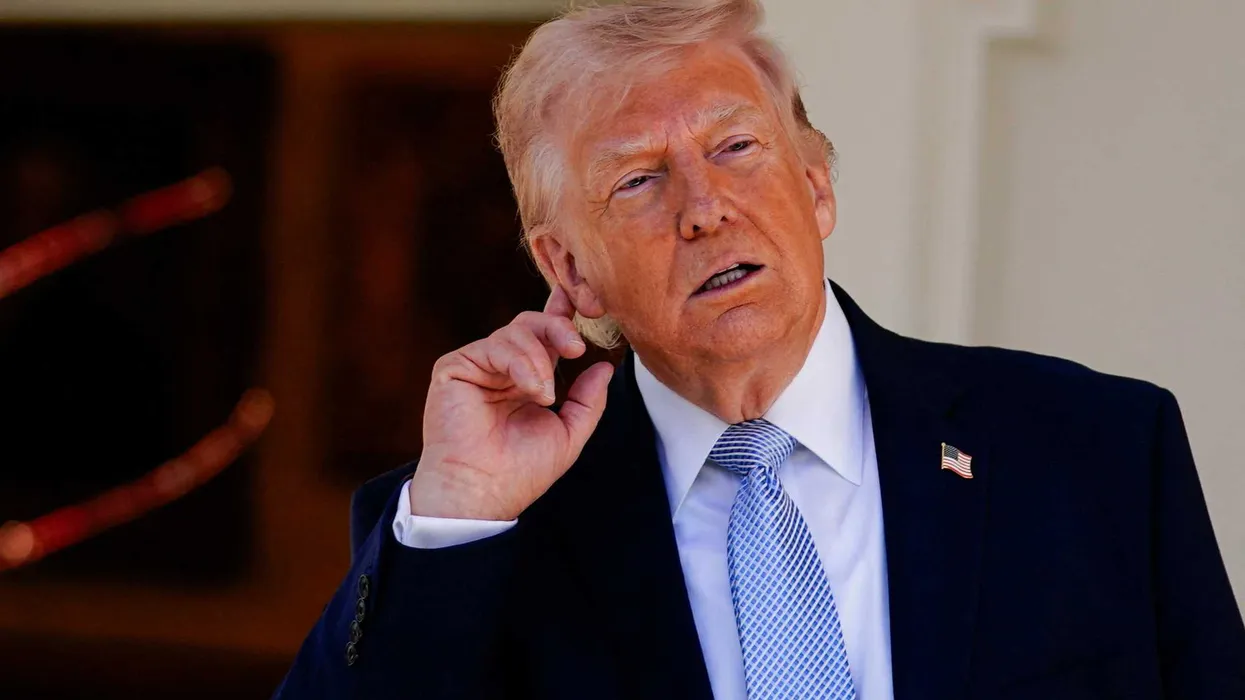
President Donald Trump has added $2 trillion to America's budget deficit in 2026, swelling the national debt to $40 trillion. Even as economists continue to sound the alarm about the daunting math, a prominent economist argued on Wednesday that the deeper problem is not the numbers at all — it is Trump himself, and the public's eroding trust in the people running the economy.
Dr. Justin Wolfers, a professor of economics and public policy at the University of Michigan and a non-resident senior fellow at the Brookings Institution and the Peterson Institute, laid out the case in an essay published Wednesday at the Platypus Economics newsletter.
Wolfers framed his argument around how American voters judge the government's handling of the economy. "How they evaluate the job the government is doing on economic policy," he wrote. "You can see why this might matter: If policy is good, you might be optimistic about your economic future. If it's bad, you're likely more pessimistic."
To quantify that judgment, Wolfers described a measure he called "America's confidence in our economic managers. To turn it into a single number, take the share of people who say the government is doing a poor job and subtract the share who say it's doing a good job. When that number rises, it means Americans are handing down a harsher verdict."
The trend, he noted, has moved sharply against the White House. "In late 2024, the verdict stood at +14. That means 14 percentage points more Americans thought the government was doing a poor job than a good one. By May 2026, it had hit +66."
Wolfers observed "that's the highest reading in the history of the question (by a lot). The previous record was +52 and it was set during the 2011 debt ceiling crisis. At that point, Congress was flirting with the idea of not paying the nation's bills. We're now 14 points worse than we were then." The comparison is a pointed one: the 2011 standoff was resolved with a last-minute agreement to raise the borrowing limit, and days later Standard & Poor's stripped the United States of its AAA credit rating for the first time in the country's history.
He argued that conventional analysis overlooks this dimension entirely. "Textbooks teach monetary policy and fiscal policy which means taxes, spending, interest rates: the levers government pulls to shape economic life," Wolfers wrote. But "there's another part of the story. That part is whether people think the folks pulling levers know what they're doing."
He concluded: "So the next time someone points a camera at me and asks why Americans are so gloomy when the numbers look fine, here's my answer. They're not misreading the economy. They're reading the people running it. And their verdict today is the harshest on record." On that reading, the gap between solid headline figures and record pessimism is not a forecasting failure on the public's part but a credibility problem that the usual dashboard of jobs, inflation and growth numbers is not built to capture.
Speaking to AlterNet in September, Wolfers went further, describing how Trump's corruption is inflicting real economic damage on ordinary people.
"If Trump gets a billion dollars richer in a country with 340 million people, even if he took it directly out of the treasury, that's $3 per person," Wolfers told AlterNet. "That's not very much. That's simply the claim that one man's profits are small relative to an enormous economy. But still, actually, I think the problems are far deeper than that. So the basic idea of a market economy is that you and I compete with each other. If I can bring goods to market at a lower price than you, then people will buy them from me rather than you. If I can create higher-quality goods than you, people will buy from me rather than you. The problem with the Trump family corruption — and not all of it's the legal definition of corruption, by the way; some of it meets the standard English-language definition, if not a legal definition — is what you do is you change the nexus of competition."
He added, "If the best way for me to get ahead is to go to the White House bearing gifts, and then they pass a rule and they ban you from competing against me, then that means the basic dynamics of competition and markets delivering good outcomes for regular folks just gets broken. That in turn means that if I'm the CEO of a company, I spend less time trying to create products at lower prices, trying to outcompete, or less time creating new or better products. And I spend more time and energy at Mar-a-Lago trying to win over the favor of the president. That means bad products will win."
Wolfers summed up the dynamic with a label: "crony capitalism" — an economy in which political access, rather than price or quality, decides who wins. Both threads of his case leave a paper trail worth watching: the confidence verdict set out in his Platypus Economics essay, and the deficit and debt figures behind the "daunting math" warnings — numbers that will keep testing whether the gloom tracks the managers or the math.

