Trust Stamp Joins €3 Billion EU Semiconductor Initiative to Embed Biometric Identity in Chips
Key Takeaways
- •Trust Stamp has been chosen as a direct participant in the EU's IPCEI AST semiconductor initiative, which commands over €3 billion in committed funding and is coordinated by Germany.
- •The company's Malta subsidiary will develop biometric identity binding technology that enables semiconductor devices to cryptographically verify their association with specific authenticated individuals.
- •Trust Stamp is exploring hardware-rooted security methods and authentication approaches for brain-computer interfaces, going beyond conventional password-based systems.
- •Participation in the IPCEI program may grant Trust Stamp access to state aid that could help fund its research and development efforts during extended development cycles.
- •The EU's evolving digital identity framework, including eIDAS 2.0 and planned digital identity wallets, is generating demand for the type of trustworthy identity-binding technology Trust Stamp is building.
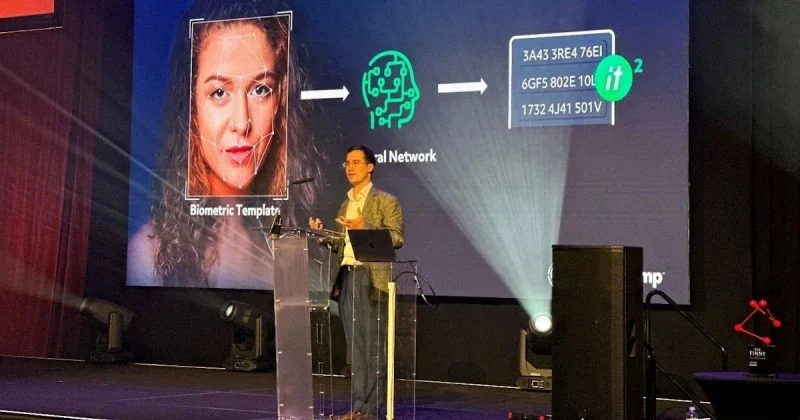
Trust Stamp (Nasdaq: IDAI), an AI-powered biometric identity company, has been selected as a direct participant in the European Union's Important Project of Common European Interest on Advanced Semiconductor Technologies, commonly known as IPCEI AST. Coordinated by Germany, the initiative commands over €3 billion in committed funding and ranks among Europe's most ambitious efforts to achieve semiconductor sovereignty — a strategic priority accelerated by the EU Chips Act and by supply chain disruptions that exposed Europe's dependence on Asian chip manufacturing.
Trust Stamp's Malta subsidiary secured its position in the project with backing from Malta Enterprise. The company's assigned role is to develop biometric identity binding technology capable of linking verified human identities directly to semiconductor devices. IPCEI projects are structured to foster cross-border collaboration among multiple participating companies, meaning Trust Stamp's work could intersect with complementary chip research underway by other consortium members.
Technical Focus: Biometric Identity Binding
At the core of Trust Stamp's contribution to IPCEI AST is what the company describes as biometric identity binding for trusted chips. The objective is to create a system in which a semiconductor device can cryptographically verify its association with a specific, authenticated human being.
This approach moves beyond conventional password-based authentication. Trust Stamp is investigating hardware-rooted security, in which identity verification occurs at the chip level rather than within software layers that are more vulnerable to spoofing or hacking. Major chipmakers including Apple, with its Secure Enclave, and ARM, with its TrustZone technology, have already demonstrated the viability of isolating sensitive operations in dedicated hardware — but Trust Stamp's focus on binding government-grade biometric identity directly into semiconductors targets a distinct use case. The company is also reportedly exploring authentication methods tailored to brain-computer interfaces — a field that, while sounding like science fiction, is already a reality given that multiple firms are currently implanting neural devices in human subjects.
Trust Stamp positions itself as a privacy-first AI biometric identity verification provider, serving both the finance and government sectors. In both industries, reliable identity verification is not merely a convenience but a regulatory necessity. The EU's evolving digital identity framework, including the eIDAS 2.0 regulation and its planned digital identity wallet, is creating additional demand for trustworthy identity-binding mechanisms that could align with the capabilities Trust Stamp is developing.
Funding Dynamics and Execution Considerations
Trust Stamp is a small-cap company operating in a market dominated by significantly larger competitors. Its inclusion in a €3 billion EU initiative represents a notable level of institutional validation. However, execution risk remains a factor: developing chip-level biometric systems is technically complex, and the path from research participation to revenue-generating products can span several years.
The funding structure could prove consequential. IPCEI participants typically receive access to state aid that would ordinarily breach EU competition rules. This means Trust Stamp may obtain direct financial support for its research and development efforts, potentially mitigating the cash burn that small technology companies commonly experience during extended development cycles.

