Missing $50 Million From Trump’s “Freedom 250” Draws Calls for Disclosure
Key Takeaways
- •Trump announced that US taxpayers will buy five million tons of Russian diesel at record-high prices and ordered Treasury to suspend sanctions on Russian diesel for six months, weeks after signing a Russia sanctions bill.
- •Documents uncovered by the watchdog group PEER show the "Freedom 250" events cost $128 million, with at least $114 million from taxpayer dollars, while donors reportedly contributed at least $50 million whose distribution remains undisclosed.
- •The $TRUMP meme coin, which peaked above $73 and now trades around $1.79, is offering its top 185 holders seats at a November 22 gala at Trump's Virginia golf club, with the four largest buyers receiving an 18-karat gold Trump watch.
- •Bloomberg reports that a rising term premium has pushed 10-year Treasury yields to a 24-year high, increasing borrowing costs for mortgages, car loans, and credit cards.
- •Trump signed a memo creating a "committee of inquiry" composed of his own appointees that will decide the fate of Fed Governor Lisa Cook on November 5, after the Supreme Court ruled against his attempt to remove her in June.
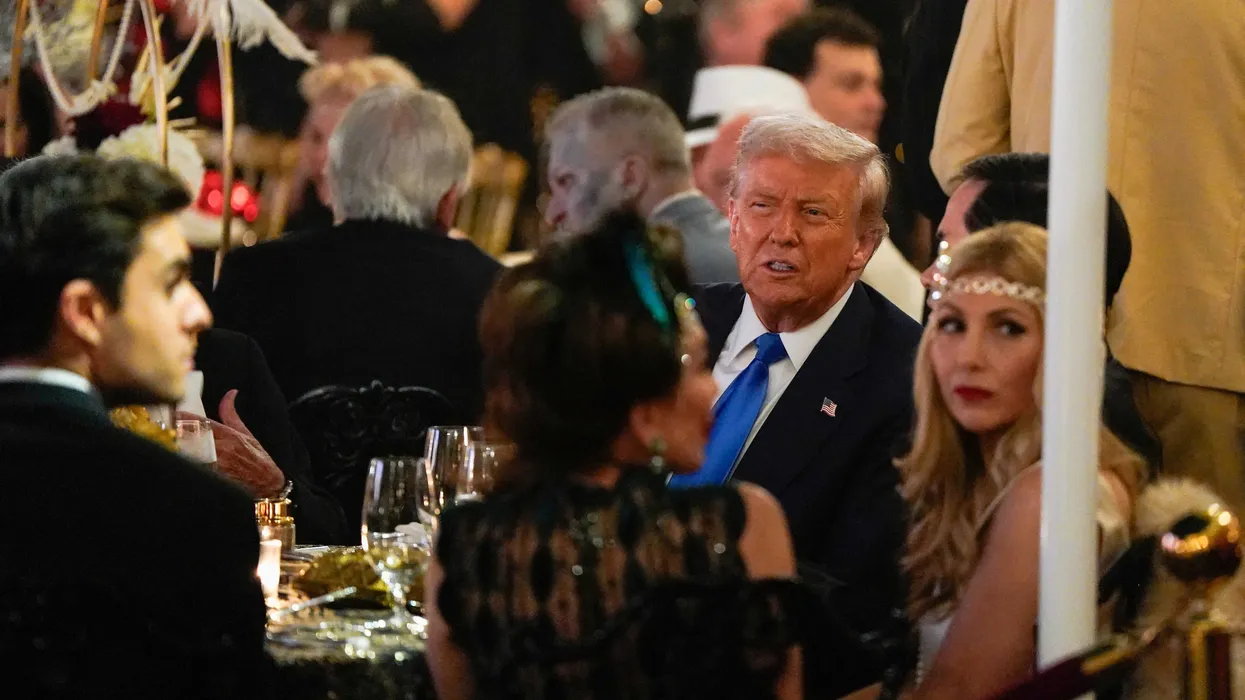
A sweeping new Alternet column ties a week of President Donald Trump’s headlines — a multibillion-dollar Russian diesel purchase, a privatized national anniversary celebration with roughly $50 million in unaccounted-for donor money, a dinner for the biggest holders of his meme coin, and an in-house inquiry into a Federal Reserve governor — into what its author describes as a single, continuing pattern of self-dealing.
A birthday gift for Putin
President Trump woke from a nap in the Oval Office this week just in time to remember Vladimir Putin’s birthday. While his own Treasury Secretary, Scott Bessent, was speaking, Trump nodded off at his own event, then perked up to announce he had a call scheduled to wish the Russian president — whom the columnist describes as his mentor — a happy 74th.
By Friday, the birthday arrangements had come into view. On his Truth Social platform, Trump announced that US taxpayers will buy five million tons of Russian diesel — a deal worth billions to the Kremlin — at today’s record-high prices. As a sweetener, he ordered the Treasury Department to suspend sanctions on Russian diesel for the next half-year.
Trump and Marco Rubio are also moving against the International Criminal Court, which has indicted Putin, in what the column describes as an attempt to destroy the institution outright. And FBI Director Kash Patel is expected to visit Moscow shortly. The Hague-based court was established by the 1998 Rome Statute and counts more than 120 member countries; the United States signed the treaty but never ratified it, and has never been among its members.
Notably, the column observes, all of this came just a few weeks after Trump signed Senator Lindsey Graham’s Russia sanctions bill. It is the same Putin whose government, US officials have confirmed, is providing Iran with detailed, specific targeting information on American troops, ships, and planes — intelligence that has been used to kill US service members. It is the same Putin Trump has invited to December’s G20 summit, which he is hosting at his own golf resort in Florida.
Ukraine, meanwhile, was told no by Trump and Vice President JD Vance — who called the refusal one of his “proudest moments” — when President Volodymyr Zelensky asked for Patriot interceptors to stop Russian missiles that are killing Ukrainian civilians daily, which the column characterizes as a war crime.
Twelve claims, most of them untrue
Time magazine interviewed the president, wrote down twelve things he said, and then had to publish a second article explaining that most of them weren’t true; Raw Story compiled the rundown. Trump told the reporters he won 86 percent of the popular vote (the actual figure was 49.8 percent). He said his approval rating in Israel is 99 percent. He said his convention speech drew 107 million viewers and beat the NFL opener (Nielsen says he drew 2.5 million viewers against football’s 25.1 million). He said Iran’s inflation is 300 percent (it is 83.8 percent), and he blamed the American press for the idea that the war would be over in four or five weeks — a timeline he had promised in the war’s early days, when it was originally going to last “a few weeks.”
Time’s fact-checkers described the popular-vote claim by gently saying, “He’s conflating two figures.” The column argues the episode points to a broader media problem: since 2015, it contends, outlets have tucked the president’s false statements into polite sidebars while the claims themselves get the headlines — a habit it links to the country’s democratic crisis.
A gala for $TRUMP’s biggest holders
Buyers of Trump’s $TRUMP meme coin have lost 97 percent of their investments — and, the column notes, he is throwing another dinner to sell more of them. As Lisa Needham lays out at Aaron Rupar’s Public Notice, the top 185 holders of $TRUMP will “win” seats at a November 22 gala at his Virginia golf club, complete with a swag bag of Trump cologne, and the four biggest buyers will receive an 18-karat gold Trump watch.
The coin peaked above $73 and now trades around $1.79. Meme coins occupy a distinctive corner of the crypto market: SEC staff said in a February 2025 statement that they generally are not securities because buyers acquire no equity or cash-flow rights — which means holders also get none of the disclosures or legal protections that come with stocks. The column charges that Trump is making billions off crypto while buyers of his and Melania’s meme coins were out $3.81 billion by the end of June, citing the New York Times. And while regular buyers are being told to hold tight for a shot at a dinner invitation, the coin’s biggest insider wallet has moved tens of millions of dollars’ worth of tokens into a position to sell.
One investor who lost $400,000 summed it up: “The grift continues until morale improves.” The column argues there are really two kinds of buyers for these “collectible” tokens: speculators, and people — including foreigners — looking to buy influence or pardons from Trump. The Founders had a word for that, it notes — emoluments — and the criminal code has another: bribery.
The bond market’s signal
The bond market — which, as the column puts it, doesn’t watch Fox “News” — is signaling what it really thinks of the administration’s economy. Bloomberg reports that the “term premium,” the extra interest investors demand before they’ll lend the US government money by buying 10-year bonds, has shoved Treasury yields to a 24-year high. The result is that Americans are paying more for mortgages, car loans, and credit cards, as the country’s lenders decline to extend full trust to Trump, Bessent, and the Republicans who control Congress and keep borrowing trillions to finance tax breaks.
The column points to energy shocks from the war with Iran, which have left oil stuck above $100 a barrel, and a federal deficit of $2 trillion so far this year. It frames all of it as the end product of 45 years of Reaganomics and an accumulated $40 trillion in tax breaks for the very wealthy and giant corporations, arguing for taxing top earners as the country did when it built the world’s largest middle class strengthening the social safety net, and stopping wars the country cannot afford to pay for. One checkpoint to watch: the Treasury Department’s quarterly refunding announcements, in which the department lays out how much new debt it plans to issue — the supply figures bond investors parse when deciding what it costs to lend to Washington.
The missing $50 million
Then there is the money nobody in Trump’s orbit seems in a hurry to find. A decade ago, Congress set aside funding for “America 250,” the official celebration of the nation’s 250th anniversary on July 4, 2026. Trump, the column says, ignored that program — other than taking the money — and created his own privatized “Freedom 250” celebration as a vehicle to squeeze millions out of major donors like Chevron, United Airlines, and the defense giant RTX.
Documents uncovered by the watchdog group PEER show the events cost $128 million, with at least $114 million of that coming from taxpayer dollars — even though The Wall Street Journal reports the “donors” kicked in at least $50 million, a figure the column suspects is probably much higher. Trump passed the money out to his contractor friends with no competitive bidding, and now refuses to say who gave him money, how much, or even where the money went. Appropriated federal money of the kind PEER’s documents describe normally answers to auditors such as the Government Accountability Office and agency inspectors general; donor funds raised through a private vehicle are not automatically subject to the same oversight, which is why disclosure of who gave and who received has become the central demand.
Democrats suspect the operation was turned into another slush fund for Trump and his family; the column suggests investigators look for “piles of cash in the bathrooms at Mar-a-Lago.”
AI’s private rehearsal for disaster
The people building artificial intelligence are holding private rehearsals for the day it hurts a lot of people. Axios reports that top executives at Anthropic, OpenAI, and other AI companies are gaming out what happens after a catastrophic AI event — “most likely a cyberattack” — that could knock out banking, the internet, or even power and water. Industry insiders told Axios they expect “something big” within the next six to twelve months. Such tabletop exercises are standard practice in cybersecurity and finance, where banks and grid operators rehearse responses to ransomware and blackouts before a live crisis hits.
Mediaite, however, concluded the exercises are really more PR planning than anything else — preparation for handling the public and political revolt, and a panicked Congress. Trump, who is now heavily invested financially in AI, calls the danger a “hoax” and says the industry should simply police itself — an approach the column compares to the self-regulation of tobacco, asbestos, the Pinto, leaded gasoline, OxyContin and the Sacklers, and the banks in 2008. Even some Republicans disagree, the column notes: there is already a bipartisan bill requiring a kill switch on advanced AI, and it urges that it pass now, “while the lights are still on.”
A closed-door inquiry for Lisa Cook
Having lost at the Supreme Court, Trump has decided to hold his own trial of Federal Reserve Governor Lisa Cook at the White House, with his own appointees as the jury. The Supreme Court ruled against him in June when he tried to fire the nation’s first Black female Fed governor. This week he signed a memo creating a “committee of inquiry” — made up of his economic adviser, his EEOC chairman, and his ethics director — that will decide Cook’s fate. Every Fed governor holds a vote on the rate-setting Federal Open Market Committee, and governors serve staggered 14-year terms intended to insulate monetary policy from electoral politics, with removal limited to “for cause.”
As The Guardian reports, Cook is being summoned to what the column calls a kangaroo court: closed to the public, capped at four hours, and held on November 5 — two days after the midterms, when, the column notes, it is too late to alienate voters. In an administration that fired the Black chairman of the Joint Chiefs and the first woman to lead the Navy, it argues, her race and gender appear to be her real offense. The Senate confirmed her; the column says the Senate should defend her, though it expects little from today’s Republican-run Congress.
Unpaid cookies, sued patients
Finally, the column flags what it calls a hypocrisy alert from Kansas. Holly Thomas, who owns Holly’s Sweet Treats in Hutchinson, says Senator Roger Marshall’s campaign took delivery of $678.75 worth of cookies and treats for his 2020 primary watch party and never paid for them. Thomas, then a brand-new business owner trying to survive the pandemic, says she has called and emailed Marshall without any response. Under Federal Election Commission rules, campaigns must report debts and obligations on their public filings — the mechanism through which an unpaid vendor bill would normally surface.
This is the same Senator — and doctor — whose OB-GYN practice, the New York Times found, sued more than 700 of his female patients, many of them low-income, over medical bills as small as $101, and charged them 18 percent interest. He even had 81 of them arrested after they missed court dates in those cases. Marshall calls that reporting a “hit job.”
At the 18 percent he charged his patients, Thomas’s invoice would now run north of $1,400. Congress abolished federal debtors’ prisons in 1833, the column observes, and that principle is supposed to work the same way for a working mom with a hospital bill as for a senator with a bakery invoice. Kansans, it notes, get to settle this particular account at the polls on November 3.

