Trump's Chaos-Driven Politics Backfire as Republicans Brace for a Blue Wave: Column
Key Takeaways
- •Republicans once considered safe in red districts are pouring money into campaigns aimed at surviving a potential Democratic wave in November's midterm elections.
- •Research from the Federal Reserve Bank of New York cited in the column found Trump's tariffs added 2.9 percentage points to the price of goods by February, with costs collected from American importers and passed on to shoppers.
- •The war with Iran, which Trump initially estimated would last up to six weeks, has stretched to eight months and driven diesel and gasoline prices higher through Iran's disruption of the Strait of Hormuz.
- •Polling cited by Andrews indicates Democrats are competitive in Senate races in Kansas and Texas, states Trump won by large margins.
- •Some Republican candidates in close contests are running advertisements attacking tariffs or declining to appear with the president on the campaign trail ahead of November.
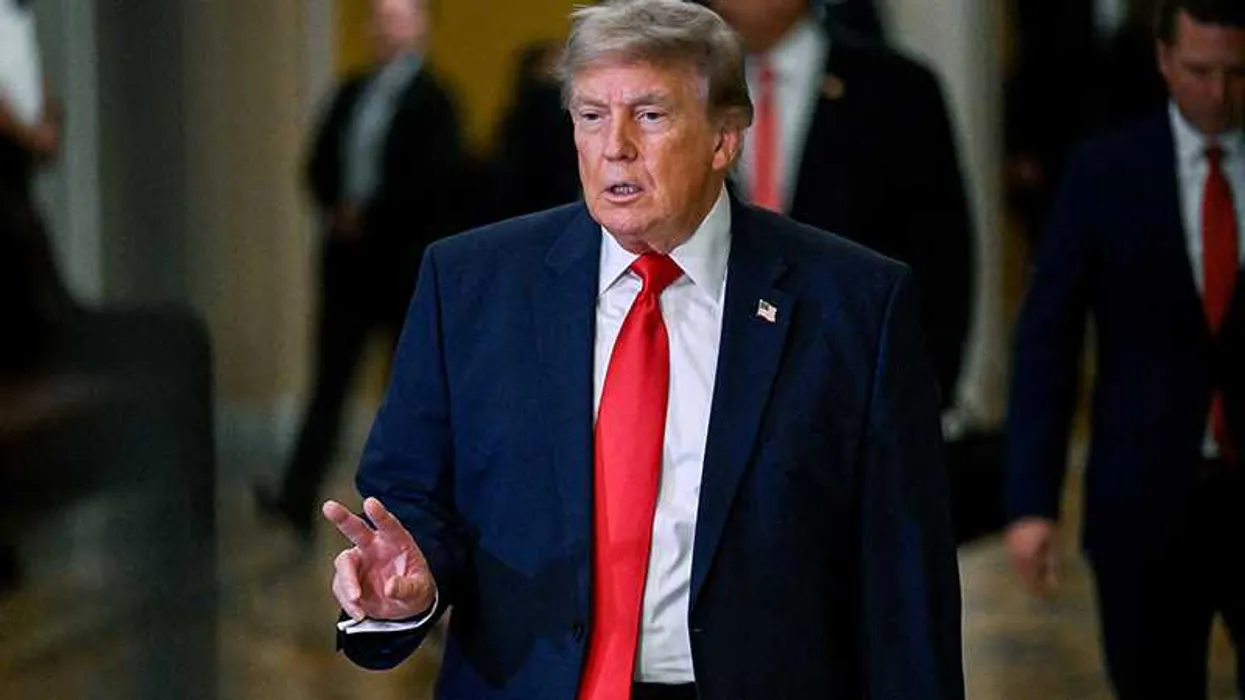
President Donald Trump's long-running ability to spin chaos to his political advantage is coming back to haunt him, with Republicans once considered safe in red districts now pouring money into campaigns aimed at surviving a potential blue wave, according to a Wednesday opinion column for The Washington Post by Kate Andrews.
Andrews wrote that the president is losing control of his chaotic brand of politics as angry voters, fed up with high prices brought on by his tariffs and the drawn-out war in Iran, head to the polls.
Trump, she noted, is struggling to accept what increasingly looks like a blue wave heading toward his party in November's midterm elections.
"I don't understand it, nobody does, nobody's been able to explain it," the president told reporters last month, adding: "Whoever wins the presidency, Republican or Democrat, automatically does poorly in the midterms. I don't know why ... but we shouldn't."
Whatever his confusion, the pattern he described is a fixture of American politics: since World War II, the president's party has lost seats in nearly every midterm election, making November's results a measure of whether this cycle defies or confirms that history.
Andrews argued that the answer is right in front of him. Voters are forced to live with the consequences of his White House's policies, and he can no longer spin enough chaos to distract them from the prices they pay on a daily basis.
"The disorder the president thought he owned has spun out of his control," she wrote.
The column cites research from the Federal Reserve Bank of New York showing that Trump's tariffs added 2.9 percentage points to the price of goods by February. According to the study, the tariffs were directly responsible for the inflated prices, and prices would have fallen if not for his economic policy.
While Trump repeatedly claims that foreign nations will pay the price of tariffs and that billions of dollars are pouring in, Andrews wrote that the reality is different: tariffs are collected from American importers when goods arrive at the border rather than from foreign governments, meaning U.S. businesses are taking the hit and are forced to pass the cost on to everyday shoppers.
Andrews also pointed to the war with Iran, which Trump boldly claimed would be over quickly when it began, estimating up to six weeks. Eight months later, the conflict has sent diesel and gasoline shooting up, driven by Iran's war-of-attrition tactics of holding up the Strait of Hormuz — the narrow waterway between Iran and the Arabian Peninsula that carries a substantial share of the world's oil, and whose disruption feeds directly into pump prices for American consumers.
For Republican candidates, Trump has given them little to defend, and more than a few have distanced themselves from him. Andrews cited polling indicating that Democrats are competitive in Senate races in Kansas and Texas — states Trump won by large margins. That shift, she said, is causing even areas that have always been Republican to appear politically uncertain. Because Senate seats are decided statewide, races in states this reliable for the GOP carry consequences for the balance of power in Washington.
In some of the closest contests, Republicans are now running advertisements attacking tariffs, while in others they are unwilling to join the president on the campaign trail — a split that will be on display as campaigns move into the final stretch before November.
The development is an awkward one for Trump, who earlier prospered by keeping the political conversation moving so rapidly that his opponents found it hard to keep up. But voters concerned about the cost of their groceries and gas, Andrews argued, do not need to be diverted by yet another White House show.
She claimed that Trump promised cheaper living costs and an end to prolonged foreign conflicts, but has in fact delivered the opposite.
Her conclusion summed up how Republican candidates are dealing with Trump's economic policies and his brand of politics: "They can't risk any more chaos," she concluded.

