Future presidents can't be trusted to undo Trump's power grabs, analysis argues
Key Takeaways
- •Jon Sopel, the BBC's former North America editor, published an analysis in The i Paper arguing that Trump's restructuring of executive power may permanently alter the U.S. government.
- •Sopel suggested that a strong Democratic showing in the November 2026 midterm elections could strengthen congressional oversight of the administration, though he considered such restraint far from certain.
- •Under the unitary executive theory, a future president, even one opposed to Trump's agenda, could keep running foreign policy without Congress, treating the Justice Department as a personal tool, and maintaining Trump's tariffs.
- •The Supreme Court's six-three conservative majority, which includes three Trump first-term appointees holding lifetime seats, and its July 2024 presidential immunity ruling will continue shaping U.S. law after Trump leaves office.
- •Sopel warned that on January 6, 2021, only Vice President Mike Pence's refusal to block certification of the 2020 election results averted a full constitutional crisis, a safeguard he doubts would be repeated.
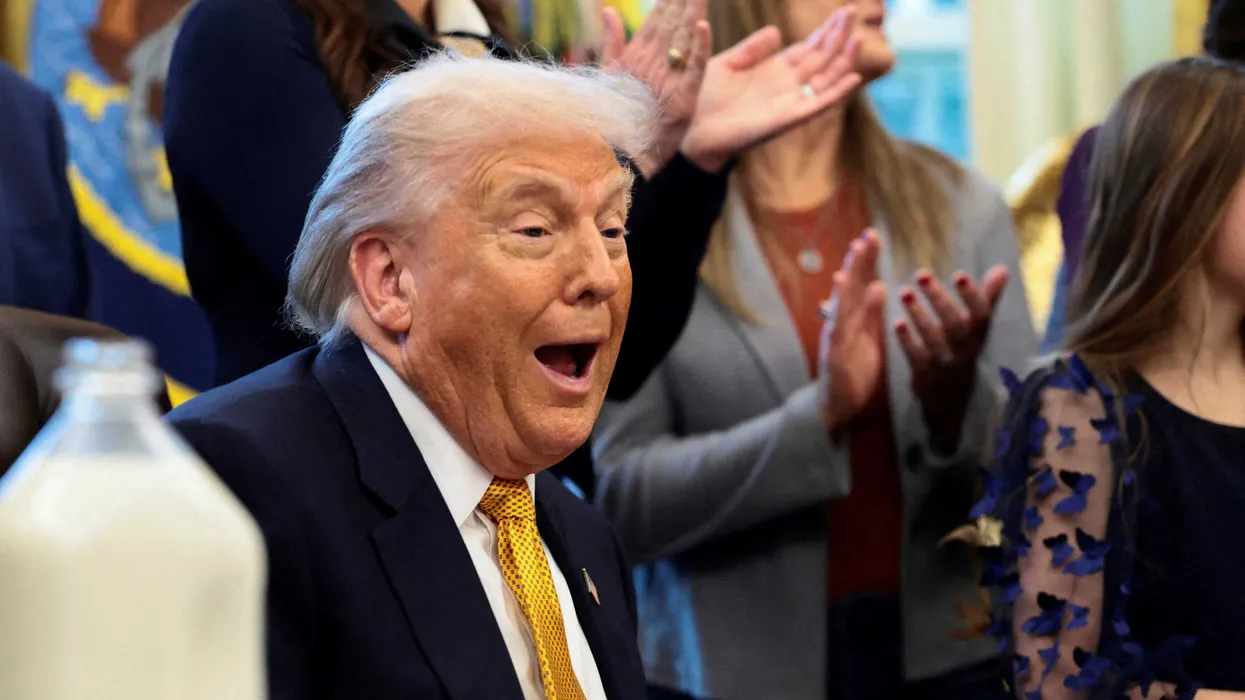
Donald Trump has done more than perhaps any other U.S. president to seize power and concentrate it in the Executive Branch, and a new analysis argues that Americans cannot count on future presidents to undo the damage. Trump is serving his second, non-consecutive term — the first ran from 2017 to 2021, and the current one began in January 2025 — a span that frames the analysis's central question of whether the changes will outlast him entirely.
The piece was written by Jon Sopel, a veteran journalist who previously served as the BBC's North America editor, and published Sunday in The i Paper. It was highlighted in an Alternet report. Sopel argued that "Trump's scheming" may have altered the structure of power in the U.S. government "forever," laying out his case for why Americans should not bet on even a future Democratic president reversing it.
Sopel acknowledged that upcoming elections could temper some of the behavior he described. "If the Democrats do well in the midterm elections – as they are forecast to do – that might change things a bit," he wrote. "Some of the more egregious behaviour of Trump and those around him will probably be curtailed because of the investigative powers that congressional committees will now have. There will be more oversight, and an increasing sense that the President is a lame duck with his powers on the wane. Maybe, just maybe that will encourage Republicans to regain some moral backbone – but that is far from certain." The midterms fall in November 2026, when all 435 House seats and roughly one-third of the Senate will be on the ballot — the chambers whose committees carry the investigative and oversight powers he described.
Still, Sopel maintained that the office itself has been fundamentally transformed. "Yet the president and the presidency has never been more powerful," he wrote. "Academics call it the unitary executive theory. And which new president coming to the Oval Office is going to say, 'I think I ought to have less power?' Sure, a new Democrat president could rule in a much more traditional way, obeying the norms that went before Trump. But he won't have to. He might just enjoy flexing his muscles in just the same way that the present incumbent has." The unitary executive theory is the constitutional reading under which the full executive power of the federal government rests with the president personally, with executive agencies and their officials subordinate to the president's direct control.
In other words, a successor — even one ideologically opposed to the MAGA agenda — is far from guaranteed to roll back Trump's excesses. Sopel pointed to the possibility that a future president could continue running U.S. foreign policy without input from Congress, continue treating the DOJ as their personal law firm, and keep Trump's historic tariffs in place.
Even if a Democrat inclined to reverse those practices enters the White House in 2029, Sopel argued that "there are structural shifts that are much more long lasting" that Trump has also inflicted on the country.
"The most notable is the Supreme Court," he wrote. "With its six-three conservative majority, it will continue to be a massive influence on all America's hot-button issues: abortion, guns, voting rights. And a ruling it made in the [tail] end of the Biden administration on presidential immunity and power will be felt long after Trump leaves office. In effect, the Supreme Court ruled that in the conduct of his duties the president can claim widespread immunity from prosecution. And you can be sure there will be pre-emptive pardons issued to his family before he leaves office to shield them from investigation, just as Biden did – disreputably in my opinion – with his son, Hunter, before he left the White House." The ruling was Trump v. United States, decided on July 1, 2024, which held that presidents are immune from criminal prosecution for conduct within their exclusive constitutional authority and presumptively immune for other official acts. Because justices hold lifetime appointments, the six-three conservative majority — which includes Trump first-term appointees Neil Gorsuch, Brett Kavanaugh and Amy Coney Barrett — will remain on the bench long after any single administration.
Sopel closed with a warning rooted in recent history. "America's democracy has rarely been tested, twisted and warped in the ways it has across Trump's two terms in office," he concluded. "On January 6, 2021, when the mob ran amok it was one man, the vice president, Mike Pence, refusing to do his boss's bidding that saved the US from a full-blown constitutional crisis. Would you bet on that happening again?" Pence was presiding over the joint session of Congress convened to certify the 2020 Electoral College results — the procedural duty Trump had publicly urged him to use to overturn the election result.

