Column Says Trump’s “Royal Injury” Reveals a Fatal Flaw in Monarchy
Key Takeaways
- •Bouie compares Trump’s White House imagery and planned projects to the symbols of monarchic rule in medieval and early modern Europe.
- •The column says Trump has used executive orders in ways that go beyond conventional policy direction and exceed formal presidential authority.
- •Trump has filed defamation lawsuits against multiple news organizations and threatened a $5 billion suit against the Center for American Progress.
- •Bouie argues that Trump’s trade conflict with Canada reflects a demand for submission and has deepened tensions between the two countries.
- •The column concludes that monarchy is vulnerable to the ruler’s personal flaws, and that concentrating power in one leader can produce disaster.
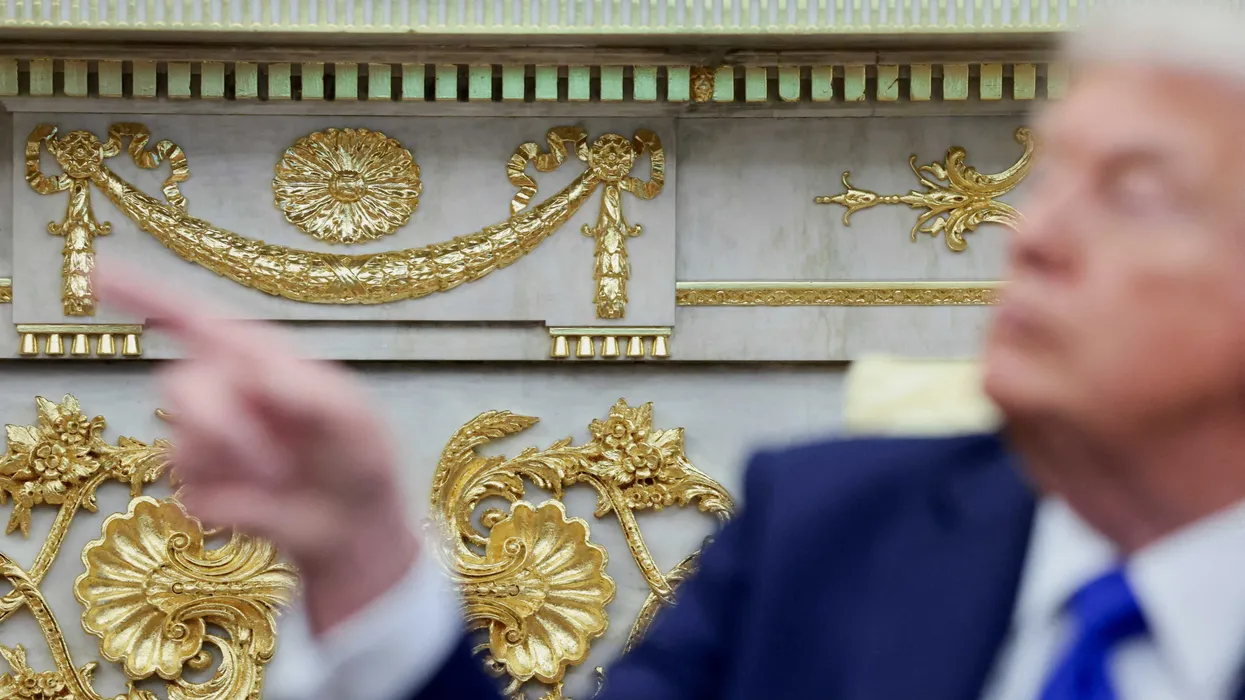
President Donald Trump’s approach to governing borrows heavily from the absolutist monarchies of medieval and early modern Europe, according to a new column, but his own personality defects have exposed the flaws in that system.
New York Times columnist Jamelle Bouie draws the comparison through Trump’s affinity for royal trappings, including a gold-draped Oval Office, gilded statues and monuments around Washington, a planned triumphal arch, and a newly built, oversized presidential ballroom carved out of part of the White House, along with other features associated with monarchist rule.
"To commit lèse-majesté was, and in some places still is, to commit an offense against dignity of the crown," Bouie wrote. "To insult or denigrate or even question the monarch was to undermine the state itself. In the absolutist states of medieval and early modern Europe, lèse-majesté was a high crime, punishable by death."
The 80-year-old president has also relied heavily on executive orders, which Bouie described as functioning less like conventional policy directives and more like royal decrees meant to be obeyed without challenge. Those orders have covered areas from ending diversity programs to rewriting citizenship rules, well beyond the president’s formal authority.
Trump has sued several news organizations, including ABC, the Wall Street Journal and the New York Times, alleging defamation. He has also threatened a $5 billion defamation suit against the Center for American Progress over a report questioning whether National Guard deployments to U.S. cities — projected to cost more than $1.7 billion through 2026 — have actually reduced crime.
"This sense of royal injury extends beyond Trump’s relationship to his political opponents," Bouie wrote. "You see it too in the way he deals with other countries — the way he treats anything short of total submission as an injury to him and thus an injury to the state."
Bouie said that dynamic is evident in Trump’s trade war with Canada, one of the closest economic partners of the United States. The dispute also shows how Trump’s style of rule can turn questions of policy into tests of personal loyalty or submission, a pattern that has become visible not just in domestic fights but in relations with allies as well.
"There is no logical reason for this conflict, and it does not serve the interest of people on either side of the border," he wrote. "It is principally a function of Trump’s boundless ego and his monomaniacal obsession with tariffs as the path to national prosperity."
Bouie argued the dispute has locked both nations into a destructive trade war and undermined trust between the two neighboring allies, while also highlighting the weaknesses of both Trump and the system of governance he appears to admire.
"The fatal flaw of monarchy is that the strength of the state depends on the personality and capacities of the monarch," Bouie wrote. "It subjects an entire people to the pathologies of that one man or woman: to his dysfunctions, his maladaptations and his twisted sense of self."
"Trump was democratically elected," the columnist concluded. "But both his unilateral exercise of authority and his monarchical aspirations are reminders, at the very least, that putting this much power in the hands of one man — in the hands of one ego — is a reliable way to produce disaster."
