Iran Mocks Trump's Economic Pressure Campaign as Experts Doubt Sanctions Will Force Concessions
Key Takeaways
- •President Trump's military campaign against Iran failed to achieve its stated goals, leading his administration to shift strategy toward economic pressure intended to force Tehran's capitulation.
- •Former officials and Middle East experts are skeptical that sanctions will make Iran relinquish its demand to toll ships through the Strait of Hormuz, the chokepoint for roughly one-fifth of the world's oil.
- •Iran previously circumvented the first-term "maximum pressure" sanctions by continuing to export discounted crude, largely to China, through a shadow fleet operating outside Western shipping and insurance channels.
- •The conflict has pushed oil prices back to about $90 a barrel and helped drive long-term U.S. borrowing costs to their highest level in nearly two decades, adding pressure ahead of consequential midterm elections.
- •Analysts including the International Crisis Group's Ali Vaez argue that a regime viewing the conflict as existential has no economic breaking point, while Tehran says six months of U.S. bombing has killed more than 3,000 Iranians by its own count.
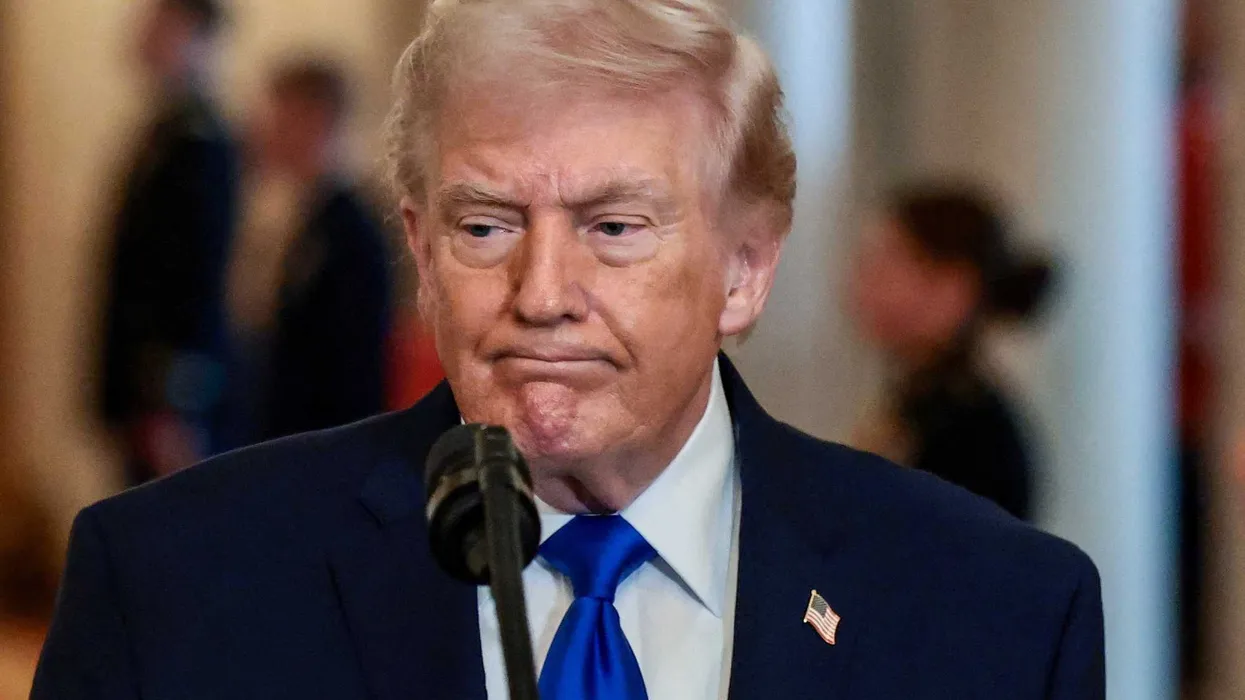
President Donald Trump's military campaign against Iran failed to achieve any of its stated goals, and his strategy has since shifted toward economic pressure that he hopes will force Tehran's capitulation. But according to new reporting from Politico, the plan has so far produced little more than mockery from the Iranian regime — and experts see little likelihood it will achieve anything more.
As Politico frames the standoff: "Trump is waiting for Iran to cave to his economic pressure. Tehran may be willing to wait even longer." Even as Treasury Secretary Scott Bessent promises a level of economic isolation "never seen before," former Trump administration officials, U.S. ambassadors and other Middle East experts are skeptical that tightening the economic vise will force Iran to relinquish its demand to toll ships passing through the Strait of Hormuz, the chokepoint through which roughly one-fifth of the world's oil passes, or to make the other concessions Trump is demanding to bring the war to an end.
"It's an attrition campaign, and I am sure Treasury tweaks this or that to fill gaps or expand coverage of sanctions," James Jeffrey, a former ambassador who served in the Middle East during three presidential administrations, including Trump's first term, told Politico. "But, it's hard to believe [there will be] something decisive after 20 years of U.S. sanctions and Iranian experience of going around them."
That skepticism is grounded in precedent. During his first term, Trump withdrew the United States from the 2015 nuclear agreement in 2018 and ran a "maximum pressure" campaign of reimposed sanctions; Iran kept exporting discounted crude, largely to China, through a shadow fleet of tankers operating outside Western shipping and insurance channels.
Jeffrey's assessment underscores the asymmetry of the stand-off. The Trump administration is staring down a consequential midterm election amid an unpopular war that has sent oil prices back up to roughly $90 a barrel and helped push long-term borrowing costs to their highest level in nearly two decades as hope dims that a peace deal is near. Iran's leaders, meanwhile, see the conflict as existential, giving Tehran reason to absorb extraordinary economic pain rather than accept terms it believes could imperil the regime — especially as U.S. inflation remains elevated.
According to Politico, former administration officials warn that Iran has an outsized incentive to muscle through the pain, leaving the success of Trump's economic pressure strategy in doubt. "I think the economic pressure would need to hit them in new ways we haven't seen so far to change the mindset of the regime," one former Trump administration official told Politico.
Iranian leadership, for its part, has been bluntly dismissive of the plan and has publicly mocked U.S. efforts to sanction the country into submission. Mohammad Bagher Ghalibaf, the speaker of Iran's parliament, posted: "Americans think squeezing Iran harder will win concessions that were never part of the agreement." He added: "Bessent and [Defense Secretary Pete] Hegseth are way out of their league. Stop waiting for the clown crew to pull a rabbit out of their hat and clean up the mess you made."
The Iranian economy has undoubtedly taken a severe hit. Earlier rounds of U.S. sanctions had already pushed the rial to a fraction of its former value and kept consumer inflation elevated for years. Yet, according to Politico, "those who have worked on previous Iran negotiations say that's far from enough to get the regime to cave, especially after six months of U.S. bombing that has killed, by Tehran's own measure, more than 3,000 Iranians."
Ali Vaez, the International Crisis Group's Iran project director, who helped bridge differences between Iran and world powers during negotiations over the 2015 nuclear agreement, under which Iran accepted strict limits on its nuclear program in exchange for relief from international sanctions, explained: "It's undeniable that there is economic pressure. The question is whether there is a breaking point, and I would say for a regime that is fighting for its life and has never hesitated to transfer economic pain to its population, there is no breaking point." For now, both governments appear braced for a contest of endurance, with Washington's midterm clock running against a regime with decades of practice riding out sanctions.