Trump's 'Beloved' Doral Golf Getaway Has Become a 'Ghost Town' Amid Intensified ICE Raids, Report Says
Key Takeaways
- •A report in The Bulwark describes Doral, Florida — home to Trump's golf resort and the upcoming December G-20 summit — as approaching a ghost town as a result of his administration's immigration enforcement.
- •Roughly 40 percent of Doral's population is Venezuelan, and the city backed Trump in the 2024 election by a 23-point margin, a 19-point swing from 2020.
- •Business owners in Doral report revenue declines of approximately 40 to 80 percent as residents avoid public places out of fear of ICE raids, detentions, and deportations.
- •The Trump administration moved in 2025 to terminate Temporary Protected Status and humanitarian parole, protections that had allowed hundreds of thousands of Venezuelans to live and work legally in the United States.
- •Asylum claims held by workers at some Doral businesses can take years to resolve in an immigration court system carrying a backlog of more than three million cases.
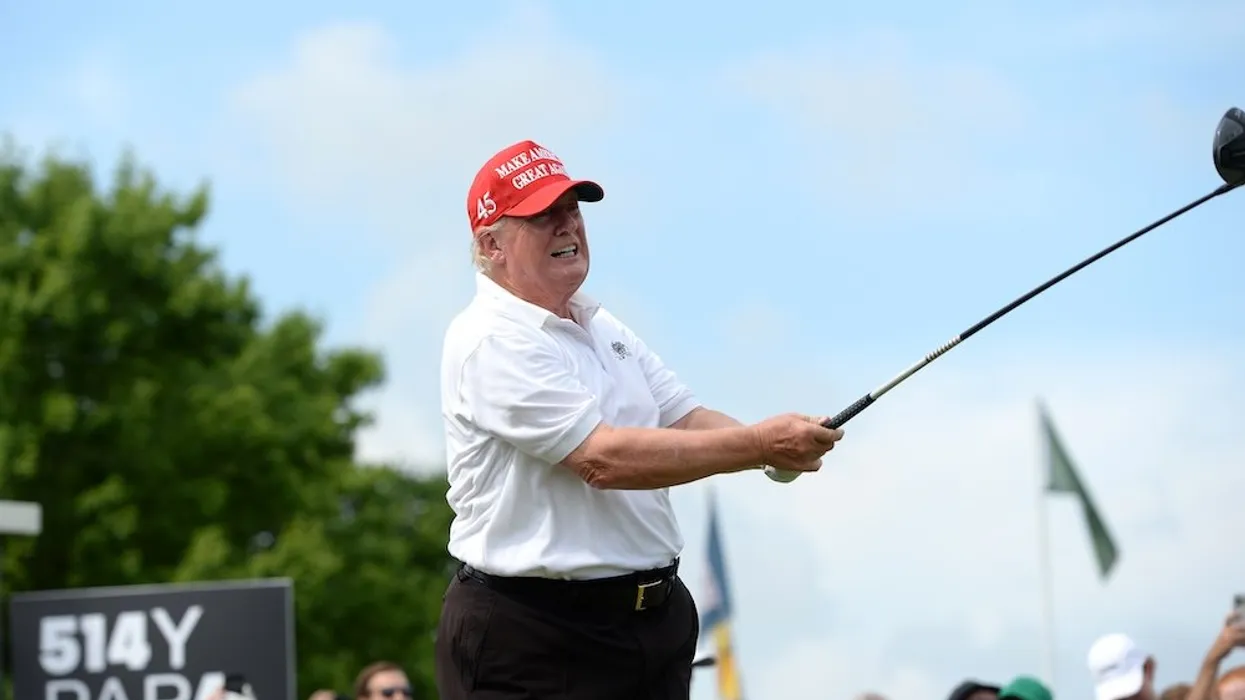
Doral, Florida — a city President Donald Trump has long treated as a personal showplace and one described as "central" to his personal "mythos" — has been rendered something close to a ghost town, according to a Friday report by Adrian Carrasquillo for The Bulwark, and the decline, the report argues, is a result of Trump's own policies.
Doral is a prominent city in the Miami-Dade metropolitan area, noted for its significant Latin American population, about 40 percent of which is Venezuelan. That community grew steadily over roughly two decades as political repression and economic collapse in Venezuela drove millions of people from the country, making Doral one of the principal centers of the Venezuelan diaspora in the United States. Like a number of heavily Latino communities, it broke for Trump in the 2024 election, voting for him by a 23-point margin — a 19-point swing from 2020.
Trump's connections to the area go much deeper than its politics, however. "Doral is a central location in the Trump mythos," Carrasquillo wrote. "His golf course there is something he speaks about with immense pride. And he sees his club as a Bretton Woods of the south." The G-20 is being held at Trump's D resort in December. During his first term, Trump tried to invite Vladimir Putin to the G-7 there before abandoning those plans amid political backlash. And when Trump renovated the Rose Garden during his second term, Carrasquillo noted, it was clearly the trappings of Doral that he sought to recreate.
All of that reverence for the city, the writer argued, makes it all the more "profound" how much Doral has succumbed to "deterioration" in the last few years — evidence, he wrote, that "Even Trump's cherished places are not immune from the chaos he's unleashed."
The report describes a business community hollowed out by fear of intensified raids and enforcement by U.S. Immigration and Customs Enforcement (ICE), the Department of Homeland Security agency responsible for immigration arrests and deportations inside the United States. "When I got to El Arepazo at lunchtime, my guide, Ade Ferro, a Venezuelan activist and Democratic organizer, remarked that she had never before snagged a parking spot right in front of the restaurant because the place was always too busy — but now she got one easily," Carrasquillo wrote. "Surrounded by mostly empty tables, I asked an employee how ICE's increased raids and enforcement efforts in the city had affected their business. Was it down 30 to 40 percent, the sort of figure I had heard cited by struggling business owners in Latino corridors across Chicago and in Minneapolis over the past eighteen months?"
"It's more like [down] 80 percent," the employee responded. "People are scared to come out and visit. When we make specials, sometimes we have to throw them out because they go bad."
The owner of the Central Park Food Station, another Venezuelan restaurant in Doral, estimated that business was down 40 percent, with conditions growing even worse as ICE activity surged over the past month. "People aren't coming. They're scared," the owner explained. "It's a chain: they don't go to work, so they don't make money, so they don't come and spend money."
"It isn't dark magic that is causing these restaurants to struggle and Doral to be a ghost town," Carrasquillo continued. "The people haven't just vanished. They've had their status stripped away and now fear being chased and rounded up, detained, and deported, as has happened already to many of their compatriots. I have to be careful with details here — for reasons of safety and to avoid re-traumatizing people. At multiple businesses I visited, members of the staff had open asylum cases."
The status Carrasquillo described is largely Temporary Protected Status and humanitarian parole — protections that allowed hundreds of thousands of Venezuelans to live and work legally in the United States, and that the Trump administration moved to terminate in 2025 amid ongoing court challenges. Asylum claims like those held by workers at multiple businesses Carrasquillo visited can take years to resolve in an immigration court system carrying a backlog of more than three million cases.
Source: Alternet
Related X post: https://x.com/ddiamond/status/1000625895219658?lang=en

