Trump’s $500 ACA Checks Draw Claims of Political Motive and ‘Overcharge’ Misrepresentation
Key Takeaways
- •About one million ACA marketplace enrollees in 30 states, including Texas, Florida, Ohio and Michigan, will receive $500 checks signed by Trump days before the November 3 election, accompanied by letters claiming the Biden administration overcharged them and kept the excess money.
- •KFF health-policy experts say the funds most likely originated during Trump's first term, when roughly $1 billion in unspent marketplace user fees accumulated, and the administration has provided no evidence supporting the overcharge claim.
- •The New York Times reported that the $500 payment exceeds what any individual recipient could have paid in excess fees and that the administration has not published the accounting behind the program.
- •Recipients, who mostly earn under $65,000 annually, face sharply higher insurance costs after ACA subsidies were allowed to expire, while roughly three million Americans who dropped coverage over the higher prices will not receive checks.
- •The program follows Trump's September 9 promise of $5,000 payments to every American family if Republicans keep control of Congress, adding to earlier undelivered promises such as DOGE dividend checks, $2,000 tariff rebates and a $2,000 COVID-19 stimulus check.
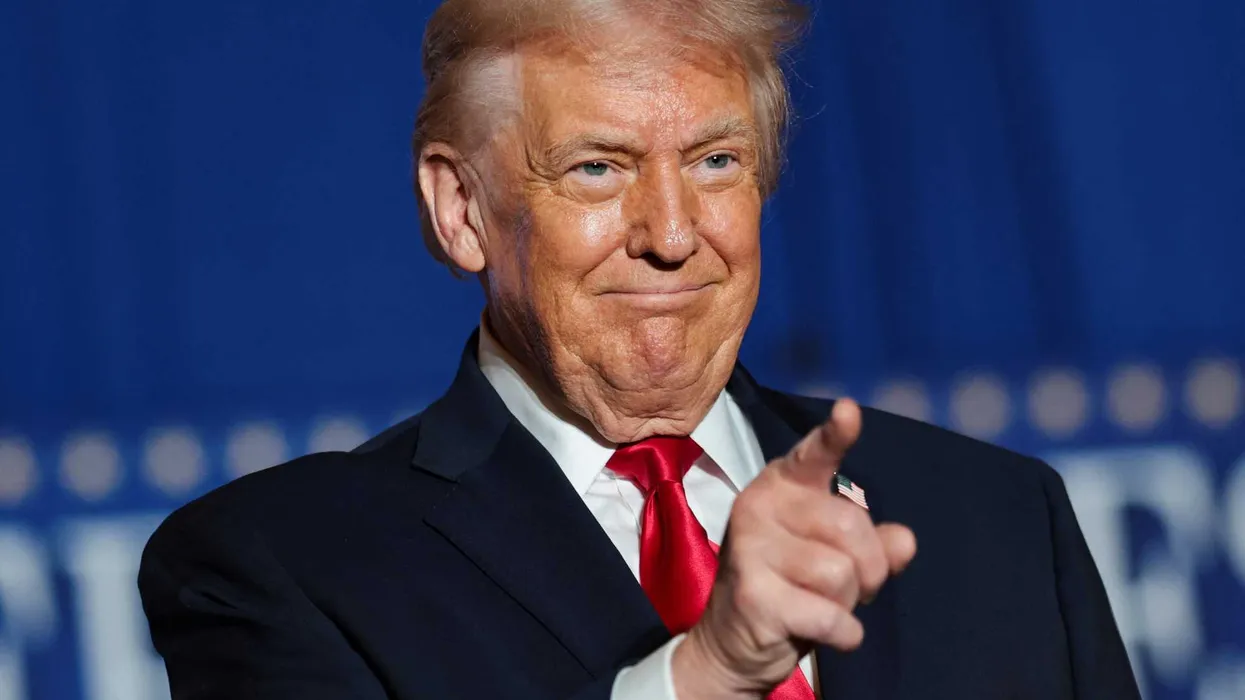
The White House says about one million Americans will receive $500 checks in the mail over the next few days. The checks, prominently signed by Donald Trump, will be accompanied by letters claiming that the Biden administration overcharged people who purchased health insurance through the Affordable Care Act marketplace and kept the excess money.
The payments have been presented as Obamacare rebates, but the program has prompted questions about their source, accounting and timing. The checks are being distributed weeks before the November 3 election and are going to people who purchased their own health insurance through the federal ACA exchange.
The White House’s announcement followed Trump’s September 9 appearance at a convention in Dallas, where he promised to send a $5,000 payment to every American family if voters kept Republicans in control of both the House and the Senate. Reports on that promise appeared in The San and The Washington Post.
The article argues that the $500 checks are intended to make the $5,000 proposal appear more credible. Trump previously promised $5,000 DOGE dividend checks, $2,000 tariff rebate checks and $1,500 payments associated with a Republican restructuring of Obamacare. None of those payments materialized, according to the article. Shortly before the 2020 election, he also promised a $2,000 COVID-19 stimulus check that was never delivered.
Other promises cited in the article include a 10% credit-card interest rate, medications that would be “1000% cheaper,” lower grocery and gasoline prices, an end to what Trump called “stupid wars,” a Trump healthcare plan, a balanced budget, the release of the Epstein files and “millions of jobs.”
The letter accompanying the new payments reportedly says that the Biden administration “massively overcharged” marketplace enrollees by collecting more in user fees than were needed and retaining the surplus. In a video announcement, Trump said: “The last administration knew about this, they studied it, but they kept the money.”
Trump and his administration have not provided evidence for that claim, according to the article. Health-policy experts at KFF have said the money most likely originated during Trump’s first term, when his administration collected substantially more in marketplace user fees than it spent, leaving an estimated $1 billion in unspent funds. Coverage of the program was also reported by The New York Times, CNBC, ABC News and Fox 11 Los Angeles.
Larry Levitt of KFF told The New York Times that Biden lowered the marketplace user fees. Levitt also said the surplus being distributed came from money set aside for advertising and organizations that help people enroll in coverage. The article says Trump declined to spend those funds because he wanted the ACA to fail, and characterizes the payments as money retained during Trump’s first term rather than an overcharge created by Biden.
The Times reported that the $500 payment exceeds the amount any individual recipient could have paid in excess fees. It also reported that the administration has not published the accounting underlying the program. If the goal were simply to return an excess charge, the article says, another option would be to reduce the marketplace fee and allow premiums to fall for ACA enrollees. The article contends that such a policy would not place checks in the hands of one million voters shortly before an election.
The recipients are people who purchased coverage through the federal ACA exchange. The article estimates that virtually all of them earn less than $65,000 annually and identifies farmers, ranchers, small-business owners, hourly workers and early retirees among the likely recipients.
Their insurance costs have increased by thousands of dollars this year, according to the article, after Trump’s “Big Beautiful Billionaire’s Bill” allowed ACA subsidies to expire as part of a tax-cut measure. The article says roughly three million Americans dropped their coverage after being unable to afford the higher prices. Because those people are no longer enrolled in marketplace plans, they will not receive the new checks. The article further predicts that the loss of coverage will lead to premature deaths, though it provides no supporting evidence for that prediction.
Insurers are also seeking another 15% increase in Obamacare premiums for the following year, according to preliminary filings reported by Fierce Healthcare. The article attributes the proposed increase to insurers’ pursuit of higher profits and uses strongly critical language to describe insurance-company executives.
The payments will be distributed in 30 states, including Texas, Florida, Ohio, North Carolina, Michigan, Wisconsin and Arizona. The article says Trump is returning $500 to families affected by higher costs while seeking their votes on November 3.
It places the payments in a broader discussion of money and politics. Elon Musk gave million-dollar checks to voters in Pennsylvania in 2024 and did so again during Wisconsin’s 2025 Supreme Court race. A bipartisan state elections commission found probable cause that Musk violated Wisconsin’s election-bribery law, according to Local 10.
The article also says Trump told two dozen oil executives at Mar-a-Lago in 2024 that a $1 billion contribution to his campaign would lead him to eliminate environmental rules they opposed. It links that allegation to subsequent policies that paid companies billions to abandon wind and solar projects, increased subsidies and deductions for fossil-fuel companies, weakened clean-air protections, ended electric-vehicle subsidies and revived coal-fired power plants. Reporting on Trump’s relationship with the oil industry appeared in The New Republic.
The article further states that the Department of Homeland Security spent $220 million on advertisements thanking Trump and that companies connected to his campaign operatives received at least $23 million in commissions. That claim was reported by Yahoo News.
The article presents these examples as evidence of what it describes as a pay-to-play approach to politics, in which corporate and wealthy donors provide money and politicians deliver favorable policies. It cites oil companies, pharmaceutical firms, banks and technology billionaires as examples of interests that support Republican candidates and seek legislation benefiting their industries.
It also traces the history of campaign-finance restrictions and later court rulings. Following scandals involving robber barons during the Gilded Age, President Theodore Roosevelt supported the Tillman Act of 1907. The law made it a felony for a corporation to provide any support or money to the campaign of a candidate for federal office.
The article’s author connects the modern system to Lewis Powell’s 1971 memorandum, President Richard Nixon’s appointment of Powell to the Supreme Court in 1972, and a series of decisions, including Bellotti and Citizens United. Bellotti was authored by Powell. The article argues that those rulings redefined political bribery as protected “free speech.” Its discussion also appears in the author’s book, The Hidden History of the Supreme Court and the Betrayal of America, listed by Amazon.
The article concludes that a political system in which votes are treated as purchases is incompatible with democracy. It argues that citizens should choose leaders according to what is best for their families and country, rather than according to which billionaire or corporation distributes the most money.
In its final recommendation, the article tells recipients to cash the checks if they arrive, describing the money as theirs, and then to vote with awareness of the policies that increased their insurance premiums.

