Will Scharf Named White House Counsel as Legal Analysts Call Him a Stephen Miller 'Clone'
Key Takeaways
- •Will Scharf will replace David Warrington as White House counsel on Sept. 1 after serving as White House staff secretary.
- •The White House counsel advises on executive legality, ethics, privilege and responses to congressional investigations, and traditionally serves the presidency rather than the president personally.
- •Scharf worked on multiple Trump legal matters, including election-interference, civil fraud, defamation and hush money cases, and helped with the 2024 presidential immunity ruling.
- •Legal analysts on the Legal AF podcast criticized the appointment as another sign that Trump is elevating personal loyalists into major legal roles.
- •The New York Times reported that Scharf has at times internally opposed some Miller-backed proposals on habeas corpus and the Insurrection Act.
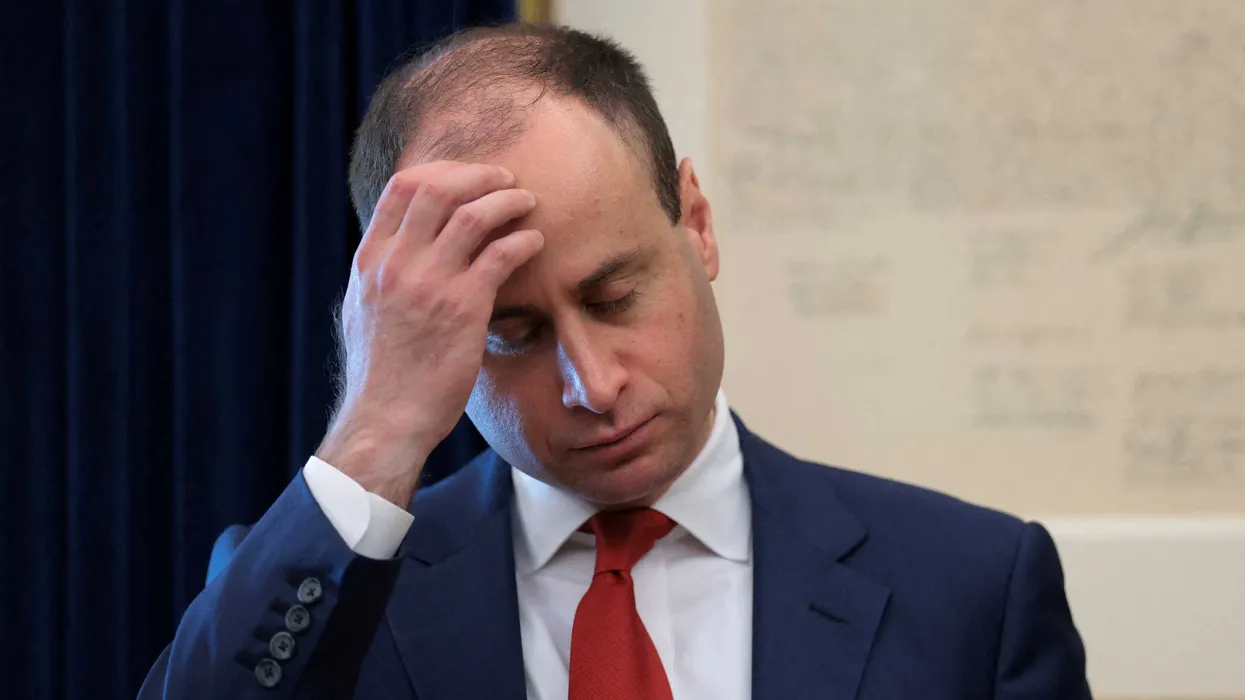
President Donald Trump's decision to install Will Scharf as White House counsel drew sharp criticism from legal analysts on Saturday, who described the move as another reward for personal loyalty.
Trump announced on Aug. 9 that Scharf, currently the White House staff secretary, will replace David Warrington on Sept. 1. The staff secretary's job, though largely anonymous, controls the flow of paperwork and decision memos that reaches the president's desk. Warrington himself previously did legal work for Trump's campaigns and political committees, and Scharf takes over the counsel's office with the November midterm elections approaching.
The counsel is the president's top in-house lawyer — a role distinct from the attorney general, who heads the Justice Department. The office advises on the legality of executive actions, handles ethics questions, asserts executive privilege and manages legal responses to congressional investigations and subpoenas. By long-standing convention, its client is the office of the presidency rather than the president personally. In Trump's first term, Don McGahn's tenure overlapped the Mueller investigation and Pat Cipollone steered the office through the first impeachment and its Senate trial.
Reviewing the appointment on Michael Popok's Legal AF podcast, attorneys Brian Kabateck and Shant Karnikian called Scharf a "clone" of Stephen Miller — whom they referred to as Trump's "brain" — and portrayed him as yet another ideologically driven young loyalist being handed a premier legal role. Miller serves as deputy chief of staff for policy in the current administration and has been the driving force behind Trump's immigration agenda since his first term.
According to CBS News, the 40-year-old holds degrees from Princeton and Harvard Law, clerked for federal appeals Judge Raymond Gruender on the 8th Circuit, and later served as a federal prosecutor in Missouri's Eastern District.
Scharf joined Trump's private defense operation in October 2023. There, he worked on the election-interference charges pursued by special counsel Jack Smith, the civil fraud lawsuit filed by New York Attorney General Letitia James, the E. Jean Carroll defamation appeal, and the Manhattan hush money prosecution. Trump lost most of those matters, though Scharf helped secure the Supreme Court's landmark presidential immunity ruling in 2024, which held that former presidents are immune from criminal prosecution for official acts.
Scharf ran unsuccessfully in the 2024 Republican primary for Missouri attorney general, losing to incumbent Andrew Bailey by 26 points. In 2023, he co-founded Jews Against Soros with commentator Josh Hammer, a group built around opposing the billionaire Democratic donor. As a Princeton senior in 2008, he was charged with serving alcohol to minors at the Charter Club eating club he presided over; the charges were later dropped.
As chair of the National Capital Planning Commission, Scharf helped clear approvals for Trump's $400 million White House ballroom and his planned triumphal arch at the Memorial Bridge, according to Axios.
The New York Times reported, however, that Scharf has occasionally pushed back internally, warning against Miller-backed proposals to suspend habeas corpus for undocumented immigrants and invoke the Insurrection Act — precisely the sort of executive-power questions the counsel's office would be tasked with vetting.
On the podcast, Kabateck delivered a withering assessment of the pick.
"The scientists under the White House, hundreds of feet below the White House, took Stephen Miller and they cloned him," he joked, drawing a laugh from his co-host. "I mean, honestly, though, Shant, this guy, though he doesn't necessarily look like Miller, he seems like ideologically he's another Miller."
Kabateck noted that Trump appears to be surrounding himself with his personal lawyers, and floated a theory he acknowledged might be offensive.
"I apologize if I offend somebody. But I don't know if, at the end of the working day, does he go down to that basement 100 feet below the White House and get in a little box and they close the box?" he joked.
"Yeah, I was going to say, because there's less sunlight there. That's probably where they keep him," replied a grinning Karnikian.
"And the little rats and mice and things like that," said Kabateck.
"Yeah. Other rats like Stephen Miller," Karnikian replied.
The exchange aired on the Legal AF episode "Trump Adds Failed Lawyer as White House Implodes!"

