Trump Says His New White House Underground Complex Would Make Any Occupant 'Awfully Tough to Get Out'
Key Takeaways
- •President Trump personally toured the White House construction site with New York Magazine reporter Ben Terris and defended the project despite criticism.
- •The ballroom and underground complex project is legally contested, with Trump's team arguing it is necessary for national security.
- •Trump said the planned complex could extend five stories underground and include a rooftop drone port, bulletproof windows, and a nuclear-blast-resistant military wing.
- •Trump described the White House's existing bunker facilities as minimal and far short of his envisioned project.
- •Asked about fears he might stay in the complex after the 2028 election, Trump said it would be very difficult for anyone to be removed from it.
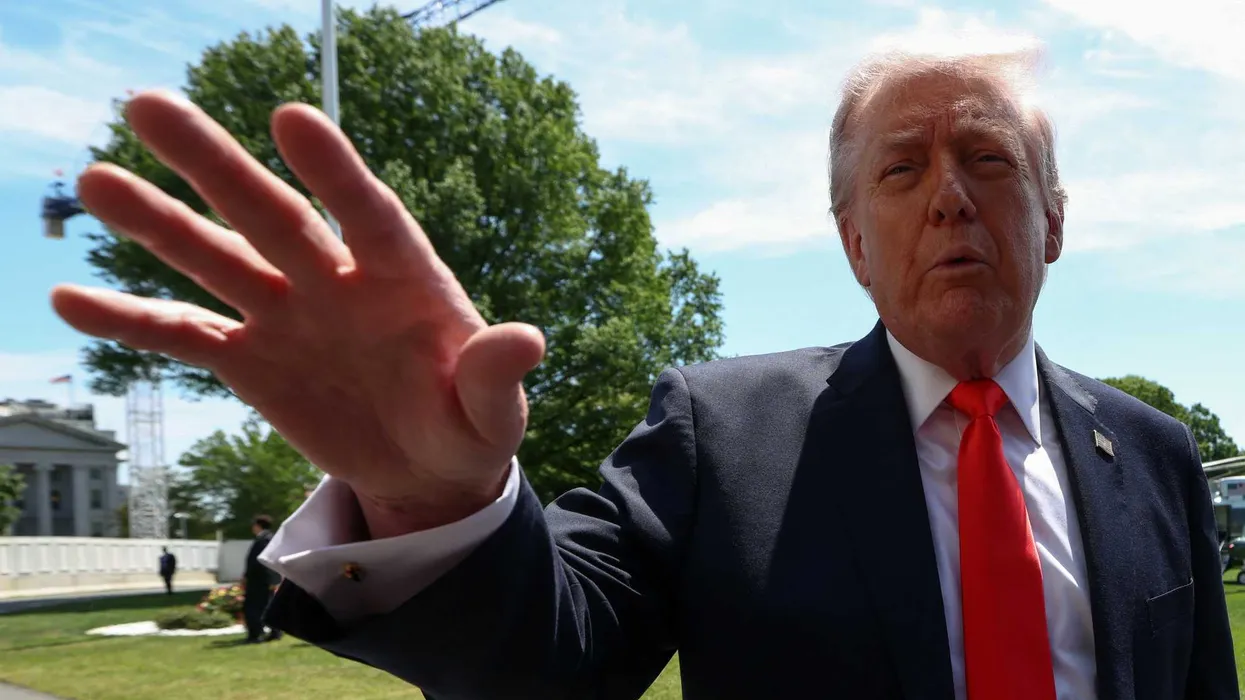
President Donald Trump quietly acknowledged the possibility of a nightmare scenario that critics of his massive White House ballroom project have raised, telling New York Magazine that once his underground complex is built, "it would be awfully tough to get you out."
The 80-year-old president gave a personal tour of the construction site where the East Wing once stood to New York Magazine reporter Ben Terris, and he addressed some of the political concerns surrounding the legally contested ballroom, as reported by the magazine. The project, which has drawn scrutiny for the pace and scale of construction on historic White House grounds, has also been the subject of litigation seeking to halt work.
"I think the people should be for it," Trump said when asked about those concerns. "A lot of people said, 'Don't do this interview.' But I'm proud of the work I'm doing."
Walking the reporter through the site, Trump pointed out a pathway leading to the White House residence that had once been asphalt but was now being converted to square-cut granite tiles.
"Look at the thickness of it," Trump said. "Normally, you use one inch, as thin as you can. It's the White House — I said, 'F--- it, what's the best you have?' They said, 'We have one that's four inches.'"
Trump and his legal team have responded to legal efforts to slow construction on the project by arguing that it is necessary for national security. The framing echoes a long history of hardened presidential facilities — the White House is widely reported to have included a reinforced underground area since the Eisenhower era, later expanded during subsequent administrations — though Trump told Terris the current arrangements fall far short of what he envisions. The president said top generals immediately arranged a meeting when they caught wind of his plans.
"They said, 'Sir, we'd like to build things, it would be a dream, but there's never been anything like this proposed,'" Trump told Terris. "'If we could build underground, we could go down five stories.'"
Trump's boasts about the project's rooftop drone port, bulletproof windows, and an underground military wing secure from nuclear blasts prompted Terris to ask whether the White House currently has a bunker where the president could go in case of an emergency.
"Not much of a place," Trump said. "You can't do much under a building that's a little on the fragile side. You can put a little room, but you can't put much under the White House. Nothing like this."
Terris then asked him directly about fears that have been floated — that Trump might hole up inside his new bunker after the 2028 election and simply remain in the White House. Such questions have followed Trump's repeated public remarks declining to rule out seeking a third term, which the Constitution's 22nd Amendment bars.
"I haven't heard that one," Trump told the reporter with a laugh. "But I tell you what, it would be awfully tough to get you out. Nobody would be able to get you out."

