Trump Gives Cryptic Answer About 'Holing Up' in White House Ballroom Bunker After 2028
Key Takeaways
- •President Trump gave an evasive response when asked whether a bunker under his White House ballroom was meant for staying in power after the 2028 election.
- •The ballroom project, announced last summer and begun in the fall, was initially justified for state functions but is now framed as a national security matter.
- •Planned features include a rooftop drone port, bulletproof windows and walls, and an underground military wing with a hospital replacing the WWII-era Presidential Emergency Operations Center.
- •Legal efforts to slow or stop the construction have so far been unsuccessful despite oversight bodies historically reviewing major White House alterations.
- •Trump has repeatedly joked publicly about seeking a third term, though the 22nd Amendment limits presidents to two elected terms.
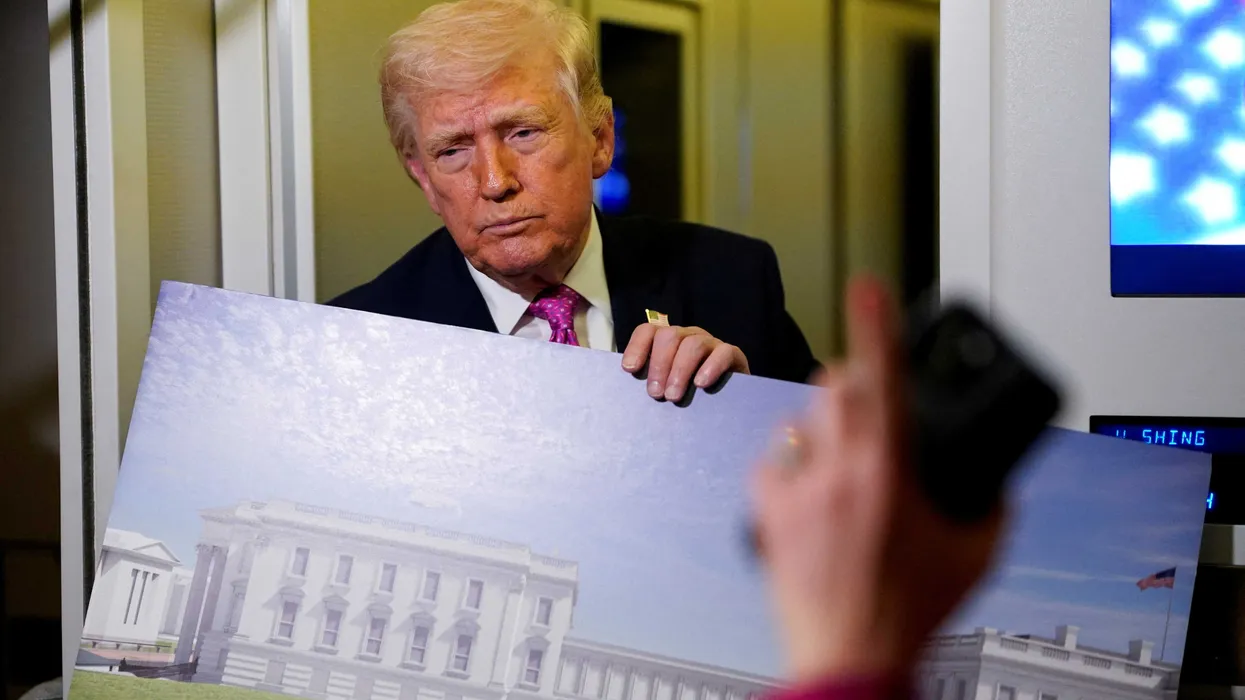
President Donald Trump gave a less-than-reassuring response when asked on Friday about a conspiracy theory concerning his much-demanded White House ballroom — specifically, the suggestion that once his term ends, he plans to lock himself away in the bunker being constructed beneath it.
According to Ben Terris, Washington, D.C. correspondent for New York Magazine's the Intelligencer, who toured the construction site with the president, Trump did little to alleviate those concerns.
"I asked Trump if he was building himself a bunker so he could hole up in the White House after the 2028 election," Terris wrote. Trump's reply was evasive at best.
"I haven't heard that one," the president said. "But I tell you what, it would be awfully tough to get you out. Nobody would be able to get you out."
Speculation that Trump intends to barricade himself in the bunker has circulated for months. He announced plans to build the ballroom last summer and began construction that fall, and the project has been plagued by controversy ever since. Initially, Trump said the ballroom was needed to host state functions, arguing that it was something presidents had long wanted. That rationale shifted, however, in an apparent effort to placate the public and the courts. Increasingly, he has framed the project in military terms, with the bunker playing a central role in that proposed use.
As Terris explains: "In recent months, in their successful effort to beat back attempts to slow down construction, Trump and his legal team have leaned into another justification for the project. It is, they say, a matter of national security. When the military first heard Trump talk about the ballroom, he says, top generals arranged a meeting. 'They said, "Sir, we'd like to build things, it would be a dream, but there's never been anything like this proposed,"' Trump says. '"If we could build underground, we could go down five stories."' Now, whenever Trump talks about the ballroom, he always brings up the drone port that will be housed on the roof, the bulletproof windows and walls, and the underground military wing, which will replace the Presidential Emergency Operations Center, the bunker built beneath the East Wing during World War II. The new bunker will keep the president safe from nuclear blasts and contain a fully operational hospital."
The third-term talk animating the bunker speculation runs against a firm constitutional constraint: the 22nd Amendment, ratified in 1951, limits presidents to two elected terms, a barrier that would require a constitutional amendment — not merely an election victory — to change. Trump, however, has repeatedly joked in public about seeking a third term, and those remarks have kept the question in political circulation.
The project has also drawn scrutiny because of where it is being built. The White House grounds fall under strict oversight, and major alterations to the complex — whose existing structures date in part to the early 19th century and were rebuilt during the Truman era — have historically been subject to review by bodies such as the Commission of Fine Arts and the Committee of 100 on the Federal City. Legal efforts to slow the construction, as Terris notes, have so far failed to stop it.
Trump's reluctance to give up power, along with his frequent taunts that he wants to run for a third term in 2028, has fueled concerns that he intends to use the fortified bunker for nefarious purposes. As one commenter replied to the article: "He is telling you, he is never leaving. We are going to have to dig him out like a tick."

