Trump Has Made Himself 'President and First Lady' in East Wing Ballroom Push, NYT Contributor Argues
Key Takeaways
- •The East Wing, completed in 1942, housed the first lady’s offices and staff before being demolished for the ballroom project.
- •Trump has held two state dinners during his second term, honoring King Charles III and Queen Camilla, and Chinese President Xi Jinping and his wife.
- •Moaveni argues that Trump’s control of White House entertaining has reduced Melania Trump’s visibility and overshadowed her advocacy work.
- •The essay describes state dinners and the social secretary’s role as important avenues for women’s participation in presidential politics.
- •The ballroom’s future guest lists, honorees and treatment of the first lady could indicate whether the historical traditions associated with the East Wing continue.
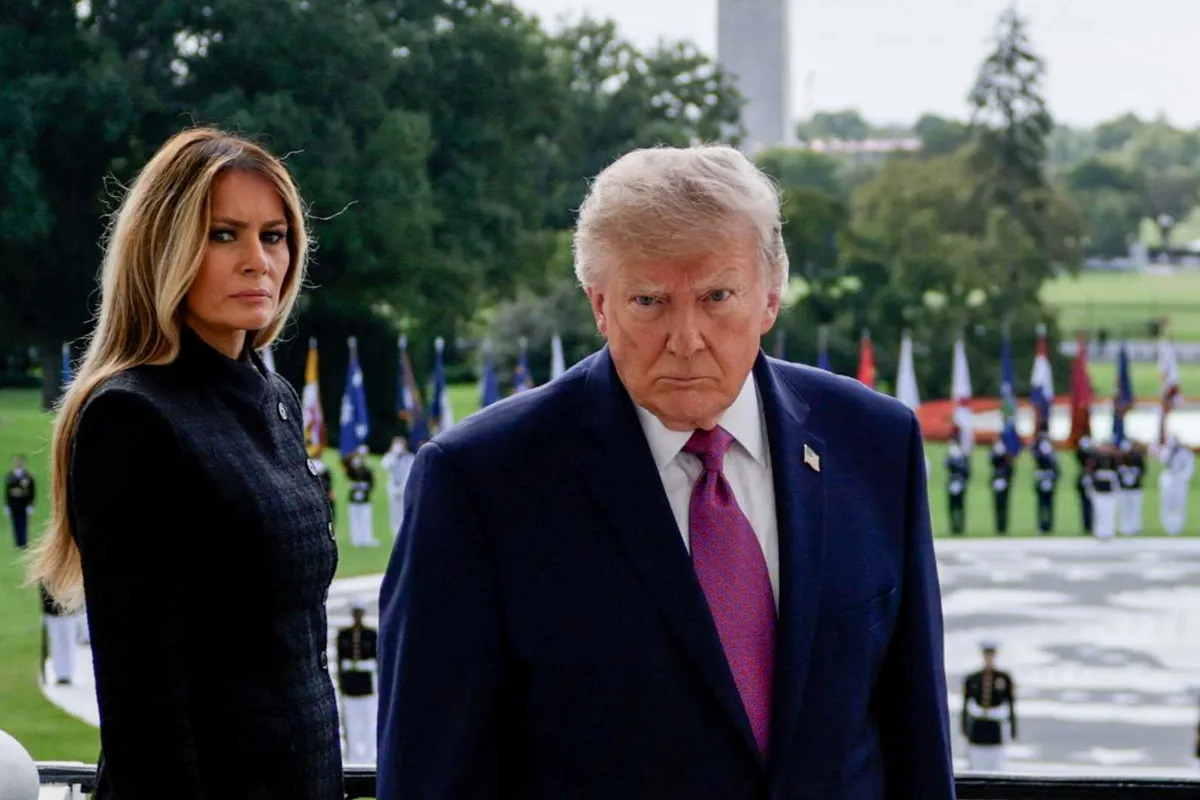
President Donald Trump has elevated the construction of a White House ballroom into one of his foremost priorities, concentrating on the project even as his war with Iran spirals and the economy deteriorates. When the East Wing was demolished to clear the way for the addition, New York Times contributor and gender researcher Azadeh Moaveni writes in an opinion essay published Tuesday in The New York Times, Trump effectively assumed the duties traditionally wielded by the first lady — making himself, in her words, "president and first lady" while his wife was pushed aside. The East Wing, completed in 1942, has long housed the first lady's offices and staff — the institutional base of a role Moaveni argues Trump has now absorbed.
Jackie Kennedy is credited with turning White House state dinners into arguably the most coveted invitation in the world. But as Moaveni explains, the political power of presidential entertaining was appreciated from the beginning: "John F. Kennedy himself was gloriously attuned to the power of setting the political tone through entertaining. He often called his social secretary, Tish Baldrige, to discuss household matters, and once pushed for French dishes on menus to be listed in English to avoid sounding too effetely European. Ms. Baldrige herself approached these dinners with ruthless political acumen. She asked the C.I.A. to prepare profiles of world leaders for Mrs. Kennedy, sent the agency thank-you notes and diarized how America had performed."
In the decades since, White House dinners have continued to be wielded with similarly careful attention to how the experience can drive a political agenda. Trump has claimed he needs the new ballroom for precisely such ends, but Moaveni argues his own record has not made that case.
"While the president is keenly attuned to the importance of a true state dinner," she writes, "he has hosted only two in his second term, both for figures — King Charles III and Queen Camilla, and President Xi Jinping of China and his wife — for whom no less formal an occasion would be appropriate. The dearth of state dinners held thus far by the builder president — the president who dreams of America's future parties — has not helped make the case for the ballroom's urgency. Neither does the absent voice of the first lady on the matter, nor the absence of a social secretary in toto." With the ballroom intended to host precisely such occasions, the cadence of future state dinners — and the first lady's place in them — will offer a concrete measure of that argument.
Traditionally, Moaveni writes, "the first lady and the social secretary play central roles in these dinners," and Trump's dominant presence while hosting has stolen the limelight from Melania Trump, whose projects and advocacy work suffer from inadequate public and media attention — much like those of the "impressive but overlooked" Pat Nixon. "Mr. Trump at times appears to wish to be both president and first lady," she observes, asking how widely it is known that the first lady "was instrumental in getting the Take It Down Act, which criminalizes deepfake and revenge porn, passed in Congress," or that her team "helps push for the return of kidnapped Ukrainian children from Russia."
As much as the state dinner evolved into a tool of statecraft, Moaveni writes, it also trailblazed a path for women to participate in the presidency and political life. The social secretary was the first staff position on the federal payroll awarded to a first lady, and the first White House role for a woman above the grade of maid, clerk, or cook.
"This is partly why the razing of the East Wing was traumatic," she writes. "It demolished a hallowed site of women's history with blitheness. There was nobody there to pause and say: Here was the place where Eleanor Roosevelt's aides toiled during the Second World War. Here was where they organized women-only news conferences to push newsrooms to hire more women and helped the first lady sell the New Deal to a suffering, frightened America."
According to Moaveni, those angered by the demolition "are contending now with the loss of that office's symbolic role — both as the soul of the East Wing as a physical structure and as the driving force behind the spectacle of political entertaining. The first lady is historically the star of the state dinner, taking on queenly attributes and accruing cultural capital that she then uses to advance her projects and the presidency. At the recent state dinner for Mr. Xi, by contrast, Mrs. Trump almost seemed aware she would not be the center of attention: She wore trousers, which had an almost Fräulein Maria-level depomping effect."
During Trump's first presidency, some in his orbit pushed for him to deploy Melania more prominently, but were rebuffed. "One aide who worked for the White House during the first Trump term told me Mr. Trump approached the presidency as a one-man show," Moaveni writes. "His masculinist, warrior persona made the traditional softening effect of a consort unwelcome." The aide said Trump also could not stand sharing attention — the opposite of John F. Kennedy, who famously declared during a state visit to France, "I the man who accompanied Jacqueline Kennedy to Paris, and I have enjoyed it."
The current president, Moaveni concludes, remains unwilling to share the spotlight with anyone else — and as a result, "Mrs. Trump appears resigned, having absorbed the lessons of the first Trump administration." How the new ballroom is ultimately used — who is invited, who is honored, and who stands at the president's side — may offer the clearest indication of whether the traditions Moaveni describes find a home in the structure that replaced the East Wing.

