Trump Weighs Renewed Strikes on Iran as US Military Planners Warn of Overextension — FT
Key Takeaways
- •President Trump is considering renewed strikes on Iran, according to the Financial Times, amid pressure from hawkish officials in Washington and Israel.
- •U.S. military planners warn that a prolonged stalemate could overextend American forces through depleted munitions, compressed maintenance schedules, and stretched crew rotations.
- •Iran's position at the Strait of Hormuz, which carries a substantial share of the world's seaborne crude, makes any renewed military action an immediate focus for oil markets.
- •Traders are monitoring tanker freight rates and Gulf war-risk insurance costs alongside crude benchmarks as gauges of supply-disruption risk.
- •The report coincided with a steep U.S. equity selloff, with the NASDAQ down 5.25%, the NASDAQ 100 down 5.50%, and the S&P down 3.53%, though no final decision on strikes had been announced.
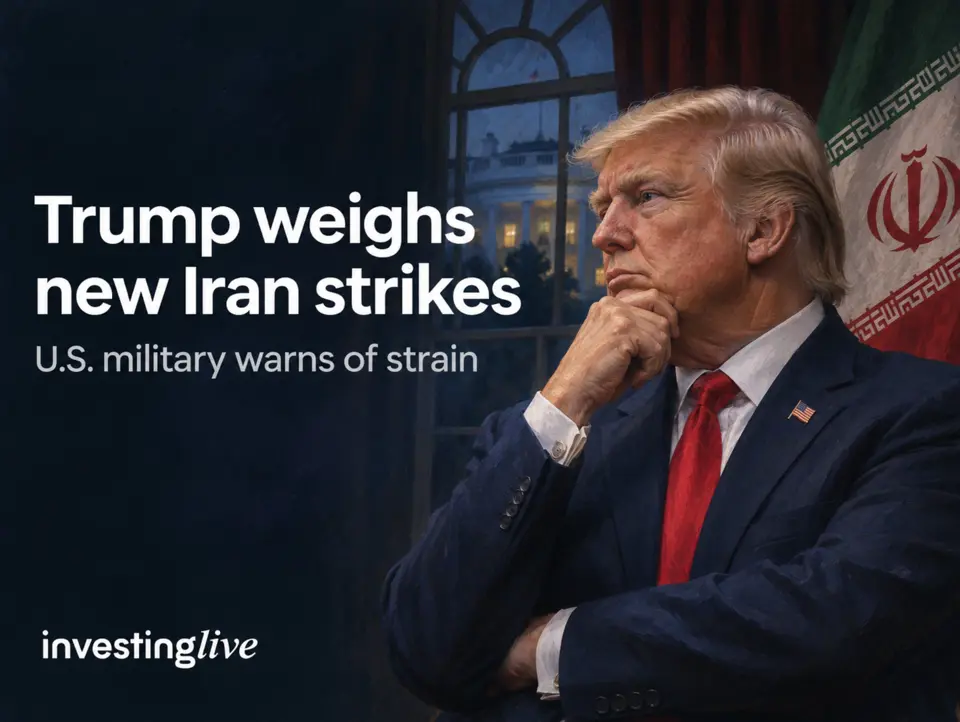
President Donald Trump is considering renewed military strikes against Iran, the Financial Times reports, as hawkish officials in Washington and Israel urge him to resume military action. Iran's position at the mouth of the Strait of Hormuz — the shipping chokepoint that carries a substantial share of the world's seaborne crude — is a central reason any move toward renewed strikes draws immediate attention in oil markets.
U.S. military planners, meanwhile, are cautioning that a stalemate dragging into the new year could leave American forces overextended. The warning adds pressure on Trump as he weighs not only whether to restart strikes, but also how long U.S. forces can sustain their current posture. In practice, overextension comes down to logistics: sustained operations draw down munitions stockpiles, compress maintenance cycles, and stretch crew rotations, and each of those constraints compounds the longer a deployment runs.
The renewed debate centers on a conflict that began on February 28. The war was launched with what was thought would be a quick end, but that expectation has not held: the fighting has proved anything but swift, and its implications are contributing to strains across markets and the wider world.
In commentary accompanying the report, the publication noted that the President's return trip to Washington from China took 15 hours — and that he saw his friends.
For markets, crude oil is the first place to watch. The report puts escalation risk back in focus, and the immediate question for traders is whether that risk begins to translate into a bigger premium for potential supply disruptions. Standard gauges to track alongside benchmark prices include tanker freight rates and war-risk insurance costs in the Gulf, which tend to move as shipping risk gets repriced.
The report comes alongside a sharply negative session for U.S. equities. The NASDAQ index was down 5.25%, the NASDAQ 100 was down 5.50%, and the S&P index was down 3.53% — the kind of broad, same-day drawdown traders describe as risk-off, though the report does not attribute the equity moves to any single driver.
As of the report, no final decision on renewed strikes had been announced. From here, the watch items are straightforward: any formal White House readout, follow-on reporting from the Financial Times, and how crude benchmarks and Gulf shipping indicators price the escalation debate in coming sessions.
Source: ForexLive / investingLive

