Fox News Analyst Warns 'Weak' Trump Could Start World War 3
Key Takeaways
- •Harley Lippman, a frequent Fox News contributor, warned that perceptions of President Trump's weakness could elevate the risk of a global conflict.
- •Trump entered a trilateral summit with Vladimir Putin and Xi Jinping in a diminished political position after his party lost both the House and Senate in the midterms.
- •Lippman asserted that China and Russia work alongside North Korea and Iran in efforts to weaken and ultimately defeat the United States.
- •He cautioned that any perceived Yalta-style division of spheres of influence would deeply alarm U.S. allies, particularly Ukraine.
- •U.S.-Ukraine relations have frayed during Trump's second term, including bipartisan outrage over throttled Starshield communications and the failure to warn Ukraine of an impending rocket attack.
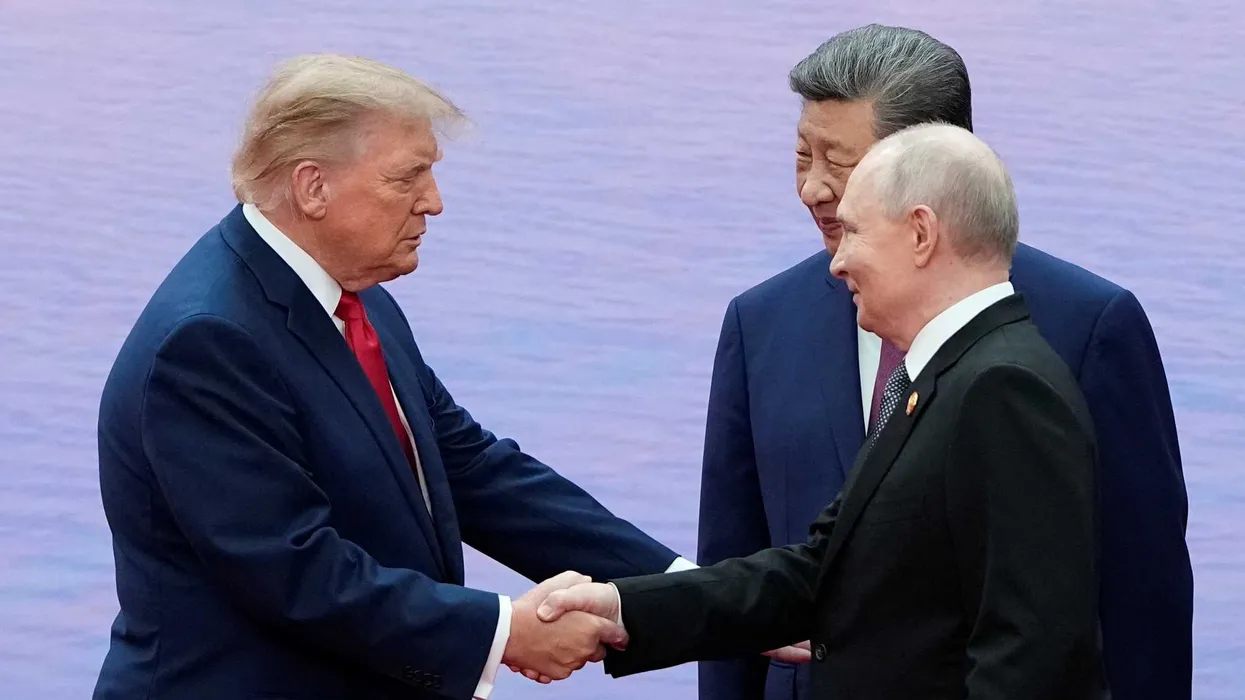
A prominent foreign policy analyst warned on Fox News Wednesday that President Donald Trump's "weakness" could lead directly to World War 3. Harley Lippman, a frequent Fox News contributor, said there is reason for concern that Trump may no longer be in a position to prevent the United States' top adversaries from taking steps that would lead straight into global conflict.
The warning came during a segment hosted by Fox's Bill Melugin, who framed the situation ahead of a trilateral summit Trump is currently attending with Russian President Vladimir Putin and Chinese President Xi Jinping.
"Beginning in January, President Trump is going to be a lame duck president, and his party took an absolute shellacking in the midterms, getting completely wiped out, losing both the House and the Senate," Melugin said, before asking whether Trump enters these talks in a weaker political position. The lame duck label describes a president whose diminished political standing — typically following an election — is seen to narrow their leverage, a perception foreign governments routinely weigh when assessing American commitments.
"That's the biggest concern," Lippman conceded. "That China and Russia will see President Trump as weak and try to take advantage of that... China and Russia work hand in hand with North Korea and Iran to weaken and ultimately to defeat the United States. That's their goal. They're doing everything possible for that outcome."
Lippman also cautioned that Americans need to understand the world does not view the summit as a "Yalta 2.0" — a reference to the post-World War II conference at which Russia, England, and the United States divided spheres of influence across Europe. "If it's perceived that President Trump is inclined to do that, that would greatly alarm our allies, particularly Ukraine," he explained. "Like any nation, they don't want someone else to decide what's going to happen to their lives."
The United States has been a vital ally to Ukraine since Russia invaded the country in February 2022, but that alliance has become strained over the course of Trump's second term. Early friction stemmed from the president's antagonistic relationship with Ukrainian President Volodymyr Zelensky, along with assertions that the Trump administration had been slow to deliver weapons and other support. More recently, Trump has been accused of outright betraying Ukraine after the United States failed to inform its ally about an impending rocket attack while Ukraine's Starshield capabilities (the satellite communications service SpaceX provides for government and military customers, which Ukrainian forces rely on for battlefield connectivity) were throttled — reducing Ukrainian defenses and resulting in the deaths of innocent civilians. The episode prompted bipartisan outrage in Washington, and the White House attempted to deflect the blame.
Against that backdrop, Trump walks into the summit bruised by the midterms, with his recent actions indicating that he will be "doubling down" on his worst impulses moving forward.
In light of all this, Lippman warned: "Trump needs to have a strong position, particularly on Ukraine, because China is watching this very closely. And the same way when Biden ran out of Afghanistan, Putin then invaded Ukraine, if China sees any weakness on Ukraine, it could prompt China to go after Taiwan, and that would create a World War Three." U.S. policy toward Taiwan has for decades rested on strategic ambiguity — a deliberately unclear public position on whether Washington would defend the island militarily — which helps explain why perceived signals about Ukraine are read closely in assessments of Asian security.
Attention now turns to what the summit produces: any joint language touching on Ukraine or Taiwan, and how allies — particularly Kyiv — respond to phrasing that evokes the sphere-of-influence diplomacy Lippman warned against.
The full segment is available via Fox News:
This article originally appeared on Alternet: https://www.alternet.org/trump-fox-news-world-war-3/

