Trump Says U.S. Leads China in AI as Washington Focuses on Artificial Intelligence Controls
Key Takeaways
- •Donald Trump stated that the United States is currently ahead of China in artificial intelligence and emphasized the need to maintain this advantage through continued investment and strategic planning.
- •Shortly after taking office in January 2025, Trump announced support for the Stargate project, a planned $500 billion AI infrastructure initiative involving major U.S. technology companies.
- •Trump revoked a 2023 Biden administration executive order that had directed federal agencies to establish AI safety standards and required developers of large AI models to share safety test results with the government.
- •The United States has imposed successive rounds of export controls since 2022 to restrict China's access to advanced AI chips and chipmaking equipment, significantly shaping the competitive landscape.
- •The European Union's AI Act, which began phased implementation in 2024, establishes risk-based requirements for AI systems and represents one of the most comprehensive regulatory frameworks globally.
Trump Says U.S. Leads China in AI as Washington Focuses on Artificial Intelligence Controls
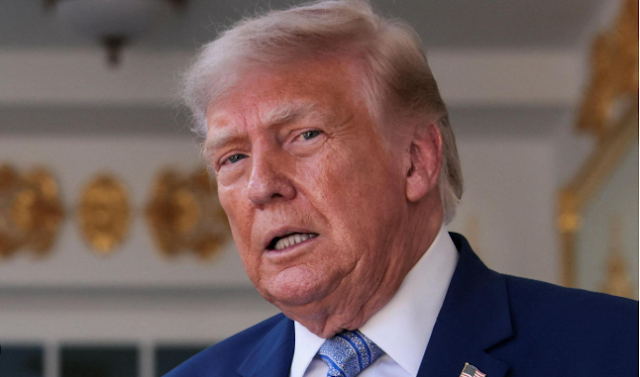
Donald Trump stated that the United States is currently leading China in artificial intelligence, emphasizing the need to maintain this advantage while putting appropriate controls in place as the technology advances at unprecedented speed.
The statement was highlighted by the X account of Cointelegraph (source), drawing attention to the escalating global competition surrounding artificial intelligence and the role of government policy in shaping the industry's future.
Trump's comments come at a time when artificial intelligence has emerged as one of the most consequential areas of competition between the world's two largest economies. Governments, technology companies, and investors alike are increasingly focused on AI capabilities, infrastructure, regulation, and national security implications.
U.S.–China AI Competition Intensifies
Artificial intelligence has become a major strategic priority for both the United States and China. The competition extends well beyond software development and encompasses several critical areas:
- Advanced AI models
- Semiconductor technology
- Data infrastructure
- Cloud computing
- Research capabilities
- Military applications
- Enterprise adoption
Both countries have invested heavily in artificial intelligence as they vie for technological leadership in what many experts consider one of the defining industries of the 21st century. Developing advanced AI systems demands significant resources, including powerful computer chips, massive datasets, specialized talent, and large-scale computing infrastructure. The U.S. has imposed successive rounds of export controls starting in 2022 to restrict China's access to advanced AI chips and chipmaking equipment, a policy that has shaped the competitive landscape.
Trump Emphasizes American AI Leadership
Trump's statement reflects his broader focus on maintaining U.S. technological dominance. He argued that America is currently ahead of China in artificial intelligence and that preserving this advantage will require continued investment and strategic planning.
The United States holds several advantages in AI development, including:
- Leading technology companies
- Strong research universities
- Advanced semiconductor companies
- Global investment networks
- Large cloud computing platforms
U.S.-based companies have played a major role in developing some of the world's most advanced AI technologies. Shortly after taking office in January 2025, Trump announced support for the Stargate project, a planned $500 billion AI infrastructure initiative involving major U.S. technology companies, signaling the scale of investment being directed toward domestic AI computing capacity.
AI Controls Become a Growing Policy Issue
While promoting AI development, Trump also emphasized the importance of implementing controls. The rapid growth of artificial intelligence has sparked discussions about how governments should regulate the technology without stifling innovation. One of Trump's first actions on AI policy was revoking a 2023 executive order issued by the Biden administration that had directed federal agencies to establish AI safety standards and required developers of large AI models to share safety test results with the government, signaling a shift toward an approach that prioritizes competitiveness.
Policymakers worldwide are debating issues including:
- AI safety standards
- Data privacy
- Security risks
- Misinformation concerns
- Copyright protection
- Responsible AI development
Governments face the challenge of crafting regulations that protect society while allowing companies and researchers to continue advancing the technology.
The Race for AI Infrastructure
One of the biggest factors determining AI leadership is access to computing infrastructure. Advanced AI models require enormous processing power, which depends on:
- High-performance chips
- Data centers
- Energy resources
- Cloud infrastructure
- Specialized hardware
The competition between the U.S. and China has increasingly centered on semiconductor technology. Advanced chips are essential for training and operating modern AI systems, making semiconductor supply chains a key element of national technology strategies.
China's Growing AI Ambitions
China has invested significantly in artificial intelligence as part of its long-term technology strategy. Chinese companies and research institutions have developed AI models, applications, and infrastructure designed to compete on a global scale.
China's AI development efforts include:
- Large language models
- Autonomous technology
- Smart city systems
- Industrial automation
- AI-powered services
The country has also focused on expanding domestic technology capabilities to reduce dependence on foreign suppliers, partly in response to U.S. export restrictions on advanced semiconductors.
U.S. Technology Companies Drive AI Expansion
American technology companies remain dominant players in the AI industry. Companies involved in AI development include businesses focused on:
- Cloud computing
- AI software
- Semiconductor technology
- Data processing
- Enterprise solutions
These companies are investing billions of dollars into research, infrastructure, and partnerships to accelerate AI adoption. The private sector continues to be a major force behind America's AI growth.
National Security Concerns Around AI
Artificial intelligence is increasingly viewed as a national security issue. Governments are examining how AI could affect:
- Cybersecurity
- Military systems
- Intelligence operations
- Economic competitiveness
- Critical infrastructure
The ability to develop advanced AI systems may influence global power dynamics, making technology leadership a strategic priority. Trump's comments reflect concerns that AI competition is not solely about commercial success but also about national influence.
Balancing Innovation and Regulation
A central debate in AI policy centers on finding the right balance between innovation and regulation. Supporters of stronger oversight argue that AI development should include safeguards to mitigate potential risks, pointing to concerns such as:
- Autonomous decision-making
- AI-generated misinformation
- Privacy risks
- Cybersecurity threats
- Uncontrolled AI development
Others caution that excessive regulation could slow innovation and allow competitors to gain an advantage. The challenge for policymakers is creating rules that encourage responsible growth while maintaining technological leadership.
Global AI Race Expands Beyond the U.S. and China
Although the United States and China are widely regarded as the leading competitors, AI development is expanding globally. Countries across Europe, Asia, and the Middle East are investing in artificial intelligence research and infrastructure. The European Union's AI Act, which began phased implementation in 2024, represents one of the most comprehensive regulatory frameworks, establishing risk-based requirements for AI systems deployed in the bloc.
Governments are recognizing that AI could transform:
- Healthcare
- Finance
- Manufacturing
- Education
- Transportation
- Defense
The race for AI leadership has become a global competition involving governments, corporations, and research institutions.
AI and the Future of the Economy
Artificial intelligence is expected to have a significant impact on the global economy. Potential benefits include:
- Increased productivity
- Automation of repetitive tasks
- Improved decision-making
- New business opportunities
- Advanced scientific research
However, AI also raises concerns about workforce disruption and changes to traditional industries. Businesses and governments are preparing for a future in which AI becomes integrated into everyday economic activity.
Investors Watch AI Developments Closely
The rapid growth of artificial intelligence has also influenced financial markets. Investors are closely monitoring companies involved in:
- AI software
- Semiconductor manufacturing
- Cloud infrastructure
- Data centers
- Automation technology
AI has become one of the strongest investment themes in global markets. Companies capable of developing or supporting AI technologies have attracted significant investor interest.
The Importance of Semiconductor Leadership
Semiconductors are among the most critical components of the AI industry. Without advanced chips, modern AI systems cannot operate efficiently. The semiconductor race involves:
- Chip design
- Manufacturing capacity
- Supply chains
- Research and development
The United States has focused on strengthening domestic semiconductor capabilities through measures including the CHIPS and Science Act, signed into law in 2022, which allocated approximately $52 billion to boost domestic semiconductor manufacturing and research. These efforts aim to reduce risks associated with global supply chain dependence.
Trump's AI Strategy Focuses on Competition
Trump's comments highlight a broader approach centered on competition and leadership. The goal is to ensure that the United States remains at the forefront of AI innovation while addressing potential risks.
The future of AI leadership may depend on several factors:
- Continued research investment
- Access to computing resources
- Strong technology companies
- Skilled workforce development
- Effective regulation
What Comes Next for AI Policy
As artificial intelligence continues evolving, governments will likely increase their involvement in shaping the industry. Future policy discussions may focus on:
- AI safety frameworks
- International cooperation
- Technology exports
- Data regulations
- Innovation incentives
The decisions made today could influence the global AI landscape for decades. Key developments to monitor include the trajectory of U.S. export controls on advanced chips, the pace of the Stargate project buildout, and whether Trump's administration introduces its own AI safety framework to replace the executive order it revoked.
Conclusion
Donald Trump's statement that the United States is leading China in artificial intelligence underscores the growing importance of AI competition between the world's largest economies. As the technology race accelerates, policymakers face the difficult task of encouraging innovation while establishing appropriate controls.
Artificial intelligence is no longer solely a technology issue. It has become a major economic, security, and geopolitical priority. As companies and governments compete to develop the next generation of AI systems, leadership in artificial intelligence could shape the future of global influence and technological advancement.

