Trump Says He and Vance Have Never Discussed a 2028 Endorsement, Dashing His Presumed Successor's Hopes
Key Takeaways
- •Vice President JD Vance told journalist Mike Halperin that President Trump would endorse him if he ran in 2028, while acknowledging the two had never discussed the matter.
- •At a White House event, Trump disputed Vance's claim, saying he did not believe they had ever talked about it and that the focus should remain on the November 2026 midterms.
- •At an Iowa rally, Trump argued he may have the right to seek a third term, despite the 22nd Amendment, ratified in 1951, which prohibits anyone from being elected president more than twice.
- •Columnist Sarah Baxter of The i Paper compared Trump's potential delay tactics to Joe Biden's July 2024 withdrawal, warning that a late endorsement could place Vance in a position similar to Kamala Harris.
- •In the past 200 years, only George H.W. Bush has won the presidency immediately after serving as vice president, and Trump's weak approval ratings further complicate Vance's prospects.
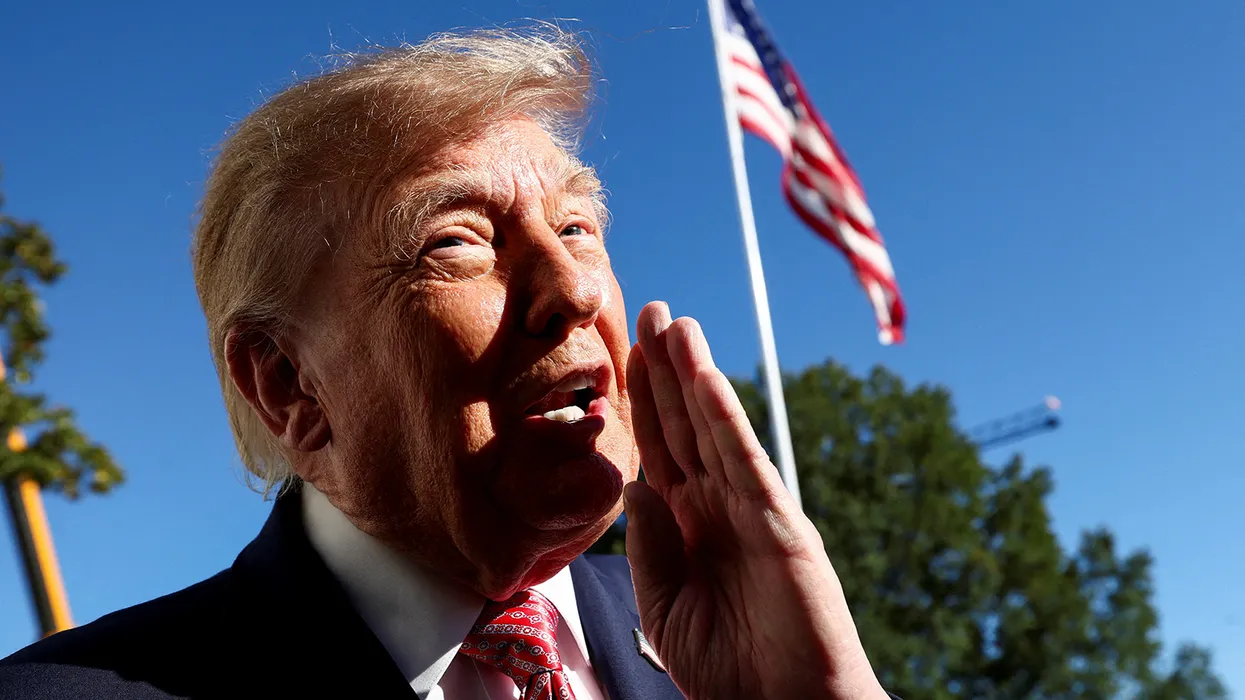
President Donald Trump's presumed successor for the 2028 Republican nomination remains Vice President JD Vance, but the president appears unwilling to make his path to the GOP nomination a simple one.
Writing in a new column for The i Paper, reporter and columnist Sarah Baxter described the moment this past week when Trump publicly undercut Vance's 2028 ambitions right to his face.
The exchange traces back to Vance's interview aboard Air Force Two with journalist Mike Halperin, during which the vice president insisted that "if I run, the President will endorse me," while stressing that the two had not discussed the matter.
"You think? The President wasn't having any of his cheek," Baxter wrote. "Asked if Vance was right about this at a White House event, Donald Trump shook his head."
"Well, I'll tell you this," Trump said. "He's a very talented person, he's a very good person, but we've, literally, I don't think we've ever talked about it."
Baxter noted that cameras then turned to Vance, who was "looking embarrassed" by the situation.
"No, sir," Vance responded. "I said that too."
Trump added: "It's early, very early right now. We have to get through the midterms, see how it goes." Those midterms, scheduled for November 2026, will be the first nationwide electoral test of Trump's second term.
Later, at a midterm rally in Iowa, Trump once again floated the idea of seeking an illegal third term in the White House rather than relinquishing power to a Republican successor. Under the Constitution's 22nd Amendment, ratified in 1951, no person may be elected to the presidency more than twice.
"I think the law says that I'm not allowed to run again," Trump said. "I studied that phrase forever Unfortunately, it's quite concise. Well, the one thing that's different, they cheated us on the second one, because we won it three times. So I think I have the right to run again."
Baxter wrote that Trump "can sound like a broken record about this, but he's convinced himself he's owed a third term," drawing a parallel to former President Joe Biden, who could claim to be running for president right up to the wire in summer 2024. Biden ultimately withdrew that July, with Vice President Kamala Harris becoming the Democratic nominee in his place. In her view, Trump is surely thinking: why can't I pull off the same trick? Even if every legal avenue proves fruitless, toying with the idea of a third term once the midterms are over would help prevent him from becoming a lame-duck president.
She added that whenever Trump is faced with an unpleasant decision or legal problem, he adopts the strategy of "delay, denigrate, deny." He could spin the question of a third term well into the last two years of his presidency — a scenario that would leave his vice president in a tight spot, with evidence mounting, Baxter wrote, that "Vance's heart is not in becoming the next Kamala Harris."
Although vice presidents are often treated as the presumed successors to the presidents they serve, Baxter observed that in the last 200 years only one has actually managed to win the presidency immediately after his boss: George H.W. Bush following Ronald Reagan. And while Reagan was still popular by the end of his second term, Trump is "historically underwater with voters," leaving Vance's prospects in shambles.
"Trump is never going to think anyone, least of all his Vice President, could be a better candidate than himself," Baxter concluded. "You can count on him avoiding endorsing a successor for as long as he can get away with it. By the time he does, Vance may find that, like Harris in 2024, it has come too late."

