Republicans Raise Alarm as Trump and Senate Majority Leader Thune Go Quiet Ahead of Midterms
Key Takeaways
- •President Trump and Senate Majority Leader John Thune have drastically reduced their communications, with Thune describing their current contact as more on an as-needed basis.
- •The SAVE America Act, described as Trump's top priority, lacks the votes to overcome the Senate's 60-vote filibuster threshold, and Thune has refused to change chamber rules to force its passage.
- •Trump maintains a far more frequent and allied relationship with House Speaker Mike Johnson than with Thune, highlighting a contrast in his dealings with congressional leaders.
- •Multiple Republican senators, including Jim Justice and John Curtis, have publicly voiced concern that the internal discord is unproductive and could harm the party's midterm election prospects.
- •Senate Republicans face added pressure in the midterms as they must defend seats in states where Trump's tariff and trade policies have drawn criticism from agricultural and manufacturing interests.
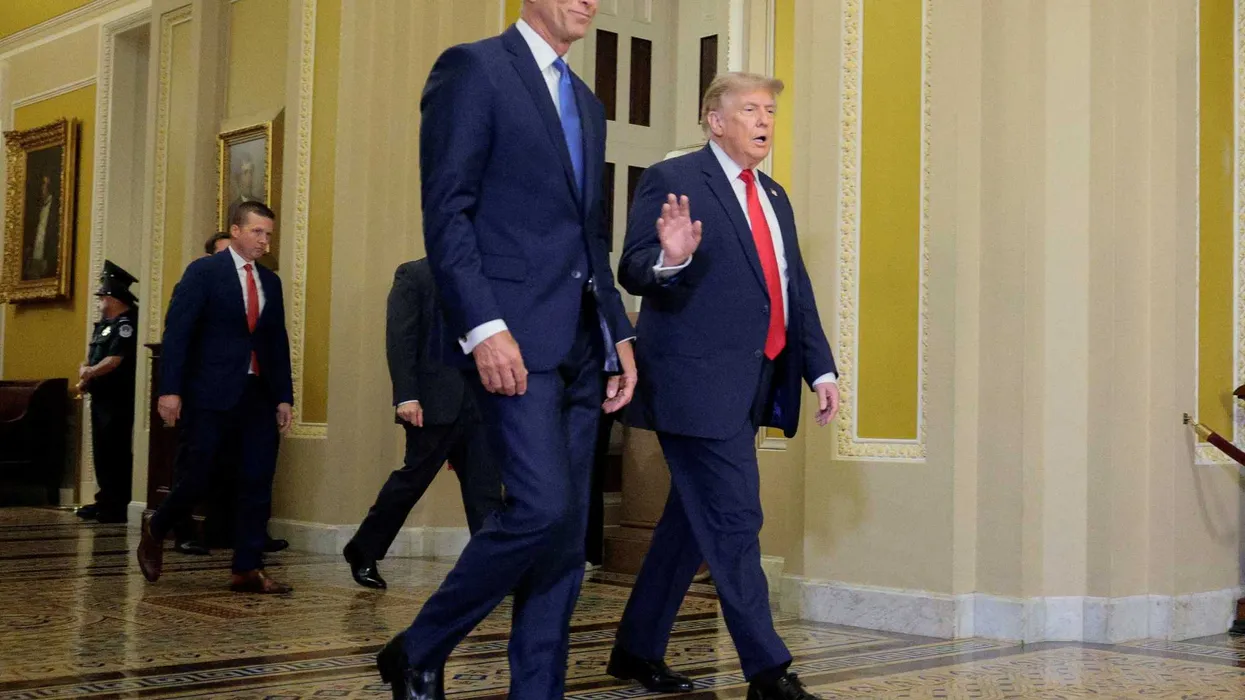
A growing rift between President Donald Trump and Senate Majority Leader John Thune has Republicans increasingly anxious, according to a new CNN report, as the party heads into a midterm election cycle where it is already expected to face steep losses to Democrats.
CNN's weekend report reveals that Trump and Thune have gone largely radio silent with one another, with "days, if not weeks" passing between their communications. Thune has indicated that the two now speak "more on an as-needed basis," a sharp departure from Trump's relationship with House Speaker Mike Johnson, who "sometimes can't get [him] off the phone."
Johnson has been widely regarded as one of the president's most committed and enthusiastic allies in Congress, making their frequent contact unsurprising. Thune, however, has drawn significant ire from Trump in recent months over his firm stance that the SAVE America Act — which would implement major voter ID requirements and has been described as Trump's "No. 1 priority" — is dead on arrival in the Senate. The legislation lacks sufficient support to overcome the 60-vote filibuster threshold, which Republicans do not hold the seats to bypass, and Thune has remained resolutely opposed to altering Senate rules to force its passage. Senate Republican leadership has faced this math on several of Trump's legislative priorities, and Majority Leader Thune's role as the chamber's vote-counter has repeatedly put him at odds with a White House that has shown limited patience for procedural constraints.
CNN provided further context on the dynamic: "While the two have never been personally close, with the mild-mannered Thune far different in style than the mercurial and combative president, they were in much more frequent communication at the start of Trump's second term, according to senators and people who know both."
"Trump would frequently praise Thune's leadership as the Senate GOP leader ushered through his agenda and often bit his tongue when he disagreed with the president, whether it was about an incendiary social media post or a policy like sweeping tariffs that hurt his constituents in South Dakota," CNN continued. "Yet in their private talks, Thune uses a very direct approach with Trump, bluntly explaining what can and cannot be accomplished in the Senate, GOP sources say, far different than other Republicans who tend to follow the president's orders, no matter how implausible."
The increasingly strained relationship has party members worried about the toll it could take in the upcoming midterms. The party controlling the White House has historically lost ground in midterm cycles, adding to the pressure on Senate Republicans to project unity while defending seats in states where Trump's tariffs and trade policies have drawn criticism from agricultural and manufacturing interests.
"We need to be talking up the wins, talking about how crazy Democrats are, and instead we are knifing each other," one anonymous GOP senator told CNN.
"The infighting is not really productive," said Sen. Jim Justice, a West Virginia Republican. "There's no point in going round and round and round."
"I would say we're all longing for a relationship with the White House where we work more in harmony," added Sen. John Curtis, a Utah Republican.

