Treasury Chief Bessent 'More Involved' in Iran War Than Defense Secretary Hegseth, Official Says
Key Takeaways
- •Trump threatened "economic warfare and isolation" against Iran and warned third countries against providing any form of financial or commercial lifeline.
- •Dasha Burns reported that senior White House officials are currently focused on economic pressure rather than military escalation against Iran.
- •The levers named in Trump’s post fall largely under Treasury Department authority and the Office of Foreign Assets Control.
- •The reported strategy would elevate Treasury Secretary Scott Bessent’s role relative to Defense Secretary Pete Hegseth.
- •The plan resembles Trump’s first-term "maximum pressure" campaign, which used secondary sanctions to cut Iran off from parts of the global financial system.
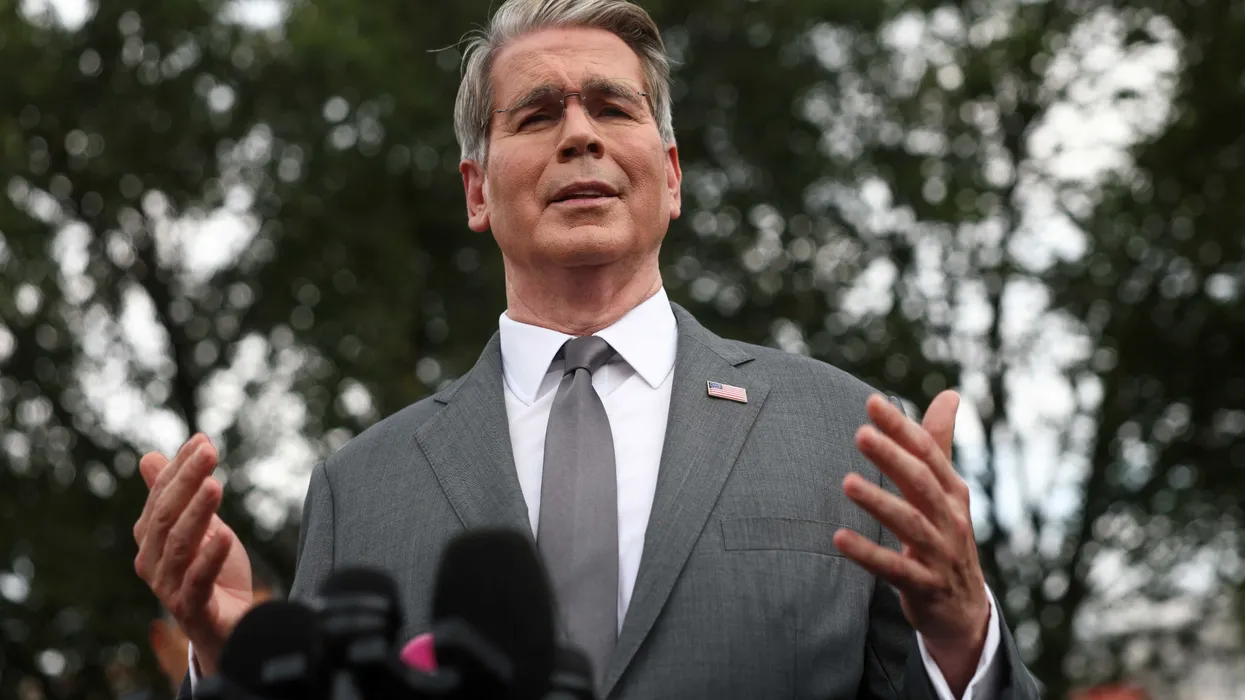
U.S. President Donald Trump threatened the Iranian regime with "Economic Warfare and Isolation on an unprecedented scale" in a post on his Truth Social platform Wednesday night, August 19. And according to Politico Playbook's Dasha Burns, the operation now being weighed inside the Trump administration would give Treasury Secretary Scott Bessent an even greater role in the war than Defense Secretary Pete Hegseth.
In his Truth Social post, Trump wrote: "No one has given the Islamic Republic of Iran a greater opportunity to make a Deal than me. TRAGICALLY, for them, they have failed to take it. Therefore, today, I am announcing the MOST CRUSHING ECONOMIC OPERATION EVER TAKEN AGAINST ANY COUNTRY! This will be Economic Warfare and Isolation on an unprecedented scale. Their navy is gone, their air force is destroyed, their military factories are now rubble, their currency is worthless, and their country is hanging by a thread. Today, I am also announcing that ANY country that allows its financial institutions, businesses, airports, or government entities to provide any type of lifeline to Iran will itself face TREMENDOUS Economic Consequences. Oil smuggling, swap lines, cash transfers, exchange houses, ship registries, front companies — It all needs to stop NOW. You know who you are."
Trump continued: "This will be an ECONOMIC D-DAY, and we need all of our Allies to stand with the United States of America to isolate, and defeat, the Iran threat. These maniacs are on the ropes, and these HISTORIC MEASURES will cripple them and their ability to project terror worldwide. IRAN WILL NEVER HAVE A NUCLEAR WEAPON. THANK YOU FOR YOUR ATTENTION TO THIS MATTER. President DONALD J. TRUMP."
In a Thursday afternoon post on X, Burns reported that, with Iran, the Trump administration is thinking primarily in economic terms at this point. The tilt matters because the specific levers named in Trump's post — financial institutions, oil smuggling networks, swap lines, cash transfers, exchange houses, ship registries, and front companies — fall squarely under Treasury's remit: the department and its Office of Foreign Assets Control administer U.S. sanctions programs, and their designations can bar foreign banks from the U.S. financial system entirely.
"After this Trump Truth Social post last night, a senior WH official tells me that there's no talk about military escalation against Iran at this point, and the president is focused primarily on strangling Iran economically. That means Treasury Secretary Scott Bessent is more involved in the war than Defense Secretary Pete Hegseth at this point, the official indicated," Burns wrote.
A Treasury-first strategy would extend a playbook Trump has used before. In his first term, he withdrew the United States from the 2015 Iran nuclear deal and rolled out what his administration called "maximum pressure" — sanctions that drove Iran's oil exports sharply lower and cut its banks off from much of the international financial system. That campaign leaned heavily on secondary sanctions, which penalize third-country firms and governments for doing business with Tehran and force global banks and buyers to choose between Iran and access to the U.S. market. Wednesday's post invokes the same mechanism — threatening "TREMENDOUS Economic Consequences" for any country that provides Iran a "lifeline" — now raised to what Trump describes as an unprecedented scale and paired with a demand that allies join an "ECONOMIC D-DAY."
When Trump launched his war against Iran in late February, he promised a quick operation. Almost six months later, the war is raging on with no resolution in sight. Critics of the war, both liberal and conservative, argue that Trump has spent billions in U.S. tax dollars on the operation without actually removing the fundamentalist Iranian regime from power. The open question now is whether the allies Trump urged to stand with the United States — and the unnamed countries he warned, "You know who you are" — go along with the threatened measures.
