Trump's 'Teflon Don' Reputation Erodes as Approval Ratings Plummet Amid Economic Discontent
Key Takeaways
- •President Trump's approval ratings have declined steadily, with his standing on inflation approximately 50 percentage points underwater, described as unprecedented for a modern president.
- •The deterioration in Trump's political standing followed his military action against Iran and economic policies that have raised consumer costs.
- •Voters who supported Trump's return to the White House did so largely expecting lower prices and better economic management, but are now connecting his policies to increased personal expenses.
- •Trump and his allies interpreted his election victory as an endorsement of his broader cultural agenda rather than a demand for economic relief, according to Alex Shephard.
- •Democrats face the challenge of unifying messages around the affordability crisis, the Iran conflict, and Trump's governing record to present a clear alternative to voters.
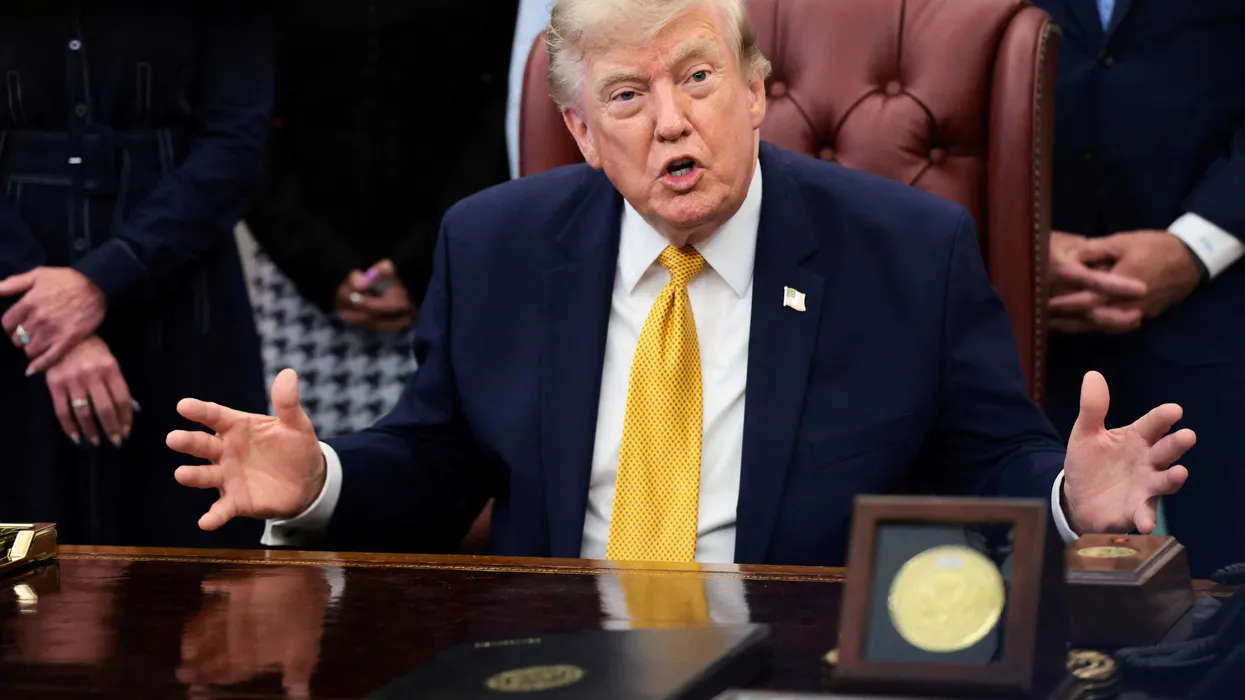
The label "Teflon Don"—long used to describe President Donald Trump's apparent ability to weather scandals, lawsuits, and political controversies without sustaining damage to his support—appears to be losing its relevance. The nickname itself originated in the 1980s as a reference to mob boss John Gotti, whose criminal convictions kept slipping away before it was later adapted to describe Trump's political resilience.
On Tuesday's edition of the "Daily Blast" podcast, The New Republic's Greg Sargent and senior editor Alex Shephard examined how Trump's political standing has deteriorated under the strain of his economic decisions and foreign policy moves. Recent polling confirms a steady decline in the president's approval ratings, with the picture growing even darker when voters are asked about specific issues.
The turning point, according to the discussion, followed Trump's decision to initiate military action against Iran and his implementation of economic policies that have driven up consumer costs. Trump's approval rating on inflation now sits roughly 50 percentage points underwater—a level described in the interview as unprecedented for a modern president. The erosion on economic approval is especially consequential because pocketbook issues have historically been among the most reliable predictors of presidential approval, particularly for a politician who built his coalition around a promise to lower costs. Additional recent surveys echo widespread dissatisfaction with his handling of the economy broadly.
Sargent and Shephard explored a central dynamic of Trump's return to the White House: voters backed him largely because they wanted lower prices and considered him better equipped than Democrats to manage the economy.
"I don't think anyone's seen anything like this before," Shephard said. "I think the big story of this presidency is that Trump was elected because voters were mad about inflation after the pandemic, and they blamed Joe Biden and his party, the Democratic Party, and they had rosy visions of Trump's presidency and they brought him back to office."
"Then Trump and the people around him—and I should say many Democrats as well—saw that victory not as a rebuttal, or a refutation against the Democrats. They saw it as an endorsement of his entire cultural, non-economic program," he continued.
Voters are now able to draw a direct line between Trump's policy choices and their own mounting expenses for groceries, health care, and electricity. Whether that connection persists in voters' minds through the next election cycle will be a defining question for both parties, given that economic perceptions can shift quickly with changes in prices and employment data.
"If there's anything that Donald Trump has proven, it's that voters forget about what he's done to the United States of America very, very quickly," Sargent remarked. "And you've got to drive it home over and over ... Trump did this to you. Trump did this to you. Say that, Democrats, right?"
Shephard concurred, characterizing the situation as an "over-interpretation of Trump's return to power." Both commentators agreed that Democrats face the challenge of presenting a clear alternative while weaving together the affordability crisis, the Iran conflict, corruption concerns, and Trump's governing record into a unified message: prices are high, and Trump's decisions have contributed to that reality.
The New Republic's coverage of Trump's approval ratings can be found here.
