Editorial Argues Democrats Should Center 2026 and 2028 Campaigns on Anti-Corruption Message as Trump Faces New Revelations
Key Takeaways
- •Todd Blanche, Trump's former personal criminal defense attorney, was confirmed as Attorney General and reportedly drafted a settlement relieving Trump of a long-standing $100 million IRS tax fraud fine while shielding his family from future tax audits.
- •Capital One Bank disclosed in sworn court testimony that it closed 385 Trump-owned businesses in 2021 after its fraud department determined the businesses were involved in illegal money laundering.
- •The editorial traces a decades-long pattern of Republican-aligned corruption beginning with the Reagan era, citing tax cuts for the wealthy, regulatory rollbacks, judicial appointments, and the Citizens United ruling as mechanisms for consolidating corporate and billionaire power.
- •Historical examples from Russia, Brazil, India, Ukraine, and the United States demonstrate that anti-corruption messaging has repeatedly served as a potent force for political mobilization across diverse contexts.
- •The editorial calls on Democrats to make Republican corruption a central campaign theme for the 2026 and 2028 elections, arguing the issue can unify the party's factions and resonate with voters.
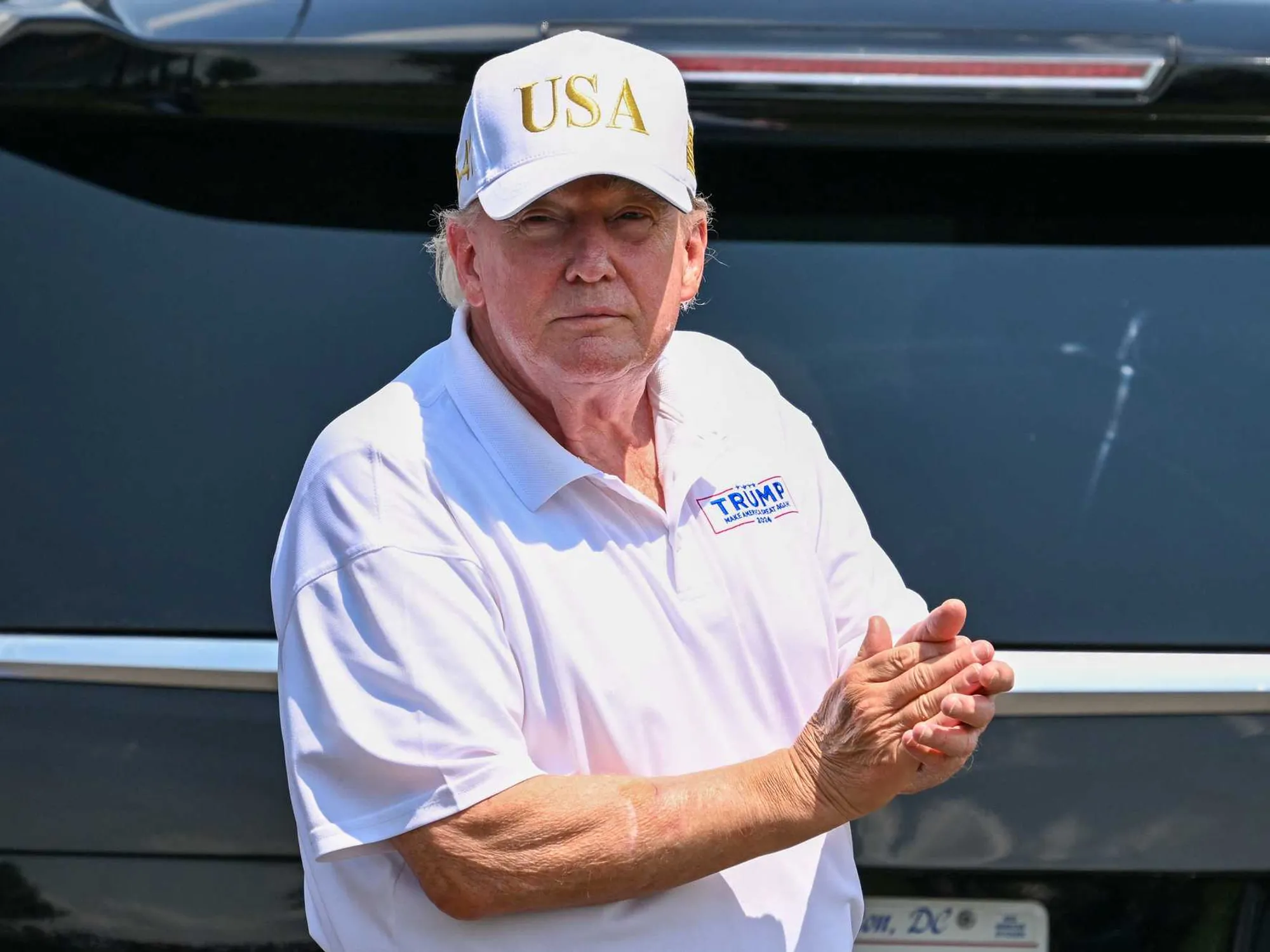
With the confirmation of Todd Blanche — who previously served as Trump's personal criminal defense attorney — as Attorney General, supported by all but two Republican senators, Donald Trump has reportedly been relieved of a $100 million IRS tax fraud fine that the agency had been attempting to collect for more than a decade, according to an editorial published by Raw Story. The outlet reports that a settlement drafted by Blanche reportedly ensures that Trump, his family members — including Donald Trump Jr., Eric Trump, Jared Kushner, Ivanka Trump, Tiffany Trump, Michael Boulos, and Barron Trump — and potentially their business partners will no longer face tax audits or tax obligations.
Separately, Capital One Bank reportedly submitted sworn court testimony stating that in 2021, the bank closed 385 Trump-owned businesses. According to the testimony, the bank's fraud department, led by an individual described as having "extensive financial fraud law enforcement experience," concluded that Trump's businesses were engaged in illegal money laundering, prompting the bank to sever all ties.
Neither of these revelations from the preceding two weeks generated significant coverage in mainstream corporate media, the editorial notes, suggesting that media organizations are increasingly reluctant to challenge Trump or his network of billionaire allies.
A widely circulated internet meme captures the prevailing sentiment, the editorial observes: "It's so weird how everybody simply accepts that Trump is a criminal and a Russian stooge and then goes on about their days."
The Case for an Anti-Corruption Message
The editorial argues that the level of corruption described represents significant political opportunity for the Democratic Party, and that current Democratic leadership is failing to capitalize on it.
As Democrats continue debating their overarching campaign message for the 2026 midterms — which will determine control of both chambers of Congress and dozens of governorships — and the 2028 presidential election, the editorial contends that a single concept — "corruption" — could unify the party's various factions and deliver proven electoral results.
The argument traces what it describes as a pattern of Republican-aligned corruption dating to the Reagan Revolution of the 1980s, asserting that the core of Republican policy has been the systematic transfer of political and economic power to billionaires and large corporations. While Republicans campaigned on slogans such as "Government is the problem, not the solution" and "Let the market decide," the editorial argues the actual agenda was to consolidate wealth and influence among the ultra-rich.
The editorial catalogues a series of policy outcomes it attributes to Republican governance:
- Tax cuts and loopholes benefiting billionaires and large corporations that, in aggregate since 1981, exceed the total U.S. national debt of $39 trillion — meaning Republicans effectively borrowed $39 trillion in the public's name and transferred it to the wealthy.
- President Ronald Reagan's 1983 suspension of antitrust law enforcement, which the editorial argues allowed every major American industry to consolidate into monopolies dominated by five or fewer corporations, undermining small business competition and raising consumer prices.
- Supreme Court rulings by a conservative majority — most notably the 2010 Citizens United v. FEC decision — determining that corporations qualify as persons and that political spending constitutes protected free speech, thereby opening elections to the highest bidders.
- Federal regulatory agencies increasingly staffed by industry insiders through a revolving-door system.
- Members of Congress and Trump administration officials allegedly engaging in insider trading with impunity; the editorial also claims that Trump's social media platform offers insider information for $100,000 per month.
- A GOP-aligned military-industrial complex that has effectively taken over Pentagon procurement.
- Federal agencies led by appointees whose stances allegedly run counter to the agencies' missions, including the Labor Department, Education Department, Civil Rights enforcement agencies, and the Environmental Protection Agency.
- Trump pardons that the editorial claims have consistently gone to individuals who provided him with millions of dollars, citing Rudy Giuliani's assertion that he and Trump sold pardons for $2 million each and split the proceeds.
- The gutting of the Internal Revenue Service to facilitate tax evasion by wealthy individuals and multinational corporations.
- The systematic undermining or privatization of public institutions — including the U.S. Postal Service, public schools, and prisons — to create profit opportunities for Republican-donor corporations.
- The flow of dark money following the Citizens United ruling, enabling billionaires and corporations to channel effectively unlimited, unaccountable funds into elections.
- The use of the Federal Communications Commission to loosen media ownership rules for Trump-aligned billionaires while threatening outlets that do not offer favorable coverage.
- State and federal voter suppression laws that disproportionately affect poor, young, female, and minority voters.
- The Republican Party's decades-long opposition to allowing Medicare to negotiate prescription drug prices, resulting in Americans paying the highest pharmaceutical costs in the developed world — a stance partially reversed by the 2022 Inflation Reduction Act, which authorized limited Medicare drug-price negotiation for the first time, over near-unanimous Republican opposition.
- The paralysis of the Federal Election Commission, which has at multiple points in recent years lacked a quorum of commissioners to conduct enforcement business, ensuring that election law violations by Republican politicians go uninvestigated and unprosecuted.
- Tax haven and trade policies that incentivize the offshoring of American jobs while executives reap record profits and bonuses, eroding the middle class.
- The normalization of lobbyists drafting legislation through organizations such as the Koch-funded ALEC, ensuring laws are written to benefit industries and billionaires.
- The rewriting of environmental and labor regulations to benefit polluting industries, often by Trump appointees with direct financial stakes in the regulated sectors.
- The strategic packing of federal courts with conservative judges to secure decades of rulings favorable to corporate and billionaire interests while weakening labor and consumer protections.
Republicans' Own Anti-Establishment Messaging
The editorial notes that Republicans have long understood the political potency of anti-corruption messaging, despite their own participation in the systems they critique. The meta-message behind Trump's signature campaign slogan — "Drain the swamp" — effectively mobilized public outrage against entrenched corruption across all three of his presidential campaigns, the editorial argues, even though it characterizes the slogan as fraudulent.
Historical Precedents for Anti-Corruption Movements
The editorial cites numerous historical examples where anti-corruption messaging proved politically decisive:
-
In Russia, Alexei Navalny's Anti-Corruption Foundation systematically exposed how Vladimir Putin and his associates were looting the government and distributing favors to aligned oligarchs. Navalny came close enough to threatening Putin's hold on power that the Russian leader ordered his assassination, the editorial states.
-
In the Philippines during the 1980s, Corazon Aquino mobilized an anti-corruption message against the Marcos dynasty. The author, who was working in the country for a German international relief organization at the time, recounts being bumped from Philippine Airlines flights for five consecutive days as Marcos cronies seized all available seats during the regime's final days.
-
In Brazil, Jair Bolsonaro won the presidency campaigning against the corruption exposed by the "Operation Car Wash" investigation into the Lula administration. Once elected, however, Bolsonaro perpetuated and expanded the corrupt system, ultimately leading to his downfall and imprisonment.
-
In India, activist Anna Hazare's 2011 anti-corruption hunger strike in Delhi ignited a nationwide movement that contributed to the passage of the Lokpal anti-corruption law and led his former allies to establish the Aam Aadmi Party, which rose to power in Delhi on a clean-government platform.
-
In Ukraine, the anti-corruption message of the 2014 EuroMaidan "Revolution of Dignity" propelled Volodymyr Zelenskyy — then a comedian and television star — into the presidency.
American Precedents
The editorial also points to U.S. historical examples:
-
In 1902, President Theodore Roosevelt rallied mass support by framing monopolies as a "corrupt alliance" between the wealthy and the government. Meanwhile, Thomas Nast's political cartoons exposing the graft of William M. "Boss" Tweed helped bring down New York's Tammany Hall political machine.
-
The Watergate scandal transformed corrupt abuse of power into a national reckoning that forced Richard Nixon from office and generated sweeping electoral gains for reformers such as Jimmy Carter. More recent scandals, including those involving former Representative George Santos, reinforced "clean government" as an effective message at the local level.
-
At the national level, Trump's "drain the swamp" campaign and the "rigged system" critiques voiced by Senators Bernie Sanders and Elizabeth Warren demonstrate that framing political struggles as a fight against entrenched, self-dealing elites remains a consistently effective strategy for mobilizing voters across the ideological spectrum.
The Editorial's Conclusion
The editorial argues that adopting an anti-corruption platform is a logical strategy for Democrats, asserting that the GOP's core philosophy — encapsulated by the Reagan-era ethos that "greed is good" — inherently invites corruption.
The piece contends that Republican politicians have effectively become instruments of the fossil fuel, health insurance, tax preparation, and weapons industries, among others, as evidenced by congressional voting patterns over the past four decades.
The editorial points to additional examples it cites as Republican corruption: alleged collusion between the Kushner and Netanyahu families that it claims contributed to a war against Iran, billions earned by the Trump family through cryptocurrency and other ventures, alleged wartime insider trading, the installation of industry insiders in regulatory agencies, and corruption scandals involving Florida Governor Ron DeSantis and Texas officials Ken Paxton and Greg Abbott.
The editorial concludes by urging every Democrat to identify local examples of Republican corruption and make "Republican corruption" a central theme in campaigning, constituent outreach, and media appearances, arguing that sustained focus on corruption could yield results comparable to those achieved by anti-corruption movements abroad.
"It's the corruption, stupid!" the editorial declares.
