Incarcerated Writer Calls Trump's Forced Labor Tariffs Hypocritical, Citing U.S. Prison Labor Practices
Key Takeaways
- •Jeremy Busby contends that U.S. reliance on compulsory prison labor undermines the Trump administration's justification for imposing tariffs on countries tolerating forced labor.
- •The 13th Amendment's punishment exception clause, ratified in 1865, continues to provide the constitutional basis for involuntary servitude in American prisons.
- •Texas prisons generated approximately $109 million in 2022 combined from industrial products and agricultural goods produced through forced inmate labor.
- •Incarcerated workers who refuse to labor face severe consequences including solitary confinement, loss of personal property, and revocation of privileges such as family visitation and good-time credits.
- •Economists including Dr. Robert Shapiro and Dr. Ed Gresser have separately criticized Trump's tariff policies for generating economic uncertainty and constituting a big-government approach to trade.
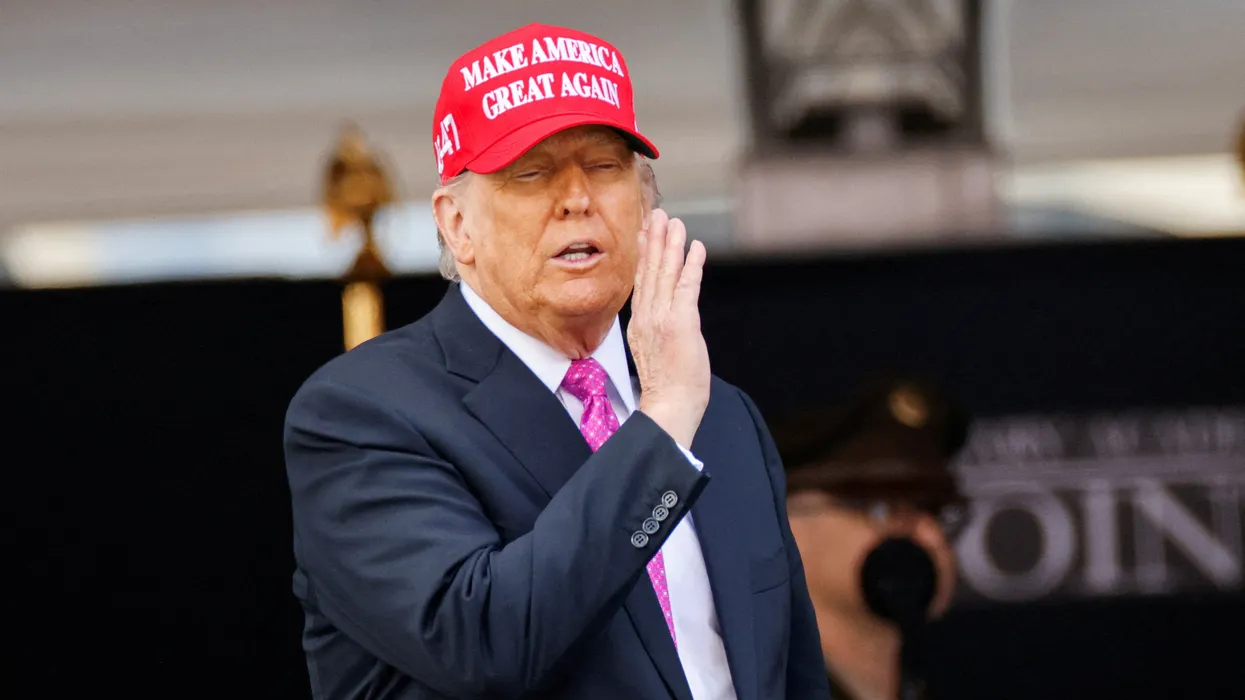
President Donald Trump's tariffs have faced broad unpopularity and have been deemed illegal by the Supreme Court. Now, a man who maintains he was wrongly convicted of murder is arguing that the administration's stated rationale for targeting nations complicit in forced labor is fundamentally hypocritical, given that the United States relies on what he describes as literal slavery within its own prison system.
Jeremy Busby, a writer and activist incarcerated in Texas for nearly three decades on a murder conviction he says was self-defense, made the argument in an essay published Sunday on MS NOW. Busby is the founder of the nonprofit JoinJeremy.
"The Trump administration's claim that tariffs are needed to punish those 59 countries and the European Union, which it says are too permissive of forced labor" is hypocritical, Busby wrote. "I write this from Texas, a state that has kept me incarcerated for nearly three decades and is one of the country's biggest beneficiaries of forced labor."
The legality of compulsory prison labor in the United States traces back to the 13th Amendment, which abolished slavery and involuntary servitude "except as a punishment for crime whereof the party shall have been duly convicted." That exception clause, ratified in 1865, remains part of the Constitution and underpins the system Busby describes. Several states — including Alabama, Oregon, Tennessee, and Vermont — voted in 2022 to remove similar language from their own state constitutions, signaling a growing but still nascent reform movement.
Busby drew from firsthand experience to describe conditions inside U.S. prisons. "I have seen guards attack a man for his refusal to chop grass. I have seen countless others pepper sprayed for refusing to perform work details. Some of my college classmates were expelled from religious and educational programs for failing to show up for prison-mandated work," he wrote. "On any given day, nearly 2 million people are behind bars in this country. More than half of them, approximately 1.2 million, are held in state or federal prisons, where work is compulsory."
In his essay, Busby contended that the prison system effectively enslaves inmates to produce cheap goods and services for large corporations. Prisoners assigned to agribusiness operations "harvest some of the same crops — like cotton — that enslaved people once did," he wrote. "They work under an armed guard on horseback, following the 'same marching orders as their predecessors," as reported by the Texas Observer.
Busby cited specific revenue figures: in 2022 alone, Texas prisons generated $58 million from sales of industrial products — including soap and stainless steel tables — produced through forced labor. That amount was entirely separate from the $51 million in agricultural earnings reported the same year.
He also documented the historical and ongoing punishment of incarcerated workers who refuse to labor. "Incarcerated workers have a long history of inhumane treatment for any type of work stoppage," Busby wrote. "In 1908, Frank Pinkard received 39 lashes after refusing to continue digging a ditch in Texas. Other incarcerated workers were killed for disobeying work orders," according to historian Robert Perkinson, author of Texas Tough: The Rise of America's Prison Empire.
Punishments for those who refuse to work include "long-term placement in solitary confinement, which requires confiscation of all personal property," Busby wrote. Prisoners can also lose "privileges like family visitation, telephone calls or the good-time credits needed for release," he added. "Commissary, entertainment and recreational access can be suspended."
Busby concluded with a pointed challenge: "If tariffs are an appropriate response to countries looking away from forced labor, then other countries would be justified in placing tariffs on us."
Economists have separately raised concerns about Trump's tariff policies. Speaking to AlterNet in July, Dr. Ed Gresser, Vice President and Director for Trade and Global Markets at the Progressive Policy Institute, characterized the tariffs as a "big-government" move despite Trump's positioning as a small-government president.
Dr. Robert Shapiro, who served as a top economic adviser to President Bill Clinton, argued that tariffs damage the American economy by generating "uncertainty."
"Every investment is based on an assessment of the likely future demand for whatever you're investing in, and how much it's going to cost to produce it," Shapiro said. "So there are assumptions about labor costs, material costs and other input costs — and again, about demand. If you have a set of arrangements that give you some confidence about the price of your inputs coming from Mexico or Canada, or about demand for goods in Canada — and don't forget, we have virtually no trade deficit with Canada; we have enormous trade, and it goes in both directions — so it's certainly right, and it's not just about investments based on these probabilities that the trade agreement can help reduce uncertainty about."

