Three-Time Trump-Voting Farmers Say They're 'Done' as Tariffs and Iran War Strain Farm Economy
Key Takeaways
- •Diesel fuel for North Carolina soybean farmer Matt Bell have roughly doubled in the past year, with his combine now requiring about $600 worth of fuel per day.
- •The war with Iran has driven up fuel costs and disrupted supply chains, as the Strait of Hormuz remains under a naval blockade allowing only a limited number of oil tankers through.
- •President Trump's tariffs have raised the prices of farm inputs including fertilizer, fuel, chemicals, seed, and parts, while continued threats of additional tariffs leave farmers in limbo.
- •Row-crop farmers have little ability to pass on rising costs because commodities like soybeans are priced by the market rather than by the growers.
- •Journalist Wright Thompson said many very conservative farmers who voted for Trump three times are now frustrated, and their 2026 midterm votes will be guided by economic survival rather than partisan loyalty.
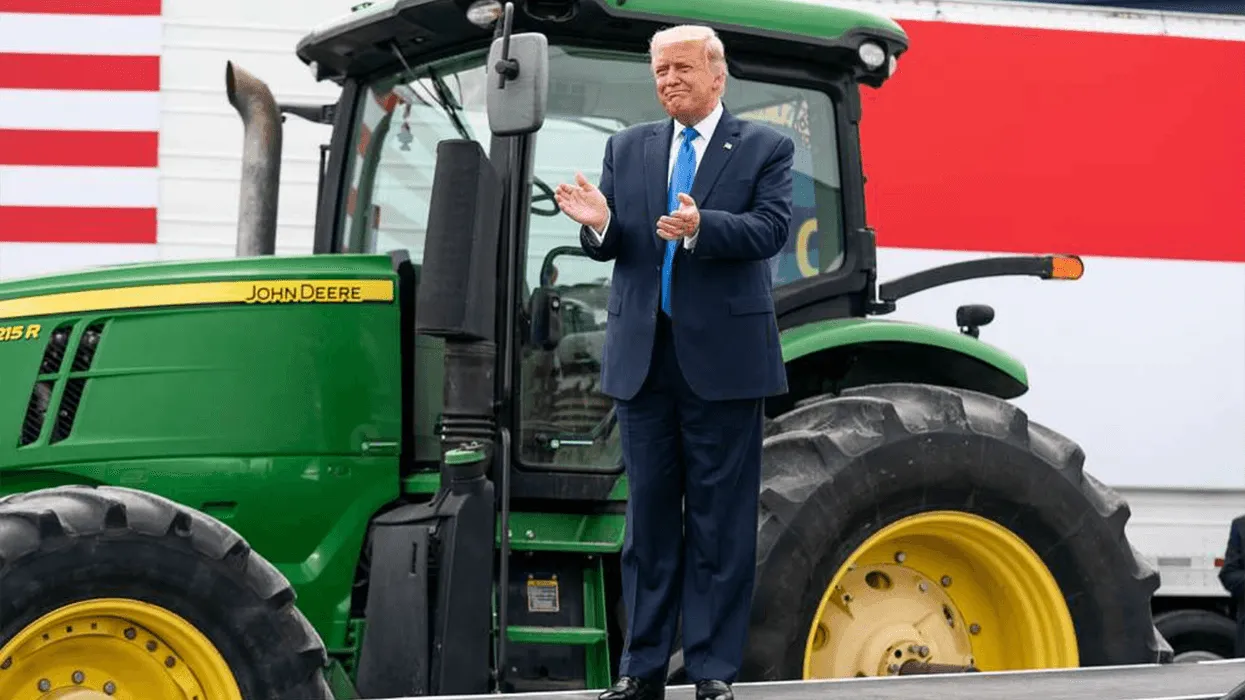
Farmers were a strong source of support for Donald Trump across the United States' last three presidential elections. Now the president's steep tariffs and the war with Iran are creating major hardships for American agriculture — and according to reporting from CBS News and the conservative website The Bulwark, farmers' frustrations are a definite vulnerability for Republicans in the 2026 midterms, which are now a little over one and one-half months away.
Writing for CBS News, journalists Emma Nicholson and Nancy Cordes detail the worries of Matt Bell, a 52-year-old soybean farmer in North Carolina — a swing state that Trump narrowly won in 2024.
"I've done this 34 years. I have never worried and stressed like I have the last year ... We've cut everything we can cut," Bell told CBS News. "The last several years in agriculture have been terrible, and we have, you know, just cut the fat anywhere we could. But we're just getting to the point now there's nothing left to cut. You cannot run without fuel. You cannot run without fertilizer. You have to have that."
According to Nicholson and Cordes, Bell says his diesel fuel costs have about doubled since last year.
"The war with Iran has driven up fuel costs and created supply chain disruptions as the Strait of Hormuz remains under a naval blockade with a limited number of oil tankers allowed through the critical waterway," the CBS News reporters explain. "And the intensifying conflict between Yemen's Iran-backed Houthi rebels and Saudi Arabia and attacks by other Iranian proxy forces on Saudi infrastructure are squeezing global fuel supplies in the Red Sea and contributing to a spike in global fuel costs ... Prices have been so volatile that Bell said the price he's quoted from his distributor in the morning is only valid until the afternoon — when it rises again." The Strait of Hormuz — the narrow passage connecting the Persian Gulf to the Gulf of Oman — is one of the world's busiest routes for oil tankers, which is why disruptions there show up in the diesel prices paid by growers thousands of miles from the Gulf.
The expense is one Bell cannot avoid, because his farm equipment runs on diesel. He showed CBS News his combine, which he says now requires about $600 worth of diesel fuel per day — more than twice what he paid last year. Diesel is not the only pressure point: President Trump's wide-ranging tariffs — taxes on imported goods whose effects ripple through farm supply chains — have also driven up costs and left Bell and other farmers in limbo as the president continues to threaten to impose more tariffs.
"Every piece of equipment on this farm runs on diesel ... Everything we're touching, the fertilizer, fuel, chemicals, seed, parts — you know, the whole nine yards, everything that we touch has gone up," Bell told CBS News.
The squeeze is compounded by the structure of row-crop farming itself: commodities like soybeans are priced by the market, not by the farmer, so when input costs rise, growers have little room to pass them along.
Separately, journalist Wright Thompson described farmers' frustration during an interview with The Bulwark's Tim Miller, a Never Trump conservative and former strategist (posted on X).
Thompson was blunt. "I know a lot of very, very conservative farmers who are just done with all of this," he told Miller. "I mean, people who voted for (Trump) three times. Just because of the ways in which the Trump administration has wrecked the American farming economy."
Thompson stressed that these frustrated, worried farmers are not approaching the midterms along partisan lines — their top concern is their own survival.
"Farmers are going to vote for the person who is most deeply invested in the idea of free capital markets at the expense of almost any other social thing," Thompson told Miller. "And forever, that was Republicans."

