Trump Reframes Supreme Court Losses as Critics Return to Court Over Tariffs, Birthright Citizenship, and Federal Reserve
Key Takeaways
- •The Supreme Court ruled that Trump lacked authority to impose sweeping global tariffs without congressional approval, finding existing statutes insufficient to support such unilateral trade measures.
- •The Court blocked Trump's attempt to remove Federal Reserve Governor Lisa Cook, a Biden appointee, allowing her to remain while her legal challenge proceeds on due process grounds.
- •Trump's executive order seeking to redefine birthright citizenship was struck down as conflicting with the 14th Amendment, which has guaranteed citizenship to virtually all persons born on U.S. soil for over 150 years.
- •The ACLU and Asian Law Caucus have returned to the original trial judge rather than filing a new lawsuit, seeking to protect class-action members from any citizenship termination under revised executive orders.
- •Both sides are preparing for the possibility that these separation-of-powers disputes will return to the Supreme Court for further clarification.
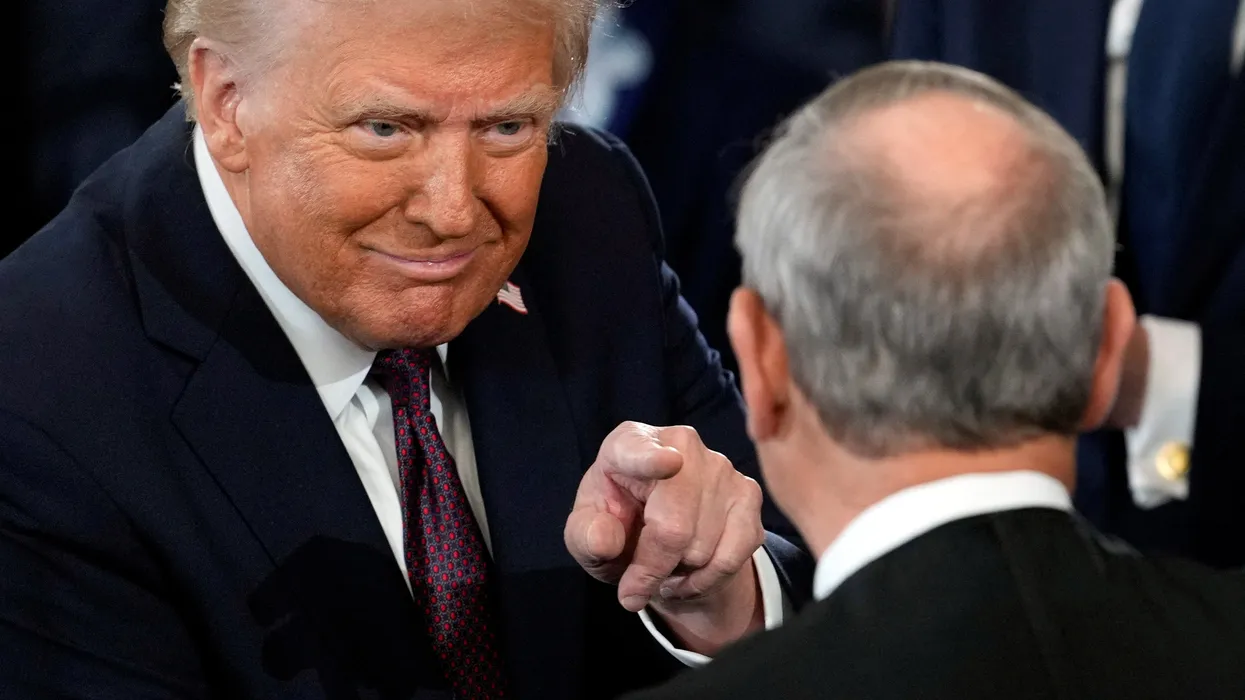
President Donald Trump is moving forward with new efforts on tariffs, birthright citizenship, and the Federal Reserve despite recent Supreme Court rulings against him, according to The Hill, prompting swift legal challenges from opponents.
"President Trump is reframing his Supreme Court losses on tariffs, birthright citizenship and the Federal Reserve as victories in disguise," The Hill reported on Wednesday. "Exuding confidence, Trump is pressing ahead with new attempts at all three. But his critics are rushing back to court. It tees up key tests of the Supreme Court's recent blockbuster decisions, putting Trump's agenda on the line once again."
The three disputes touch on core constitutional questions about the separation of powers — the limits of unilateral executive authority over trade, immigration, and monetary policy. The Supreme Court previously struck down most of Trump's tariffs, determining that he lacked the authority to unilaterally impose new import taxes without congressional approval. Article I of the Constitution vests Congress with the power to regulate commerce with foreign nations and impose duties, a authority Congress has delegated to presidents under specific statutes but which the court found insufficient to support Trump's sweeping global levies.
The court also blocked his attempt to remove Lisa Cook, a Joe Biden appointee, from the Federal Reserve Board of Governors, permitting her to remain in her position while her legal challenge proceeded. The case touches on the longstanding principle of Federal Reserve independence, designed to insulate monetary policy decisions from direct political pressure. Additionally, the court ruled against his executive order seeking to redefine "birthright citizenship," finding it in direct conflict with the 14th Amendment of the U.S. Constitution. The amendment's citizenship clause, ratified in 1868 following the Civil War, has for over 150 years been understood to guarantee citizenship to virtually all persons born on U.S. soil.
As The Hill noted, Trump has a pattern of interpreting judicial rulings in expansive terms, testing how much flexibility exists to continue pursuing his policy objectives despite adverse decisions.
"When the court stopped him from immediately firing Federal Reserve Governor Lisa Cook because she was owed due process, he quickly noted that it was on a 'strictly procedural basis' and vowed to push on," the report stated. "On tariffs, Trump claims the ruling invalidating his first round of global levies made his authority 'more powerful and more crystal clear.' And when the majority struck down his Day 1 executive order restricting birthright citizenship, Trump latched on to Justice Brett Kavanaugh's concurring opinion that found it only violated federal law."
Opponents of Trump's agenda have acted quickly to mount legal responses. Aarti Kohli, executive director of the Asian Law Caucus, discussed with The Hill the lawsuit her organization filed jointly with the American Civil Liberties Union challenging Trump's revised executive order on birthright citizenship.
"This order is a desperate and brazen attempt to bypass the Supreme Court's decision and expand a very narrow set of exceptions to the 14th Amendment," Kohli said.
Rather than filing a new lawsuit, the groups returned to the trial judge who previously ruled against Trump and whose decision was ultimately upheld by the Supreme Court. According to The Hill, they are seeking a ruling that Trump cannot terminate citizenship for anyone covered by the existing class-action lawsuit, regardless of any new executive orders the president may sign. The strategy reflects a broader pattern in which both sides are preparing for the possibility that these disputes will eventually return to the Supreme Court for further clarification.
Cook's legal team, led by attorney Abbe Lowell, also addressed her ongoing situation in a statement to The Hill.
"These allegations are as baseless now as they were a year ago when President Trump tried to remove Governor Cook and interfere with the independence of the Federal Reserve," the team said. "No matter what President Trump tries to do next, this much is clear under the facts and Supreme Court precedent — there is no valid cause for removing Governor Cook."
