Trump's Canada Tariffs Cost U.S. Importers Billions as Duties Soar Nearly 25-Fold
Key Takeaways
- •Customs duties collected on Canadian imports reached roughly $10 billion in 2025, a nearly 25-fold jump from about $400 million the previous year, with U.S. importers bearing the cost rather than Canadian exporters.
- •Tariff concerns have disrupted businesses, prompting Alberta's Rig Hand Craft Distillery to close its Texas packaging facility and Quebec equipment maker RefPlus to lose a $1.6 million order despite its goods not being tariffed.
- •Canada was the United States' second-biggest trading partner in 2025, its third-largest source of foreign direct investment with $747 billion, and the supplier of 64 percent of U.S. crude oil imports by volume.
- •The conflict has escalated since August, when Trump imposed 50 percent tariffs on select Canadian products, leading Canada to retaliate in September with tariffs on roughly $20 billion worth of U.S. goods.
- •A Leger survey found 38 percent of Canadians now view the United States as an enemy, while the White House plans to keep its tariff approach for the remainder of Trump's term, even as Democrats prepare a congressional challenge in January.
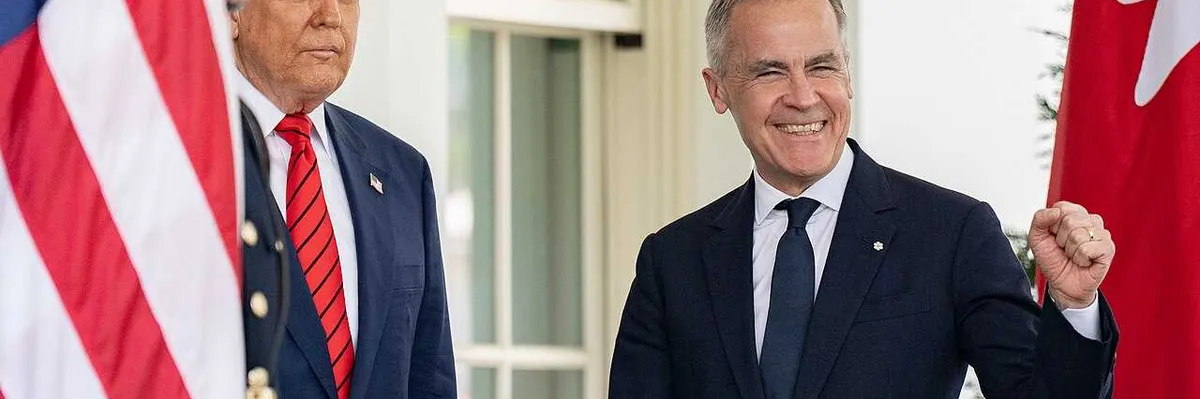
President Donald Trump's trade war with Canada has added billions of dollars in costs for U.S. importers and pushed one Canadian company out of Texas, according to a Newsweek report published Thursday.
Customs duties collected on Canadian imports jumped to roughly $10 billion in 2025, up from about $400 million the year before — a nearly 25-fold increase — according to Congressional Research Service data cited in the report. The duties applied to about $56 billion worth of goods from Canada. Those duties are paid by U.S. importers at the border rather than by Canadian exporters, which is how the tariff policy translates into billions of dollars in added costs for American businesses.
Gary Cohn, a former top economic adviser to Trump who now serves as IBM's vice chairman, called the tariffs “a consumption tax on the U.S. consumer.” He suggested Congress could maintain protections against unfair trade practices from China while dropping the tariffs on Canada.
The measures are already reshaping business decisions. Rig Hand Craft Distillery, based in Alberta, has closed a packaging facility in Texas over tariff worries and lost contracts in Texas, Arizona, and Alaska. Quebec equipment maker RefPlus lost a $1.6 million order after a U.S. customer grew concerned that tariffs would be imposed before the equipment was delivered — even though the equipment was not subject to tariffs.
Mark Wiseman, Canada's ambassador to the United States, said this week that the tariffs are making the United States a costlier place to do business. Speaking at the B20 summit in Washington on Wednesday, he said trade uncertainty raises the cost of capital and reduces companies' incentive to invest in factories, equipment, and research, and he called for a speedy return to freer trade.
The stakes are substantial. In 2025, Canada was the United States' second-biggest trading partner and its third-largest source of foreign direct investment, with $747 billion invested in the U.S. Canada also supplied 64 percent of U.S. crude oil imports by volume. Tariffs on cars, steel, aluminum, and lumber have added costs to closely interlinked supply chains, including homebuilding.
The trade conflict has escalated over several months. In August, Trump imposed 50 percent tariffs on select products from Canada. Canada retaliated in September by placing tariffs on around $20 billion worth of U.S. goods, and a U.S. import ban on certain Canadian products took effect a few weeks later.
Canadian public opinion has hardened as well. A survey by Leger found that 38 percent of Canadians view the United States as an enemy, compared with 20 percent who see it as an ally.
The White House is not backing down. Jim Goyer, director of the White House Office of Public Liaison, defended the tariffs at the same summit and said the administration plans to stick with its approach for the remainder of Trump's term, signaling that more measures may follow. Most Canadian imports into the United States, however, remain duty-free.
Democrats plan to challenge Trump's tariff policies once the new Congress convenes in January, but Trump retains the power to veto any bill that would seek to roll back his tariffs, and overriding such a veto would require two-thirds majorities in both chambers of Congress.

